Market says 25% chance of debt default
The rising cost of Ireland’s pledge to support its biggest banks has made the nation’s debt riskier than that of Iceland, whose financial system collapsed in 2008.
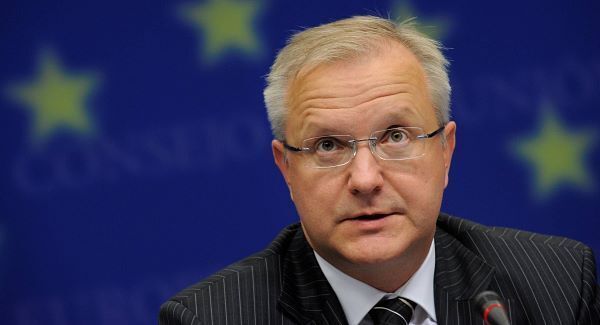
However, yesterday the European Union commissioner for economic and monetary affairs, Olli Rehn, said: “We don’t imagine the default of any eurozone country.”
Credit-default swaps on Irish government debt have surged nearly 200 basis points since March, to a record 319 basis points yesterday, according to data provider CMA. That implies a 22.4% probability Ireland will default within five years, compared with a 21.9% likelihood of Iceland failing to meet its commitments.
Investors are concerned the cost of rescuing Anglo Irish Bank will exceed the maximum €25bn forecast by the Central Bank, which is equivalent to 15% of the nation’s annual gross domestic product and 75% of its tax take. The Government took over Anglo, which bankrolled property developers during the country’s building boom, after losses surged amid a slump in real-estate prices, which have fallen by half since peaking in 2007.
“When you can’t put a cap on liabilities, market confidence is obviously going to get eroded and that is what’s happening,” said Gary Jenkins, head of credit research at Evolution Securities in London.
It costs €319,000 annually to insure €10 million of Ireland’s debt from default for five years. Credit-default swaps tied to Iceland’s bonds have tumbled more than 1,100 basis points since October 2008 to 315.5 basis points, or €315,500 annually, CMA prices show. The country took a €3.6bn loan from a group led by the International Monetary Fund after its three largest lenders, Kaupthing Bank, Landsbanki Islands and Glitnir Bank defaulted.
Irish debt is considered riskier than Iceland’s because the probability of default is calculated from swap spreads and expected recovery rates. The recovery assumption for Ireland and most developed markets is 40%, compared with 35% for Iceland, according to CMA.
CONNECT WITH US TODAY



Be the first to know the latest news and updates











