‘Banks can expect more robust regulation’
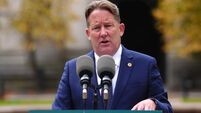
Speaking at the Financial Services Ireland annual dinner in Dublin Mr Honohan said in recent years, the term “principles-based regulation” seems to have become a code for deferring to the preferences of the regulated entities. “That will certainly not characterise future regulation. Instead you may expect to see challenging and assertive supervisors taking an independent and robust view of the risks of a firm, and insisting on mitigation. They will be backed by a credible threat of enforcement action,” he warned.
He is determined there will be a renewed emphasis on enforcement, even at the risk of the regulator incurring legal costs in unsuccessful actions. He said new structures and approaches will be adopted in what is rapidly becoming a unitary Central Banking organisation “without artificial and unnecessary” internal barriers.
“The risk of losing a court case taken in good faith, where the Regulator’s legal powers prove insufficient to prevent socially harmful risk-taking behaviour by a financial firm, is one I am prepared to take – always ensuring of course that due process is followed. I am confident that, if existing legal powers do prove inadequate in such cases, legislative amendments will be forthcoming,” he said.
Since the nationalisation of Anglo Irish Bank, the Regulator has adopted what has been termed an “intrusive” approach to supervision of the main firms.
“This involves on-site presence on a daily basis by several regulatory staff in each of the institutions covered by the Government guarantee.
“They have been sitting in as observers on key decision-making committees in each of these banks as well as conducting a number of specific investigations and reviews.” He told financial services sector executives they will have to pay more for regulation as the welcome flow of new entrants put pressure of the Central Bank’s regulatory role.
“It is evident that more regulatory resources will have to be devoted to the task of assessing applications and monitoring approved firms. Given the pressures on the public finances, I am forming the opinion we can not expect the public purse (through the Central Bank) to continue indefinitely its practice of, in effect, paying half of the costs of regulation. Moving to a 100% charge-back arrangement for at least some of these activities seems inevitable to me. This may not be music to your ears, even though the costs involved are low in general, relative to the scale of activities,” he said.