John Whelan: Irish pharma, food, and hospitality exporters face repercussions of war
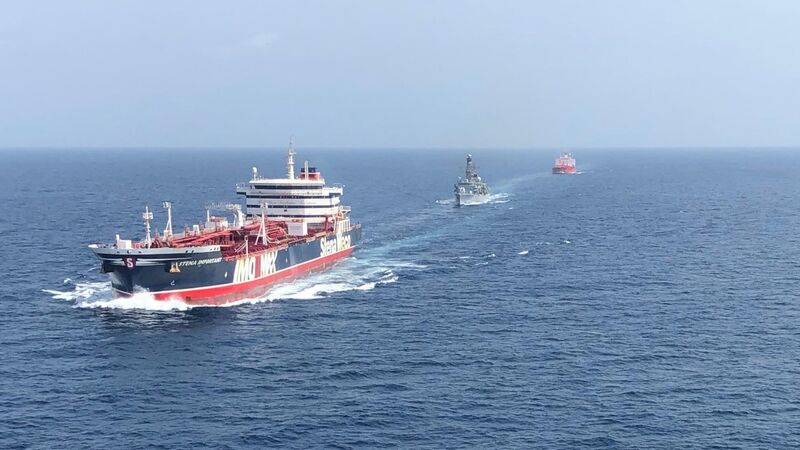
A British navy escort accompanies vessels in the Gulf. Iran's blockade of the Strait of Hormuz s playing havoc with shipping.

The rapidly expanding Iran war is threatening some of Ireland’s key industries, particularly pharmaceuticals, food production, and hospitality.
The blockade of the Strait of Hormuz, responsible for a fifth of global crude oil and LNG transport, has stranded hundreds of tankers. Six vessels have been attacked, prompting the US president Donald Trump to offer war insurance and military escorts for shipping companies. The Brent Crude index, which shapes global oil pricing, is experiencing a sharp escalation. Qatar’s energy minister has warned that prices may reach $150 per barrel should tanker movement remain suspended.
Iran’s expansion of the war by bombing its neighbours in the region has exacerbated the situation, bringing total instability to the Middle East.
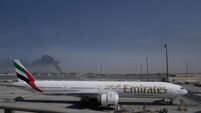
Airport suspensions announced by several Middle Eastern countries — including the UAE, Qatar, Bahrain, Kuwait, and Iraq — pose significant challenges for Irish exporters. Airlines have cancelled or rerouted flights as a precautionary measure. Emirates SkyCargo, Etihad Cargo, and Qatar Airways Cargo dominate Ireland’s exports not only to the region but also act as transit routes for shipments to Asia and Africa, are severely affected.
Costs for Middle East routes have doubled, particularly impacting Ireland's pharmaceutical and medical device exports, which predominantly rely on air freight. It is estimated that 20% of Ireland’s exports of these products are directly affected by disruptions in the region.
Imports from India to Ireland are also impacted, including vaccines and generic medicines supplied to the rest of Europe. Should the regional conflict persist, widespread drug shortages are expected, affecting pharmacies and patients who depend on affordable products. India is a major supplier of generic medicines — including paracetamol, ibuprofen, metformin, and atorvastatin — as well as bandages and vaccines.
Maersk, a leading shipping company, has warned that closures of major container ports in the UAE, Saudi Arabia, and other Gulf nations could lengthen lead times, especially for sea-air shipments. Dubai serves as a critical transfer hub for cargo moving from Asia by sea and then by air to Europe. Sea-air transport is preferred by companies seeking expedited transit at lower costs compared to full air freight.
Freight forwarders are chartering flights to offset lost capacity, landing outside affected airports and forwarding by road. Kuehne+Nagel, Ireland’s largest forwarder for pharmaceutical products, cautioned that backlogs to and from the Middle East and Asia may begin accumulating imminently.
Air freight rates are rising rapidly due to rerouted flights, reduced payloads, and increased fuel expenses. These impacts extend far beyond the Middle East, affecting nearly all air freight shipments. On the Asia-Europe trade lane, carriers now have only two routing options — north via Afghanistan and the Caucasus, or south via Oman, Saudi Arabia, and Egypt — as Russian airspace remains closed due to the Ukraine conflict. Extended detours necessitate planes carrying additional fuel, limiting cargo capacity, and potentially requiring expensive and time-consuming refuelling stops.
Carriers are prioritising humanitarian aid, military shipments, perishables, pharmaceuticals, premium cargo, and contract clients over general cargo booked last-minute. Maersk noted that airlines are imposing war risk surcharges for shipments routed through or near conflict zones. DHL Group has indicated that its forwarding division may implement emergency surcharges this week.
Airlines are also expected to raise fuel surcharges as jet fuel prices climb. DHL, FedEx and UPS are reviewing war insurance and fuel surcharges and are likely to introduce further hikes during the week.
Additionally, disruptions to fertiliser supply chains pose challenges for farmers and may increase food costs. Approximately one-third of global fertiliser products — including sulphur and ammonia — transit through the Strait of Hormuz. Delays in shipping routes for these goods and longer alternative freight paths are expected to contribute to further delays and rising costs.
Major EU shipping lines, including Danish-owned Maersk and French company CMA CGM, have suspended transits through both the Strait of Hormuz and the Suez Canal. Vessels must now take extended routes around Africa to reach Europe from the Middle East and Asia, adding substantial distance to voyages. Maersk recently notified clients of an emergency surcharge of €3,000 per forty-foot container — double previous rates — and implemented contingency measures such as route adjustments and operational changes to maintain service continuity. Other carriers serving the region have introduced similar rate increases.
If hostilities in the region persist over the coming weeks, a significant risk exists for rapid inflation, exacerbated by higher energy and raw material costs alongside ongoing shipping disruptions.