Risk remains that chancellor Rachel Reeves will be back for more in next year’s UK budget
Britain's budget unveiled last week sees taxes rise but few signs of growth
Risk remains that chancellor Rachel Reeves will be back for more in next year’s UK budget

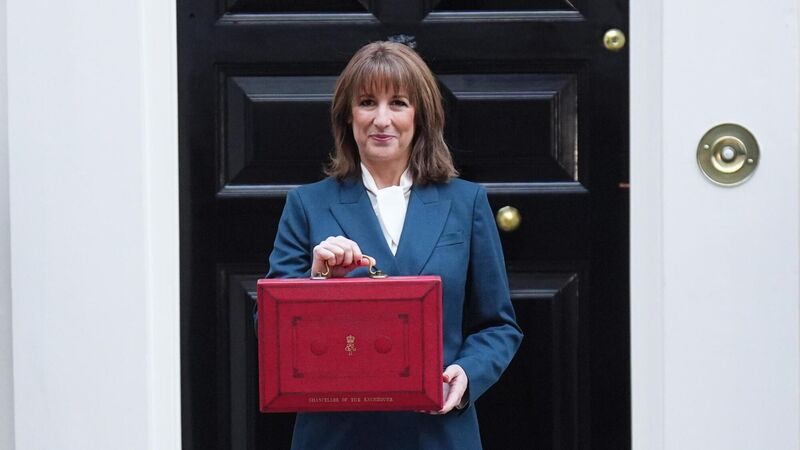
British chancellor of the exchequer Rachel Reeves poses outside 11 Downing Street, London, with her ministerial red box, before delivering her budget in the House of Commons. Picture: PA

While markets took a sanguine view of the UK budget, the measures represented a further up front boost to public spending, paid for largely by back loading tax-raising measures. 

With growth forecasts cut by the Office for Budget Responsibility (OBR), and no major policies to boost growth, the risk remains that the British chancellor Rachel Reeves will be back for more in next year’s budget, if her ‘fiscal headroom’ begins to slip again. 

The overarching trend is UK taxes as a percentage of GDP will reach a post-war record of over 38% of GDP by the end of this decade, five percentage points higher than they were in 2010.

GDP growth was robust in the early part of the year, partly due to tariff front-running, but has since moderated. Having pencilled in overly optimistic forecasts in March, the OBR cut its GDP outlook in 2026 to 1.4% (from 1.9%) and 1.5% in 2027 (was 1.8%). 

Ms Reees had committed to not raising taxes materially further following last year’s hikes to national insurance on employer contributions, which among other measures raised £40bn. The deterioration in the fiscal numbers since then means the chancellor broke that pledge with a package of £26bn in tax rises, largely through income tax threshold freezes.

While the tax rises are largely to fill the hole in the fiscal rules, there are also net spending increases in the budget. The overall picture is that trade-offs have been made to achieve this by limiting spending increases in many departments in later years to pay for an overall spending boost of around £9bn, which largely funds higher welfare expenditure.

UK government borrowing is projected to fall from 4.5% of GDP in 2025-26 to 1.9% in 2030-31, while the current budget deficit will be closed – meeting a key fiscal rule set by Ms Reeves. However, estimated borrowing as a share of GDP has gone up by circa 0.5 percentage points per annum since the March projections, for each of the next four fiscal years out to 28/29. Furthermore, debt will remain around 95% of GDP over the period, which is two percentage points higher than projected in March. Worryingly, the OBR indicates that Ms Reeves has only a 52% chance of meeting her fiscal rule to have debt as a share of GDP falling by 2029-30.

The tax hikes are expected to dampen GDP growth, albeit as referenced above, they are backloaded. The OBR forecasts confirm this, estimating that the spending boost will be offset by weaker consumption by households hit by higher taxes. 

While the continued focus on capacity-enhancing infrastructure is to be welcomed, and should bear fruit in the long term, there are few other signs of a coherent growth strategy to boost moribund productivity.

David McNamara is AIB chief economist

x

More in this section

Cookie Policy Privacy Policy Brand Safety FAQ Help Contact Us Terms and Conditions

© Examiner Echo Group Limited