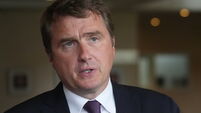
Oliver Mangan: Labour market data paints a picture of a flexible and dynamic economy

The economy added over 100,000 jobs in the past year.

National accounts data show GDP is in decline, but this largely relates to a fall in contract manufacturing activity abroad by Irish-based companies.
The latest labour market data, by contrast, point to a still strong Irish economy. Employment was up by 4% in the past year and rose by 1% between the second and third quarters of 2023, according to the latest CSO figures.
Growth in employment was evident across all regions of the country and also in every sector of the economy, bar construction and manufacturing.
The declines in these two sectors are not surprising given the weakness in commercial building activity and industrial production seen in 2023.
In total, the economy added over 100,000 jobs in the past year. This brings the rise in employment over the past four years to 333,000, or 14.3%, a period of time when the economy has had to withstand covid-19, Brexit, slower global growth, a cost-of-living crisis and a sharp rise in interest rates.
The labour force is growing very strongly too. It has increased by 333,000 also in the past four years and 111,000 in the latest 12-month period.
Two factors in particular are driving the strong labour force growth: a rising participation rate (defined as the percentage of the working-age population in the labour force), and large-scale net inward migration.
In regard to the latter, the number of non-Irish citizens in the labour force rose by 55,000 over the past year. The vast bulk of these immigrants are from outside the EU, a notable change from a couple of decades ago. Overall, non-Irish citizens now account for 20% of employment, or one in five jobs, in the economy.
Meantime, the participation rate increased by 1.0 percentage point to 65.8% over the past year, boosting the labour force by 52,000. This is nearly all due to rising female participation rates, which increased from 58.9% to 60.8% in the past year. The rate stood at 56.1% four years ago, pre-covid.
It may be that the move to more flexible working arrangements in recent years, in particular remote working or working from home, is making it easier for women to remain in, or re-join, the labour force.
Cost-of-living pressures may also be causing more women to take up employment at a time when jobs are plentiful. Whatever the reason, having been broadly stable between 2005 and 2020, the female participation rate has surged in the past three years.
One unusual feature of the labour market in the last six months has been a pick-up in unemployment at a time of rapid job growth. This simply reflects the fact the labour force is growing more strongly than employment.
The jobless rate has risen from 4.1% to 4.8% between May and October. This should not be taken as a sign of weakening economic activity as employment growth has not slowed down over this period.
Indeed, it is a welcome sign that one of the constraints facing the economy — a very tight labour market — is easing somewhat.
Overall, the labour market data paints a picture of a flexible and dynamic economy and society that is undergoing considerable change. It is unlikely the trends of strong inward migration and greater participation by women in the workforce will reverse any time soon, with the economy expected to continue generating large numbers of jobs.
- Oliver Mangan is chief economist of AIB