Oliver Mangan: The view now is that rates will have to remain high over the medium term
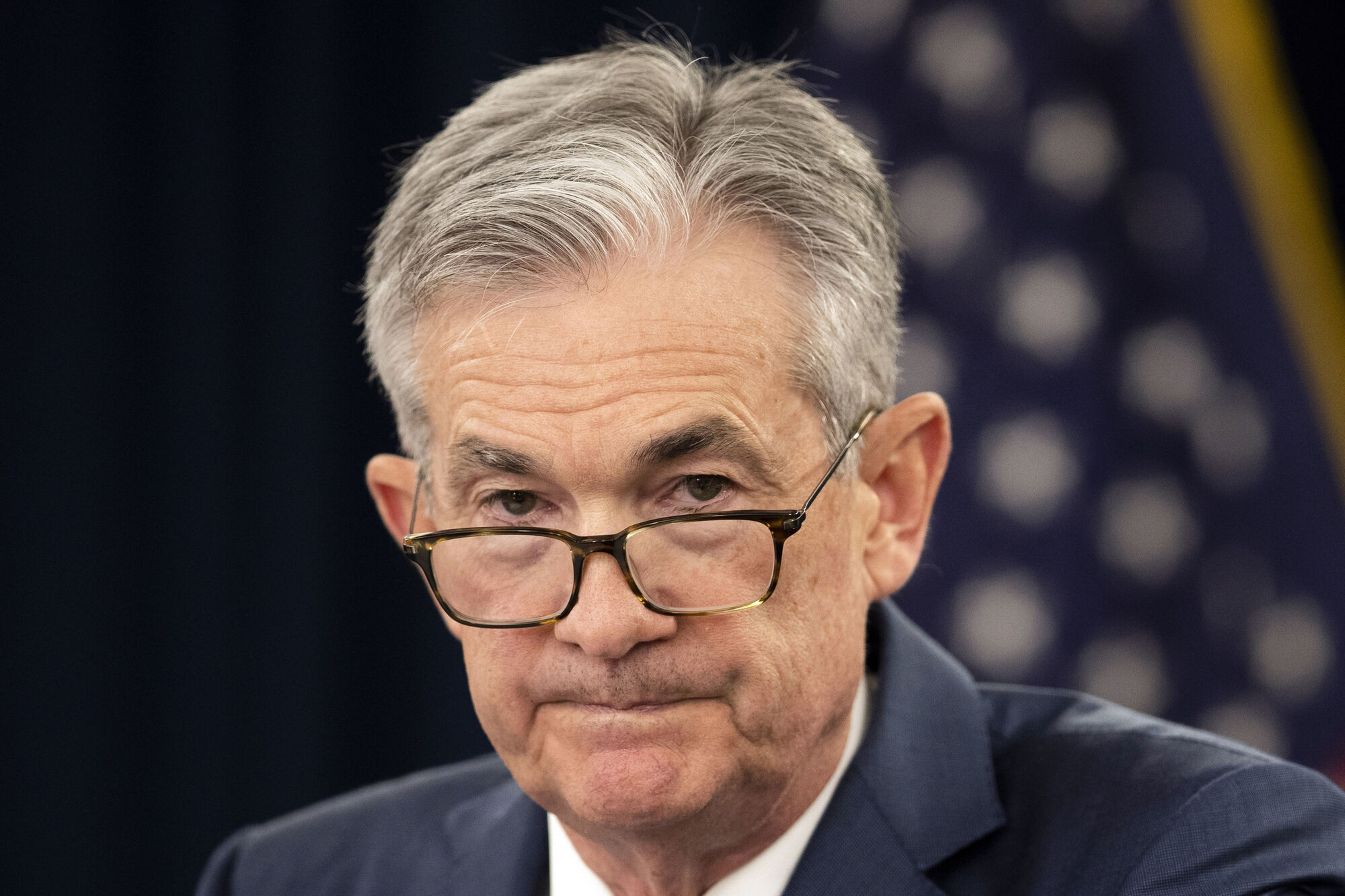
Federal Reserve chairman Jerome Powell 'will keep at it until we are confident the job is done'.
US Federal Reserve chair Jerome Powell is apparently a big admirer of a previous chair, Paul Volcker, who tightened monetary policy very aggressively in the 1980s, putting the US economy into recession to squeeze long-running inflationary pressures out of the system.
The penny has now dropped that Powell is equally determined to restore price stability. Last week, he once again committed to tightening monetary policy sufficiently to bring inflation back down to 2%, saying the Fed “will keep at it until we are confident the job is done,” a not so subtle reference to Volcker’s memoirs, titled .
There has been a dramatic re-pricing in all interest rate markets over the past two months. This has had four notable features: a shift to much larger sized rate hikes; far higher terminal or peak interest rates; delayed policy reversal into easing mode; and marked moves upwards on the level where interest rates settle over the medium term.
The move to larger rate hikes is already here with the ECB and Swiss central bank recently joining the Fed in hiking by 75bps and the Swedish Riksbank jacking rates up by a full 100bps.
Meantime, markets have moved to price in UK rates getting to 6% next year as the government slashes taxes despite sky-high inflation and widening fiscal and balance of payments deficits.
In the US, a significant number of Fed policymakers now see rates peaking in a 4.75-5% range. Markets expect ECB rates to reach 3.25% by autumn 2023 whereas not that long ago the peak was expected to be little more than 1%.
The Fed has been to the vanguard in arguing that restoring price stability will require a restrictive policy stance for some time and cautioning against prematurely loosening policy.
Its latest macro forecasts make for sombre reading. Core inflation is seen as still being well above target at the end of 2023, in a 3.0-3.5% range. It only gets down to 2% by the end of 2025. Thus, expectations for policy easing during 2023 have largely evaporated everywhere.
Meanwhile, with inflation proving persistent, the view now is that rates will have to remain high over the medium term. Markets now see US rates as still being about 3.5% in 2025.
Meantime, UK rates are expected to be at circa 5% and eurozone rates at about 2.75% in three years’ time.
Of course, there has seldom been so much uncertainty about the economic outlook and central bankers are even divided on their very near-term rate views.
There was a three-way split in the Bank of England vote last week on the magnitude of its rate hike. Fed policymakers are divided down the middle on whether the next rate hike should be 50bps or 75bps.
What is clear, though, is that all bar one of the Fed’s 18 policymakers sees US rates rising to a 4.25-5.0% range next year.
The biggest challenge, though, is being faced by the Bank of England. The sharp fall in sterling in the aftermath of last Friday’s badly received tax-cutting mini-budget will add to inflationary pressures.
This puts pressure on the BoE to step up the pace of rate hikes in an economy that is already very weak.
- Oliver Mangan is chief economist with AIB