Brian Keegan: Pandemic benefits can no longer be regarded as temporary

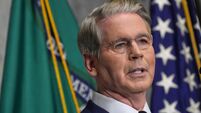
'The pandemic will leave us with a bigger state apparatus to manage in the years ahead.' Picture: Larry Cummins

There is a growing sense that, as we cope with this third wave of the pandemic, the arrangements and restrictions are not temporary.
Unlike the first and second waves, the government's responses were immediate but looked upon as being short term. Even the subsidies paid to employees were initially granted under a “temporary” wage subsidy scheme. Now we realise that many of the constraints we all have to live and work under and many of the measures to alleviate the situation, like the pandemic unemployment payment, are going to be around for some time to come.
All these constraints and supports come at a cost. Until quite recently, the narrative was that the costs will be met by borrowing at the current low-interest rates, and we would worry about how to pay for the emergency later. However, in recent weeks we are seeing more official moves towards funding what are increasingly looking like medium-term rather than short-term measures.
Earlier this week the government announced that it was to postpone the introduction of a system of auto-enrolment into pensions schemes for all workers. While done under the cover of not introducing more complexity for employers, it will also postpone what could have been a costly policy decision from an Exchequer perspective. The auto-enrolment proposals involve government as well as employer and employee contributions to pension funding.
We were also reminded that retired 65 year-olds must make do with jobseekers benefit until the social welfare pension payments kick in at 66 years of age. Separately, the Revenue Commissioners started to adjust individual tax credits with immediate effect to reflect the tax consequences of the pandemic unemployment payments being made.
The pandemic will leave us with a bigger state apparatus to manage in the years ahead. That state apparatus must be funded, and that means that there will be a greater obligation on the part of citizens to stump up funds either directly, through the tax system, or indirectly by taking more personal responsibility over the cost of their own health care and their own retirement provision.
With all the current difficulties, this isn’t easy for anyone to handle. When responsible media reports on matters like taxing Pandemic Unemployment Payments using terms like “surprise” and “shock”, they reflect a genuine knowledge deficit within a large cohort of the population. Tax is many things but one thing it should not be is surprising.
Only a certain amount of income can be earned before we start paying income tax, and for most single workers that is about €16,500. In addition, there may also be USC and PRSI to be paid. Most social welfare payments are taxable and must be included in a calculation of taxable income.
Perhaps most importantly, employees can no longer rely as extensively on employers to sort out all their tax affairs through the PAYE system. Between disrupted employments and additional state benefits, there is an onus on everyone to check that they have the correct deductions and credits.
The best way to do that is on-line via the Revenue MyAccount system.
Revenue do a reasonable job of informing the public of their obligations and occasionally run public information campaigns, but they need to do more to reinforce the notion that most social welfare benefits are taxable. There are clear explanations of how systems work from many other sources, and the Citizens Information service deserves particular credit in this regard.
As we head into a second year of rolling lockdowns and restrictions, pandemic work conditions and benefits from the State can no longer be regarded as temporary.