Hospital overcrowding crisis - HSE in much worse health than Angola
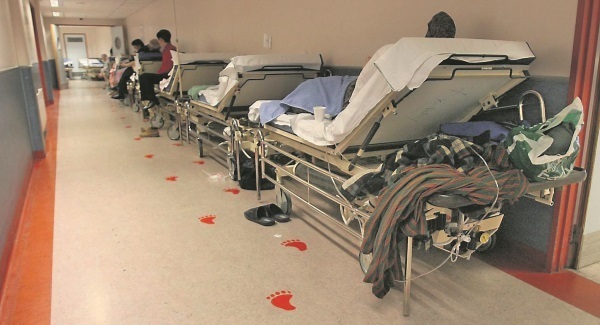
If Ireland’s ailing health service were a patient, it would be on life support. In a way, it already is, as we face an existential threat to a service that is lurching from crisis to crisis. Signs are that trolley numbers in hospitals have hit record highs this week.
It is a nationwide dilemma. Conditions at Cork University Hospital and the Mercy Hospital are said to be appalling, while flu levels have prompted visitor bans at several hospitals nationwide.
A seven-year-old boy from Wexford has had heart surgery postponed eight times at Crumlin hospital in Dublin; in Limerick, a young mother with Crohn’s disease had to be treated while seated in a chair in the emergency department of the city’s university hospital.
When he became Taoiseach, in June 2017, Leo Varadkar said one of his stated priorities was to repair the health service so as to ensure greater patient access. Instead, as the latest trolley figures show, the situation is going from bad to worse.
There have been serious problems with the HSE since its creation, in 2005, during the tenure of Mary Harney.
At the time, the 11 regional health boards were considered to be too politicised, with nominated board members often the aspiring members of political parties.
The new structure was meant to make the service more responsive to the needs of patients, more accountable, more transparent, and better value for money. It has failed miserably on all four fronts.
Yet, within a year, it was clear that the HSE was ill-conceived, poorly designed, and was being badly executed.
In 2006, Maev-Ann Wren, of the ESRI, and Professor A . Dale Tussing, of Syracuse University in New York, produced a devastating critique of the service, saying it did “not address the two-tier access to care, the consultants’ contract, the deficiencies in primary care, the inadequacy of acute care, or the needs in community and continuing care”.
In 2011, then health minister James Reilly scrapped the HSE board and, the same year, the programme for government between Fine Gael and Labour promised that the HSE would be dismantled.
This plan was abandoned in late 2017, in favour of reform and various efforts have been made in that regard — including the introduction of Sláintecare — with limited success.
The health ministry has confounded our finest politicians. Nobody can doubt the strenuous efforts of Micheál Martin, the intelligence of Ms Harney, the passion of Mr Reilly, or the dogged determination of Mr Varadkar, yet we still have a dysfunctional service.
When Simon Harris was appointed in 2016, it was hoped that youth would triumph over experience. That has not happened.
Former taoiseach Brian Cowen once described his tenure at the Department of Health as akin to Angola, referencing the prolonged civil war in the southern African former Portuguese colony.
This was because administrative “landmines”, like a prolonged nurses’ strike, bed shortages, and overcrowding in hospitals, could detonate without warning.
Angola has been enjoying relative peace and stability since 2002, while Ireland’s health service remains in peril.

CONNECT WITH US TODAY



Be the first to know the latest news and updates