Government with lessons to learn: special needs education
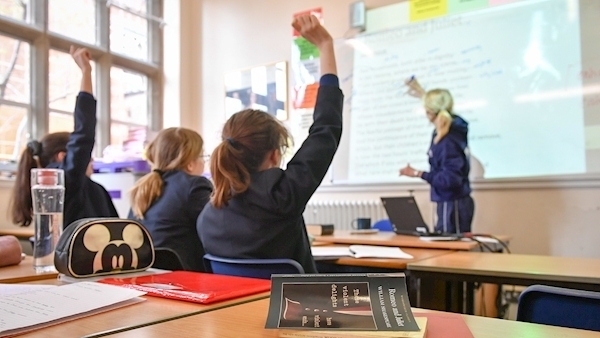
Lingering recession-era cutbacks mean that, when a teacher is absent, children with special needs often lose out, writes Michael Clifford.

Government with lessons to learn: special needs education

Lingering recession-era cutbacks mean that, when a teacher is absent, children with special needs often lose out, writes Michael Clifford.

You will search long and hard to find a lobby group which will admit that those it represents have it good. After all, the whole purpose of lobbying is to get a better deal. Therefore, any survey undertaken by a lobby group among its members should come with a health warning.


However, even taking such a warning into account, the survey of primary school principals about the provision of special needs education points to a system that is simply not fit for purpose.

The survey by the National Principals Forum (NPF) group shows a school system in which the level of provision in special education is simply not meeting the need. The NPF was set up last year in response to growing frustration among principals at what they regard as the diminution of their roles in an environment of greatly increased workload.

  • Among the most shocking statistics in the survey, to which over one in four principals in the country responded, are:

    Special needs education has been receiving enhanced coverage in the media over the last year, particularly in relation to the provision of places. Most of that coverage has been from the perspective of parents who endure constant struggles and battles to get a proper education for their children. The Inclusion Illusion offers some perspective from the point of view of those running the schools.

    The finding that three-quarters of principals regularly used a special education teacher to cover absences is a shocking indictment. This is directly attributable to cutbacks in the provisions for substitute teachers made during the recession.

    So now it would appear that in the instance of an unexpected absence — which occurs in all workplaces — the first casualty is the provision of special education. The children most in need in this respect are those whose needs are sacrificed first.

    If, as appears to be the case, principals have no choice in this matter, it falls back on the department to address it in a structured manner. In terms of the provision of places, the finding that the overwhelming majority of principals don’t want a special class forced on their school raises all sorts of questions.

    Why would a special class have to be forced on a school? Is there a fear that if such a class were initiated, it would impinge on the mainstream education? Is there a fear that a special class would not receive the resources required for it to function properly?

    The other matter receiving coverage in recent months was that of children with special or additional needs being put on shortened days. Last month, a report carried out by Technological University Dublin found that one in three pupils with autism were being placed on shorter school days.

    The report suggested that this was a form of “behaviour management” by schools. Quite obviously from the survey, principals feel this coverage reflected poorly on them in an unfair manner. What emerges from the survey is that principals are adamant that they do not have sufficient supports for special education, forcing them to resort to an ad hoc shortened day policy.

    All of these issues within special education point to a system in which principals are constantly firefighting. Every time the provision of special education comes up, the stock response from Government is to trot out figures that illustrate how there are so many more places — and resources — available today than was the case in 2011.

    Yet the NPF survey points to a belief among principals that they have fewer resources today than seven years ago.

    The reality is that more money is being put towards the sector today, but only because it was starting from such a low base. It is also the case that those entitled to special education today would not have been back in the days when the whole area was treated as something to be swept under the carpet.

    If the principals’ perceptions and opinions are correct, then the level of resources required is simply not being met. That would be a scandal, and one that simply will not be contained behind closed doors for too much longer.

    More in this section

    Revoiced

    Newsletter

    Sign up to the best reads of the week from irishexaminer.com selected just for you.

    Cookie Policy Privacy Policy Brand Safety FAQ Help Contact Us Terms and Conditions

    © Examiner Echo Group Limited