Charlie Flanagan: Welcome new citizens to our Irish family
The narrative of ‘them’ and ‘us’ is offensive to our history as a nation of emigrants, writes
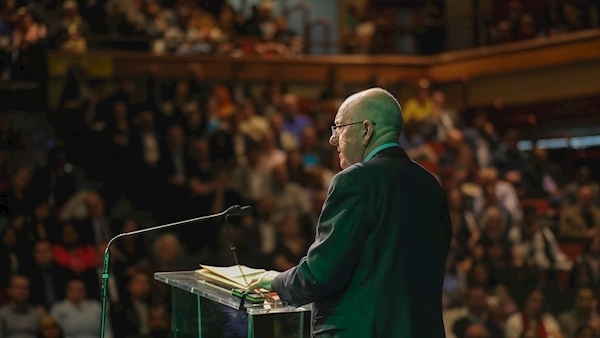
Attending a citizenship ceremony is Killarney is always a privilege, always a truly wonderful occasion.
But today, it will be extra special. Because, for much of the second half of this year, neither I, nor my officials, nor the 2,000 people who will this morning join our community of Irish citizens, knew whether or not they would actually get the opportunity to do so in 2019.
For all of us, but especially for those looking forward to declaring their loyalty to our State, the last few months, as we awaited the judgment from the Court of Appeal, have been stressful. But within my department there was an absolute determination that should the judgment allow it, ceremonies would follow as quickly as possible. And so here we are.
Today, people from over 100 countries, who have spent time learning what it means to be an Irish citizen, will take that oath of fidelity to our nation and loyalty to our State. It is an important day in their lives and an important one too for Ireland, as the nation bestowing the honour.
And Irish citizenship is an honour. It bestows constitutional rights, protections, and guarantees.
All Irish citizens are entitled to equality before the law, freedom to travel, freedom of expression and religious liberty. We can vote in local, national and European elections. And we are not only citizens of Ireland, but of the European Union too.
I think a renewed appreciation of the privilege of European membership is one of the few bright spots which have come to the fore through the mire of the Brexit discourse.
We have all, I think, developed a fresh sense of joy at the simple benefit of unfettered access. Our gratitude for the ease with which our young people seize the opportunity to travel, live, and work in any EU country is renewed.

And of course, we don’t just travel to Europe. As Irish citizens we have, for centuries, spread out across the world, taking our bodhrán, sliotar, and Sean-nós with us. We are used to being the immigrant expecting a welcome. We settle abroad, expecting to keep our culture alive through storytelling, music, sport, and openness.
Now, however, we are, more and more often, the host nation. We are welcoming new arrivals to our shores, new citizens to our Irish family.
Today I want to say to each and every one of them: ‘You are welcome, you are Irish, and you are also a person who comes with the richness of another culture which we look forward to sharing.”
It is important that our new citizens become vital and active members of their communities. We need to encourage them to share their experiences, skills, customs, and culture to enrich the fabric of ours. This is how we can ensure that we are a truly enriched and integrated republic.
In recent months, an ugly narrative has emerged. One that talks about ‘them’ and ‘us’. That is offensive to our history as a nation of emigrants and to our sense of community with our diaspora living in every country across the globe.
Racism and racial discrimination have no place in Irish life and will not be tolerated. I have recently established a new anti-racism committee with a mandate to review current evidence and practice and make recommendations to Government on how best to strengthen our approach to tackling racism.
Professor Caroline Fennell will chair the independent committee, which will convene for the first time early in the new year. The committee will produce its first report to Government within three months and I look forward to receiving it.
In parallel, we are also running a public consultation on hate speech and taking steps to modernise our legislation around hate crime.
The people who are receiving their citizenship today will have the same opportunities as you and I.
One day they, or a child or grandchild of theirs, could be a government minister, a judge, or follow in the footsteps of our Taoiseach, Leo Varadkar — the son of an immigrant father.
All of this future potential derives from them becoming a citizen of our country today.
Let’s make sure that they know they are equal citizens, valued and appreciated for who they are and for all that they can contribute to our country, our culture, our Irishness.
CONNECT WITH US TODAY



Be the first to know the latest news and updates