Margaret Hickey: Our constitution more than a system of prohibitions and controls. It is a statement of our values
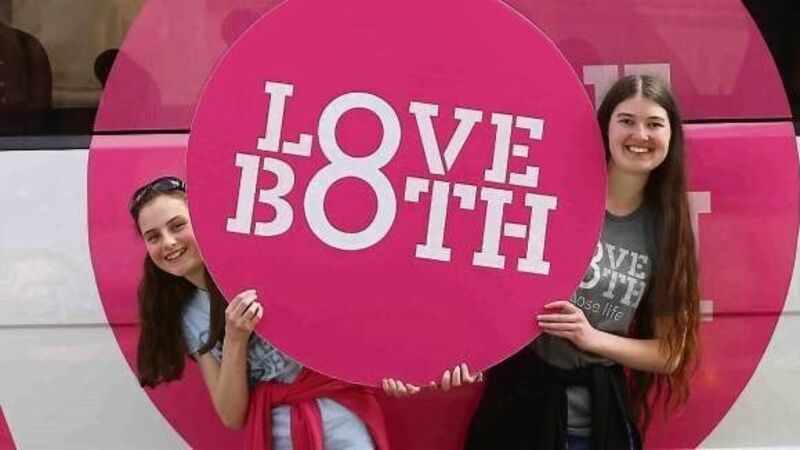
Vote No: Because I believe the right to life is the most fundamental right of all, I will be unreservedly voting no, writes .
On Friday, we will be faced with a straightforward question, demanding yes or no.
A stark binary choice that for many fails to reflect the complexities, contradictions, and dilemmas thrown up by a long and rather confusing debate.
This is not a referendum “on the regulation of termination of pregnancy” as official Ireland claims, though that is its remote purpose. It is a proposal to retain or repeal the Eighth Amendment which protects the life of the unborn with due regard to the equal right to life of the mother.
If the yes campaign is successful and the Eighth is repealed, the new Article will allow the government of the day to determine what, if any, protection is due to unborn babies.
A lot has been said about the need to trust our elected representatives by yes campaigners but really this is not an issue. I fully trust them to make good their promise to allow abortion on demand up to 12 weeks, with some regulatory fig leaves, and up to viability for reasons of ‘risk’ of serious harm to the physical or mental health of the mother.
For babies with fatal abnormalities, terminations will be lawful up to birth. GPs and other health professionals will be co-opted into a further pretence that re-brands abortion as healthcare and living human beings as pregnancy tissue.
As a woman opposed to abortion — a medical procedure intended to end the life of the fetus — (Proposed Bill to Regulate Termination of Pregnancy), I need to be entirely satisfied that pregnant women will not be denied necessary treatment in life threatening situations.
I have heard obstetricians, campaigning for a yes vote, claim “numerous” women have died as a result of the Eighth Amendment. This is untrue. The most recent Maternal Deaths Enquiry did not attribute a single death to the Eighth Amendment.
Indeed, we might well assume, if such deaths had occurred, we would have the statistics in our heads by now. Instead we get the same two or three names of women who died in pregnancy because their care was compromised.
Savita Halappanavar is the best known and her tragic death has been exploited to fuel the repeal campaign without scruple. Three inquires into her death concluded she died from mismanagement of acute sepsis.
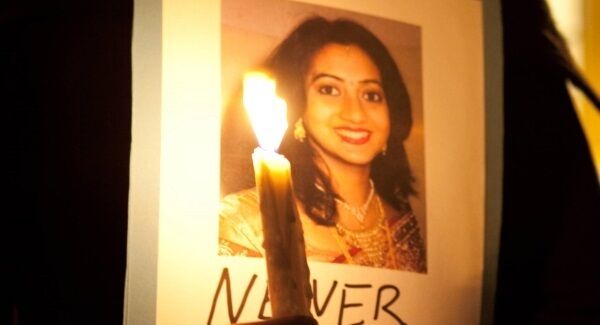
Nine members of staff involved in her care were disciplined as a result. Yes, the Eighth Amendment was cited as a contributory cause in the HSE inquiry, but it is more accurate to say that it was the mis-interpretation of the amendment that was the issue.
Since the Eighth was passed in 1983, obstetricians have been making the appropriate intervention in cases like Savita’s, which is evacuation of the uterus. This unavoidably means termination of the life of the fetus unless viability has been reached.
The fact Ireland is ranked ahead of both the US and UK, by the WHO, for its care of pregnant women is testimony to the way the Eighth Amendment protects both mothers and babies.
Rhona Mahony, an obstetrician campaigning for a yes vote, has repeatedly said women need to be “dying” before a termination can be performed because of the Eighth Amendment. This is untrue.
According to Medical Council guidelines, “abortion is permissible where there is a real and substantial risk to the life of the woman”.
This risk, while substantial, may not be immediate or inevitable in all cases. If she thinks this is not specific enough to give her legal protection, she is likely to have the same problem with the proposed legislation, which will allow abortion before viability where there is ‘risk of serious harm to the health (physical or mental) of the woman. It does not quantify risk.
I have a huge issue with the way hard cases are exploited and spun to justify abortion on demand up to 12 weeks or up to viability on vague grounds, such as exists in Britain.
I can understand someone arguing for termination based on health grounds. But why should that carry the further intention to end the life of the fetus as the outlined legislation proposes? Is it because, despite the emphases on hard cases, the repeal campaign is really just about choice? Abortion until viability raises another serious question for me.
How can viability be a settled thing? Does a baby not have to be born alive to ascertain whether or not they are viable? Can we presume that babies on the cusp of viability will be killed in utero before they are delivered because they have not reached an arbitrary gestation point? It is my belief that they will.
Perhaps the hardest of hard cases centres on the pregnant 14-year-old rape or incest victim, the line of final attack against no campaigners, in most debates.
It is surely one measure of media bias that presenters failed to see this as an equally challenging question for the yes campaign. The fact is that very often such victims do not emerge until quite an advanced stage of pregnancy.
So the challenge to care with special tenderness for these victims and their babies can equally be one for those who support the legislation that will be enacted if the Eighth Amendment is repealed.
Of course, I accept that keeping the Eighth Amendment will not stop women from seeking and procuring abortions. But our laws and Constitution are more than a system of prohibitions and controls. They are primarily a statement of our values.
The smoking ban is just one instance of how effectively the law can shape attitude and behaviour for the better, however imperfectly. The value of values of any civilized society has to be the way it treats and respects human life.
We can see from around the world how discriminatory treatment of the unborn is linked with further discriminatory targeting, based on disability and gender, discrimination which our society considers reprehensible in all other contexts.
The Article of our Constitution we are being asked to repeal comes under fundamental rights.
Because I believe the right to life is the most fundamental right of all, I will be unreservedly voting no.


CONNECT WITH US TODAY



Be the first to know the latest news and updates