Donncha O’Callaghan: Congo shows us what it takes to beat a virus
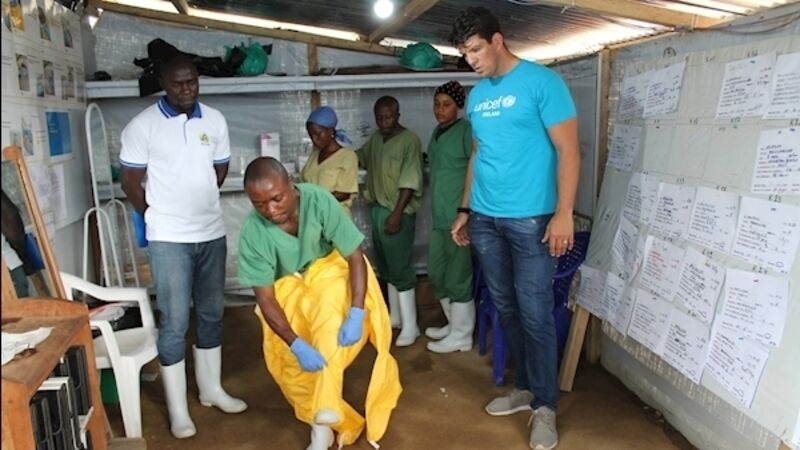
It was one year ago that Ebola in the DRC was at its height. We can learn lessons from how it tackled the outbreak, writes former Munster and Ireland rugby star .
Nearly two years ago a deadly ebola outbreak hit the Democratic Republic of Congo (DRC). An official announcement is expected in the coming days to declare the terrifying outbreak — which claimed more than 2,000 lives and infected 975 children — finally over.
In the midst of the Covid-19 pandemic, this is an achievement we should celebrate. And it provides us with an opportunity to reflect on the lessons learned, and how they can help us now in our common battle against the coronavirus.
In June 2019, at the near height of the crisis, I visited the DRC with Unicef. As a proud Unicef ambassador, I have been on several overseas trips visiting humanitarian emergencies around the world. But nothing prepared me for what I saw in the DRC.
This was the second-largest Ebola outbreak in history. A third of people infected were children. Just after we landed, we heard of the first case in neighbouring Uganda. Health workers were seeing a near-70% fatality rate, and there was real concern how far it could spread.
But it didn’t spread. Almost from that day, the virus was sent in retreat.
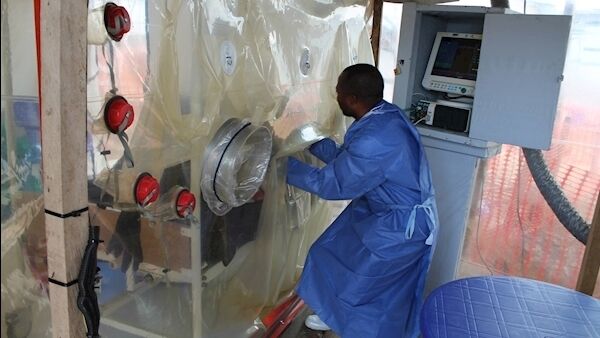
A united force of local DRC health workers and international teams, from the likes of Unicef and the World Health Organisation, fought it back. They were relentless — in some of the most difficult conditions you can imagine.
It was incredibly inspiring to witness. And as we all face a new deadly disease, I wanted to share some of the lessons that have stayed with me.
Accurate information is key
Sadly, we’ve all seen how misinformation can be deadly when an outbreak strikes. As with Covid-19, all sorts of rumours and ‘fake news’ were spread about Ebola in the DRC.
Ebola spreads through bodily fluids and primarily through person to person contact. Thankfully, it’s not as infectious as Covid-19. But like Covid-19, Ebola was unknown to the communities it struck. And the unknown breeds fear and speculation. That’s why local authorities, Unicef, and other partners, worked tirelessly to provide accurate and credible information.
Spreading the word far and wide
Getting the word out and helping people understand what they’re fighting, and how they can protect themselves, is key to containing and beating back a virus. Knowledge is power is more, as they say. And in an outbreak, you need to spread the word fast. And do it at a vast scale.
In the DRC, Unicef worked with local leaders and influencers. They held information sessions in schools, workplaces, churches, and homes. They fought back against misinformation online. Information had to reach every group in society — if the virus was to have nowhere to hide. The numbers involved are staggering. Unicef alone reached more than 35m people with information about Ebola in the DRC.
Being there for every child
Tragically, the Ebola outbreak in the DRC saw more cases among children than any previous outbreak. Almost one in three cases were a child. As you can imagine, Ebola is terrifying for adults, but it’s even more so for children.
If not infected themselves, children in the DRC witnessed the death and suffering of loved ones, or spent weeks in isolation because they were part of the contact chain.
As we all know now, social isolation is a very tough experience for anyone — but for a child separated from their family, it be deeply traumatising.
That’s why Unicef supported a specialised creche beside the Ebola treatment centres.
I visited one myself and saw how Ebola survivors — now immune from the virus — gave the children all the love and attention they so badly needed until they got the all-clear to go home with their families.
Leave no family behind
Every day, we hear a new barrage of numbers related to Covid-19. To me, it’s so important we remember every case is somebody’s child. Each new figure is a son or a daughter. Not a statistic.
Each death leaves a family mourning and scared about what will happen next.
The same is of course true about Ebola in the DRC. Due to misinformation and rumour, many Ebola survivors faced stigma and discrimination when they returned to their homes. This can have a huge impact on them and their families — socially, psychologically, and economically.
In response, Unicef rolled out an innovative programme of support teams who provide follow-up and psychological care to more than 22,000 families affected by the disease.
Power of listening and community
I think we’ve all been blown away by how people in Ireland have come together in the last few weeks.
In times of need, we’ve truly shown our best selves. We’ve stayed home. We’ve made huge sacrifices — to fight a danger we cannot see. And we’ve done this for others. People who we do not know. And who we will not meet.
Visiting the DRC, I saw the same commitment and solidarity. I saw just how important community action is.
To beat Ebola, communities in the DRC worked together with government and organisations, like Unicef, to change attitudes and find new ways to do things.
By listening to each other and sharing ideas, health experts could better understand cultural norms and perceptions, and communities could learn how to adapt and tackle this new virus together.
Being grateful, realising we can do it
As I reflect on witnessing Ebola in the DRC, during these uncertain and deeply worrying times, perhaps the biggest lessons I’m left with are just how lucky we still are, and that we too can find a way to defeat our deadly virus.
The epicentre of the outbreak was in the eastern province of North Kivu. This area is volatile, with more than 25 competing armed groups in almost constant conflict.
Unicef teams, as well as government and NGO health workers, came under attack on several occasions — forcing them to suspend or drastically cut back their response.
You almost couldn’t imagine a more difficult environment for the DRC to fight a disease like Ebola. Conflict, instability, malnutrition, and now disease threatened the people of the DRC. You could almost forgive them for giving up.
But as we’re seeing now around the world, people are resilient. In the DRC, they found new ways to fight back.
They neutralised misinformation with knowledge. They altered old traditions and customs, and they found solidarity when it mattered most. In all of this, they’ve shown us the way.
Stay well and stay safe.
CONNECT WITH US TODAY



Be the first to know the latest news and updates