Analysis: Garda commissioner appointment ‘like Man City signing the Man Utd manager’
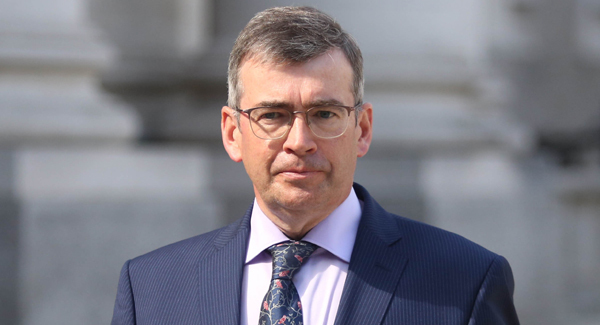
Two conundrums have emerged with the appointment of PSNI police chief Drew Harris as the next garda commissioner.
In the two months or so before the deputy chief constable takes over, one of those issues may be clarified somewhat; the other won’t be clear for some time.
HAND-PICKED TEAM
It has been long been suggested that the new commissioner, if from outside the force, would have to bring in their own team — particularly to reform a sprawling and ponderous beast and tackle the ingrained Garda culture of defensiveness, secrecy and suspicion of the outside.
The chairwoman of the Policing Commission, Kathleen O’Toole, a seasoned US police chief and former boss of the Garda Inspectorate, has been the most high-profile figure to say the new commissioner would need to bring their own people.
In her open letter to Justice Minister Charlie Flanagan in September 2017, she said the new commissioner “will undoubtedly need latitude to select a new command team”.
She later said civilian experts should make up a “good portion” of the new management team, which should have policing skills and business acumen.
At the announcement of Mr Harris’ appointment on Tuesday, Taoiseach Leo Varadkar said the question of him bringing his own management team is an issue that could be discussed with the Department of Justice and the Policing Authority.
But how this could be done is not clear given that all senior Garda vacancies have to be filled, as laid out in legislation, through open and highly-regulated competitions run by the Policing Authority.
It is thought the Policing Commission has an understanding that the Government would bring in provisions to allow the next commissioner to bring in his own team. If it involves an amendment to legislation, that would take time and might draw some criticism.
There are currently 19 people on the Garda senior management team (but 24 if all vacancies are filled) — 10 gardaí and nine civilians, meaning it is currently nearly 50/50.
Acting commissioner Dónall Ó Cualáin is also deputy commissioner governance and strategy, meaning that post will need to be filled on his retirement in September.
That will have to be done through the normal Policing Authority procedure, though in ranks of deputy and above the authority does not appoint itself but nominates a name to the Government.
Maybe there is possible wriggle room there to allow a Harris candidate to take it, though how that could happen is not clear.
How Mr Harris would effect change at assistant commissioner level is more doubtful. Six of the existing eight assistant commissioners were promoted through a Policing Authority competition, so it is difficult to see how, and on what basis, they could be encouraged, or otherwise, to leave.
Further complicating the picture were comments made on Wednesday by the justice minister, when he said that there may be an opportunity for the new commissioner to bring with him a “very small number of support staff”, but that Mr Harris would work with “Garda management, as a team”.
That sounds a lot different than his own management team. So, what is going to happen is altogether unclear as it stands.
STATE SECRETS
This is a fascinating aspect of the appointment of Mr Harris and one that will take some time to be resolved.
He joined the old RUC 34 years ago, following his father, who was blown up by the IRA in 1989.
He climbed his way to Assistant Chief Constable of Crime Operations Department — which includes both overt and covert units tackling organised and serious crime as well as intelligence and counter-terrorism operations. During that time he was the liaison officer for MI5, the lead agency in the North on security matters.
In 2012, he put late evidence into the Smithwick Tribunal, set up to examine claims of collusion by a garda in the IRA murders of two RUC officers in 1989, that there was an unknown informant involved.
Security sources told the Irish Examiner this late intervention “aggravated and annoyed” Garda security services, who said no evidence was produced to back up that claim (although the tribunal did find there had been collusion somewhere).
Before his appointment, senior sources here believed a foreign national could not be commissioner, given he or she would be security chief.
They said that if a British police officer was appointed there would be doubts over where loyalties might lie. Scenarios were given of information regarding a threat to Britain, that gardaí might want to handle sensitively in relation to the source of it, with doubts as to how that would pan out if a British national was commissioner.
After the appointment of Mr Harris, the Government said he has applied for an Irish passport.
Sources said that officers in Garda Security & Intelligence and related units will be “feeling their way” with the new regime. But one source was clear: “He is commissioner and head of security, unless that changes [referring to the Policing Commission report]. He will be briefed fully when he takes up, I can’t see any other way. He is head of security and, in turn, has to brief the Government. He can’t be half briefed or quarter briefed. He is the boss.”
Sources said when Mr Harris was AC for Crime Operations he worked “very closely” with Garda Security & Intelligence: “He was well regarded, though there were mixed views,” said one source.
“There will be differences, different priorities and views.”
One source said that gardaí gave him the level of information that they needed to “and no more” — adding “that’s the difference” now.
The source said Mr Harris would have worked “very closely with MI5” and added: “There may be questions, but you have to trust and depend on his integrity.”
Sources also emphasised that given his experience, Mr Harris is “well-informed and clued-in from a terrorist perspective”, but may not have the knowledge of organised crime here.
A source said Mr Harris was “very supportive” to the gardaí in their investigations into the murder of Det Garda Adrian Donohoe in January 2014 in terms of conducting “cross-border inquiries”.
How Mr Harris will deal with any moves in relation to Irish efforts to access British files on the Dublin-Monaghan bombing is hard to know, but sources said “if he has information, he can’t hold on to it”.
Putting some levity into the issue, but tellingly nonetheless, one security source said:
“It’s like the manager of Manchester United being signed up by Man City.”
CONNECT WITH US TODAY



Be the first to know the latest news and updates