The Big Interview: Rally legend Rosemary Smith on a life of thrills and spills on and off road
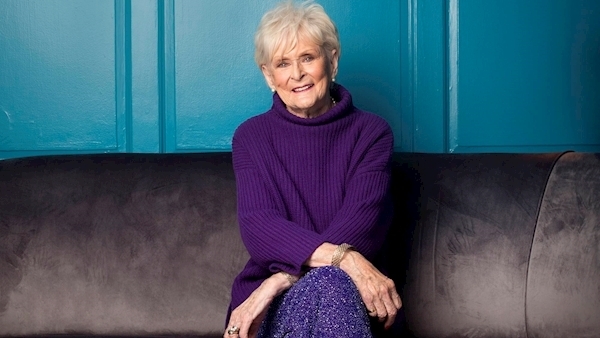
A living legend of Irish and world motorsport, Rosemary Smith enjoyed huge success as a public figure but endured a series of devastating blows in her private life. Having just published her autobiography, at the age of 81, she recalls how she came through it all and is now the happiest she has ever been.
YOU are 13 years old and home alone with your mother when, with her hands wet from doing the dishes, she goes to unplug the electric fire and is promptly knocked unconscious by the shock. What do you do?
“It never dawned on me to use the phone,” says Rosemary Smith, still shaking her head at the memory of her panicked response on that traumatic childhood day in the family home in Rathfarnham nearly 70 years ago.
“My only thought was to get her out, get her into the car and get her down to the doctor. The car had to be reversed out down the driveway. I’d driven forward before but reverse was a different matter. So out I went, hitting the wall on both sides, then into first gear and down the road, thinking my mother was dead. Got to Dr Donald’s, which was only a short distance away, up his gravel driveway, and into his house. And when he saw that I’d driven her there, he nearly collapsed. Anyway, she was resuscitated and she was fine. And it was only then that I decided it would be better to run home and phone my dad.”
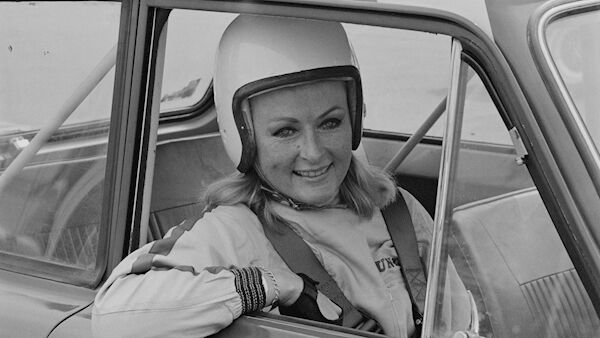
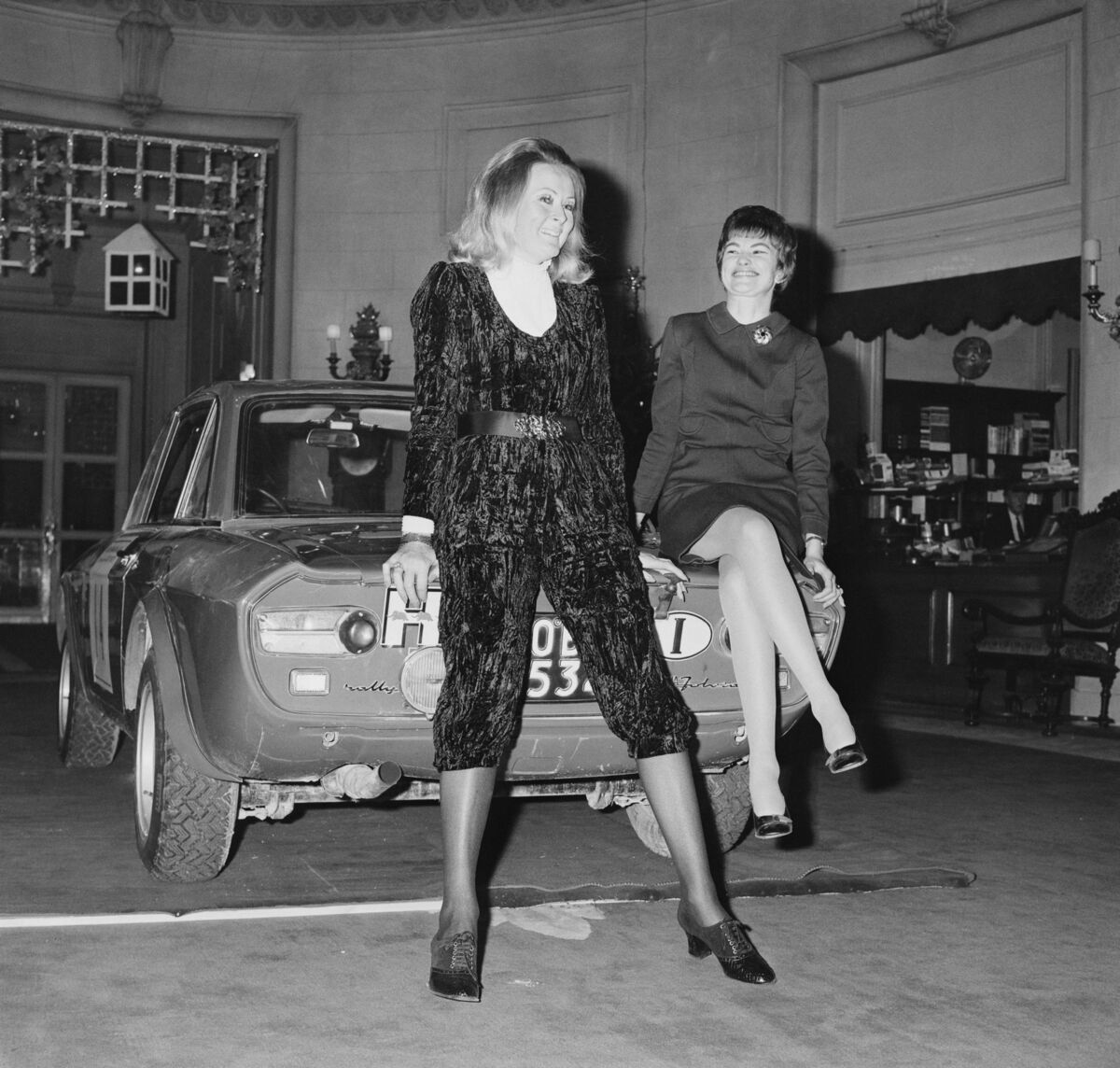
Rosemarie pauses before drily adding, “I didn’t drive for a while after that.” Once she did get back behind the wheel, there would be — almost literally — no stopping Rosemary Smith. The young girl who’d first been taught to drive at age 11 by her beloved, garage-owing father went on to become a household name in Ireland as well as internationally renowned for her achievements in the world of motorsport, including as a serial winner of the Coupe des Dames prize in Monte Carlo, beating all-comers in the European Tulip Rally in 1965 and competing in such gruelling and iconic events as the London to Sydney Marathon Rally in 1968, the World Cup London to Mexico Rally in 1970 and the East African Safari Rally in Kenya in 1974.
In his introduction to Rosemary’s newly published autobiography, Driven (Harper Collins), Eddie Jordan puts her stellar achievements in the 60s and 70s into context. “Motorsport was uber cool and Rosemary was the queen of it,” he writes. “She was an Irish superstar, a Dusty Springfield lookalike who was incredibly talented behind the wheel.” For Rosemary, who still cuts a strikingly glamorous figure at the age of 81, there was, she reveals, an entirely practical benefit to making sure she always looked the part behind the wheel, especially when engaged in one of those exhausting marathon rallies.
“The eye-lashes were always stuck on because when the eyes started to close, I’d see the lashes coming down and I’d wake up again,” she says. “People thought I was just being a dolly bird. No. It had a very practical use. But, anyway, I always felt just because you drove a car, you didn’t have to look like a man. A lot of the other girls would have no make-up, no nail polish, no nothing. That’s not who I am. Having modelled and been a dress designer before I got into rallying, it was second nature to me.”
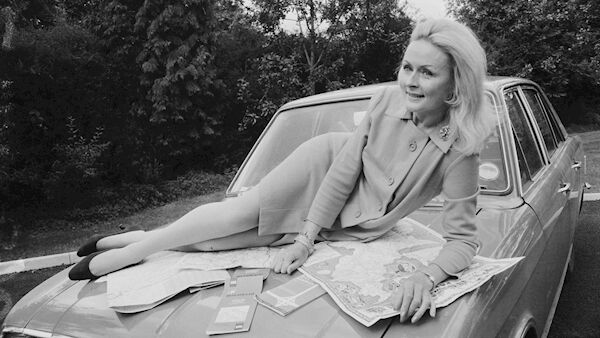
But of much greater significance to the success she’d enjoy in her career was, allied to natural driving ability, a formidable will to win or, if winning wasn’t possible, a defiant refusal to quit. And, serving only to intensify that indomitable spirit was the added incentive of always having to prove she could hold her own in a male-dominated sport.
“Oh, yes,” she says. “It was about proving a point. Not just to everyone else but to myself as well. That I can do this. What really annoyed me is that a lot of people had this, ‘ah sure, she’s only a bird’ attitude. ‘We’ve had the photographs taken, she can give up now’. And they should have taken me seriously because I never gave up. No matter what happened. When the wheel would come flying off on the side of a mountain, I’d go down and get it and some farmer with his blow torch would help me put it back on. You can’t give up.”
The first half of Driven is packed bumper to bumper with hair-raising accounts of her experiences on the international rallying circuit. Take the Monte Carlo Rally in 1963 when, after driving on snow and ice for a few days and nights with minimal rest, a fatigued Rosemary lost her bearings on a mountain hairpin bend in thick fog at 3am.
“I just literally drove off the road,” she says. “There’s a dead silence when you do that. And then: bumpety bump. Bump. Bump. The car going over and over and over. This was in the Alps so it was a big drop and I was just lucky there were a lot of trees that stopped us. I clambered back up and tried to flag a few cars down but they wouldn’t stop.” And just when you think she’s about to bewail the callousness of human nature, she adds matter of factly: “And I didn’t blame them. Because they were on a rally and, when you’re on a rally, you’re going out to win. When everybody else is doing it, you’re not going to give up. That’s the whole point.” Happily, Rosemary lived to tell that tale — as did, after further misadventures, her co-driver who’d been flung from the car into the snow — as well as the many other stories which make reading Driven such an eye-popping adventure in its own right.
Like the time she found herself driving backwards over the Khyber Pass.
“The pistons had burned out,” she explains. “I got up half a mile and it wouldn’t go any further. So I free-wheeled back down and put the car into reverse. Someone said, ‘what do you think you’re doing?’ I said, ‘I’m getting over this bloody mountain’. And that’s what I did. I reversed over it. For 53 miles.” As you do.
“In rallying, you learned to expect the unexpected,” she observes. “People say, ‘oh, your reactions wouldn’t be so good now’ — she points to cutlery on the table between us — “but drop one of those on the floor and I’ll catch it before it gets there. I think you have to have that as a natural ability. But if you’re interested in going into rallying or racing, you must also have that thing that you’re going out to win.”
ORIGINALLY, Rosemary Smith wanted to call her Ann Ingle-ghosted book ‘Life’ because, well, that’s what it’s about: the story of one woman’s 81 years on the planet. (So far). But she eventually came around to ‘Driven’ because, the more she reflected on the highs and lows of her life, the more she recognised that the title pretty accurately summed up the determination and resilience she needed to show in the face of adversity off the road as well as on it.
Far more challenging that any of the obstacles she encountered when racing in Ireland, Europe, North America, South America, Australia, and Africa, were a series of devastating blows she would endure in her personal life, including a dysfunctional marriage, a series of miscarriages, another relationship which left her mired in debt and on the brink of homelessness and, still later, the discovery that she would require treatment for heart disease.
Driven unflinchingly documents those traumatic years and how they reached their nadir on a day when, in a state of utter despair, she found herself looking out at the small but deep fish pond in the garden and thinking, as she writes, “that if I went face down in that now, it would all be over in a few minutes.” Recalling that rock bottom moment, she tells me: “It was a bleak, dark time. I have the greatest empathy and sympathy with people now who are losing their houses. I got down to that stage. And it’s why I say everyone who is on their own should have a cat or a dog. I had two dogs and they knew exactly what I was thinking. I had no electricity and I was sitting in the dark, about four o’ clock on a winter’s afternoon. And I just thought, ‘I’ve had enough’.
“Blackie was on one side of me and she put her nose on my knee and looked at me with these big dark eyes. And Zak, who was a beautiful Alsation, put a paw up on me and he looked at me with big sad eyes. And I thought, those dogs know that I’m really at my lowest ebb. And I thought, I just can’t leave them. So they were the ones that jolted me out of this, I suppose, self-pity.” And so, not without difficulty, she found her feet again. Home is now a rented terraced house in Sandyford with a big green and trees in front, the mountains behind and “wonderful neighbours”. And, with the publication of Driven she finds herself firmly back in the public eye, with her calendar full.
And it’s frankly lovely to hear the conviction in her voice when she smiles and says: “I’m happier now than I’ve ever been in all my life. There’s always something going on. My ex-husband when he left used to say, ‘you’ll become an embittered, lonely, old lady’. I am not.”
Quite so. Two years ago in France, at the invitation of Renault — for whom she is an ambassador — she became the oldest person ever to drive a Formula 1 car. “When they asked me, I didn’t even stop to think,” she laughs. “Yeah, why not?” And even at 79 she felt she had a point to prove to sceptical men. Or, rather, one man in particular. A few years earlier she’d appeared in a show at Earls Court with Jeremy Clarkson and took an instant dislike to the former Top Gear presenter who, she says, seemed to make a point of ignoring her. “He was just so big headed, egotistical, strutting around.” So, the knowledge that Clarkson had struggled in his own attempt to drive a Formula 1 car was very much in the forefront of her mind as, tracked by film cameras for a documentary, she readied herself to hit the track in Marseille in 2017.
“Jeremy Clarkson had just stalled it and stalled it before he got it going so if anything was an incentive not to stall it, that was it,” she says. “And I didn’t. But I did go very slowly. People say what speed were you going? I say, if you think I was going to take my eyes off the track to see, no.”
Perhaps the only obvious concession to Rosemary’s advancing years is that she plans to bring the curtain down on her eponymous Driving School in Naas.
“I don’t have the time and the energy any more,” she says “It’s going into its 20th year and we have bookings up to the end of school year in May but I will close it down altogether unless someone wants to take it over. Getting up at quarter past six every morning — that’s alright when you’re 40, 50 or 60, not when you’re 81. That doesn’t work. I just couldn’t do it. And I would prefer instead of it dwindling off or being run in a half-hearted way, to say, I’m retiring, end of story.” Except, of course, that won’t be the end of her story.
“Oh, I’ll do my knitting and I’ll feed my cat,” she replies with mock sarcasm, when asked how she’ll fill the time. “No, I won’t. Definitely not. I’ll still do private lessons so I can pick my own time. But I’ll keep busy. The rent has to be paid month by month.” Any unfulfilled ambitions?
“I’ve warned Renault that I’m not going to climb the Alps in my skin,” she chuckles. “And I’m not going to jump out of an aeroplane without a parachute. But if they think up some other nice things, I’ll do them.” And how would she like to be remembered? For perhaps the only time in our hour-long conversation, she takes a long pause before answering.
“I’d like to be remembered just for trying to be a nice person, who tries to help people if I can. That’s all. When I was younger I was so shy. I literally couldn’t talk to people and so they thought I was very stand-offish. No, I wasn’t. But it’s only in the last number of years that I can go anywhere and meet anyone. Nowadays, I’ll often go into one of the local pubs on my own and just get talking to people — they even have ‘Rosie’s glass’ in one of them.” We should all raise one to her.

CONNECT WITH US TODAY



Be the first to know the latest news and updates