Commission explains Anelka ban
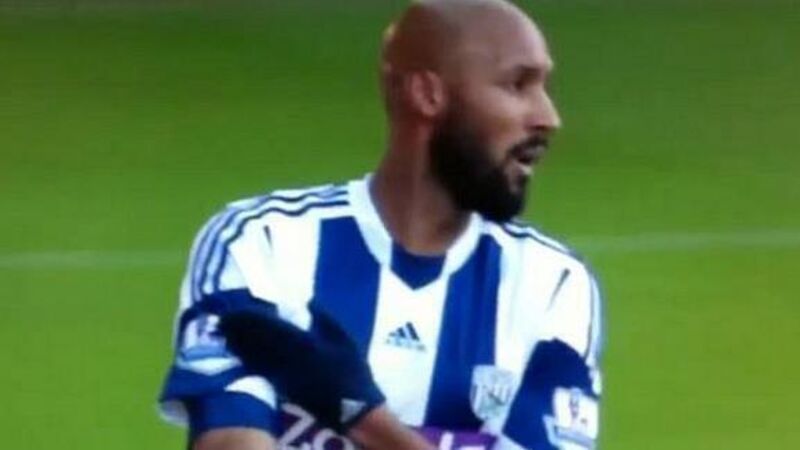
Nicolas Anelka’s ’quenelle’ gesture did contain “a reference to anti-Semitism” but was viewed as less serious than Luis Suarez’s racist abuse, according to the independent regulatory commission that imposed a five-match ban on the French striker.
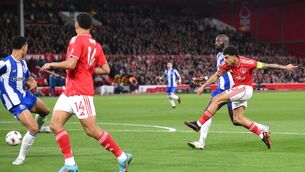
The commission’s written reasons state the three-man panel was not satisfied that Anelka intended to “express or promote anti-Semitism by his use of the quenelle” when he made the salute as a goal celebration against West Ham on December 28.
The reasons also reveal that the Football Association had argued for a more severe sanction than the minimum five-match ban for the West Brom player.
The commission compared the case with Suarez’s eight-match ban for racially abusing Patrice Evra, and pointed out the Liverpool striker did so on at least five occasions while Anelka’s was a one-off action.
John Terry’s four-match ban for racially abusing Anton Ferdinand was also studied by the commission.
The commission added: “[Suarez’s] eight-match suspension was imposed for conduct with five identified aggravating factors including the repeated use of the word ”negro“ or ”negros“. In our view that was clearly a more serious example of an ’Aggravated Breach’ than the [Anelka] instant case.
“Similarly, when Terry was decided there was no mandatory entry point. He was suspended for four matches for insulting (once) an opponent.”
Anelka and the FA have seven days in which to appeal but it is expected neither party will do so.
The commission said Anelka’s quenelle “did contain a reference to anti-Semitism” in that it is strongly associated with his friend, the French comedian Dieudonne M’bala M’bala, who has been convicted seven times of anti-Semitic crimes.
Anelka said himself he made the quenelle as a gesture of solidarity with Dieudonne but denied he knew it had any anti-Semitic connotations.
The 34-year-old did admit, however, attending a Dieudonne performance in Paris that contained “grotesquely anti-Semitic” material.
The commission were also told of photographs of Dieudonne supporters using the quenelle at locations with “strong Jewish connections, for example Auschwitz, the Wailing Wall, Holocaust and deportation memorials in Paris and a Jewish school in Toulouse where, in 2012, a Rabbi and three Jewish children were shot dead”.
In his defence, Anelka had said some of Dieudonne’s humour was “lost in translation” and that he did not accept he was anti-Semitic. Anelka added that he knew nothing of “Jewish stories” and denied knowing that the quenelle was an anti-Semitic gesture.
In deciding on the five-match ban, the commission ruled against the FA’s claim that the minimum sanction should only be given to those who had pleaded guilty, because no such clause is contained in their rules.
“It would have been simple for the FA to state that in the rules if that is what it intended,” says the ruling.


CONNECT WITH US TODAY



Be the first to know the latest news and updates