Real-life lawyer Bryan Stevenson on inspiring Just Mercy
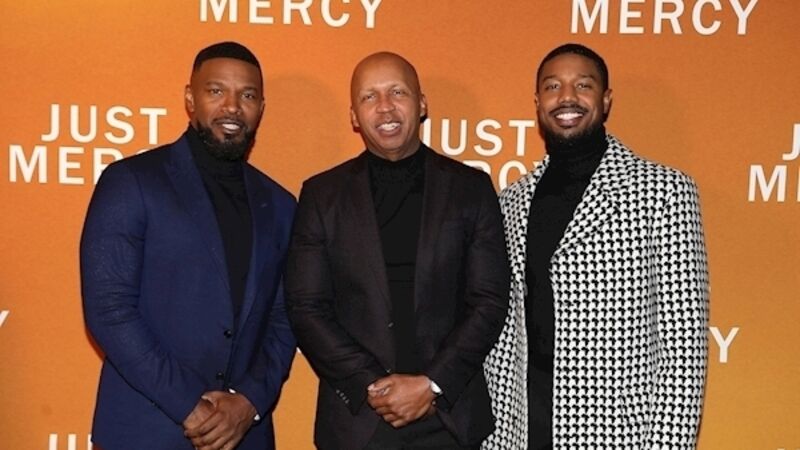
Bryan Stevenson is the American civil rights lawyer who provided the inspiration for the newly-released film Just Mercy. spoke to him in Ireland
Did you have any reservations about bringing your story to the big screen?
“I was apprehensive at first because I've seen books turned into films that didn't really carry the strength of the truth of the book with it. Sometimes there's too much emphasis on entertainment and truth is compromised. But when I met Destin (Daniel Cretton) the director, I'd seen his film Short Term 12, and I 'd been really impressed with it. When Michael B Jordan signed on, we spent time together and we talked. When it was finally put together, I was so proud and really excited to share this film with the world. The humanity and the dignity of my clients is intact. I've always believed that if people saw what I see on a regular basis, they'd want the same things that I want, that people are treated fairly and justly.”
What was it like working with Michael B Jordan, who plays you in the film?
“He's got a big heart. He's a really kind, thoughtful person who wants to treat people with respect. We spent a lot of time together preparing and he does a brilliant job. I've always believed that you have to be tactical and strategic, you can't just shout things and get angry. I felt like he embraced that approach to portraying me.”
Herbert Richardson admits guilt but suffered from post traumatic stress - why was his story important to feature?
“If you've got all of the innocent people off of death row, we'd still have an unjust, unfair system because no one is just a crime. I believe that each of us is more than the worst thing we've ever done. We don't put crimes in prison. We put people in prison. And when you learn who the people are, it complicates the question of punishment. He was a combat veteran and we've done terrible things to combat veterans who've been traumatised, where we celebrate their choice to fight for our freedom and then we turn our backs on them. I wanted people to think beyond just the black and white dichotomy of guilt and innocence and understand the weight that's created when we condemn people who've been wronged.”
The film examines the continuum from slavery to mass incarceration. Why was that important?
“I just don't think we're free in America. I think we're burdened by its history of racial injustice. We've never really acknowledged the damage that was done by enslavement for two and a half centuries. We created an ideology that black people aren't as good as white people, and that narrative persisted after emancipation. We ended involuntary servitude, but we didn't end that ideology. Slavery doesn't end. It just evolves. At the Equal Justice Initiative, we've opened a museum called From Enslavement to Mass Incarceration. It's important to understand history, if we're going to get to the pathway that leads to true freedom.”
The execution storyline in the film is very powerful. Have you experienced such executions in real life?

“I have. It's surreal to see a human being who's not a threat to anybody systematically killed by an all-powerful state to advance the absurd proposition that killing is the way we show that killing is wrong. The execution of Mr Richardson was particularly challenging because when I got to death row that night, he told me that all day long people had been saying: ‘What can I do to help? What do you want for breakfast, for lunch? The guards kept saying, can we get you coffee, water?’ And I never will forget him saying: ‘Bryan it's been so strange. More people have said what can I do to help you in the last 14 hours of my life than they ever did in the first 19 years of my life’. And I was thinking about that while I held his hand. Where were they when you came back from Vietnam, traumatised and injured by your experiences there? That definitely added to the sorrow of seeing this man strapped in an electric chair and killed. But it also deepened my resolve, it made me appreciate why we should never kill people to show that killing is wrong, that we have to reckon more honestly with our commitment to human rights.”
What prompted your move to the Deep South following graduation from Harvard?
“I knew that that was the region where the needs were most acute. It was a bit of a shock. I didn't anticipate how violent and reactionary and resistant people would be just for advocating for fair and just treatment of someone. The bomb threats and the death threats and all of that is not something I expected, but it was something I felt prepared for. My great grandparents were enslaved and they found a way to endure the bondage of enslavement with their hope intact. My grandparents were terrorised by lynchings and they found a way to endure with their hope intact. My parents lived through Jim Crow, segregation and apartheid, and endured with their hope intact. I just felt like it was my obligation to honour their lives by maintaining that hope, by continuing that fight. I stand on the shoulders of people who did so much more with so much less. Dr. King said injustice anywhere is a threat to justice everywhere. And I believe that's true.”
Can you recall your first encounter with Walter McMillian (played by Jamie Foxx in the film)?

“There was this marathon day at the prison when I met person after person and what I remember about him was that he was just so adamant, he got emotional trying to persuade me. And when I got back, I read the transcript. It was immediately clear to me that he'd been wronged. It just made no sense. It was so absurd, the testimony that was provided. When I went back and met his family, this weight was taken off of him. He and I became really close, and when he got out of prison, he remained a close friend until he died. My biggest regret is that he's not here to see this film. I think it would make him so happy to know that people are learning his story.”
What do you mean when you say that the opposite of poverty isn't wealth, it's justice?
“I think that sometimes there are structures and systems that sustain poverty. We've created mechanisms that keep people poor, that disadvantage people, that disfavour people. I believe that you can't just end poverty by throwing money around without any appreciation that much of what we see in the world of people who are impoverished is unjust. We have to deal with the injustice of those who abuse power, those who exploit others, those who are corrupt, those who use fear and anger against certain groups, against certain people. And when we commit to justice, that's when I think we can effectively end poverty.”
“I sometimes think that people believe there is no room for mercy in justice, or that mercy is disconnected from justice.” Why do you believe this?
“When we make mistakes, we all want to be forgiven. We want there to be room to recover. We don't ever want to be judged by the worst thing we've ever done. We have this misguided notion that we should only be compassionate, we should only be forgiving, we should only be merciful to people who persuade us that they deserve it. It's not mercy when we give it to the deserving. It's mercy when we give it to the undeserving, to people who have done things that they shouldn't have done. It's how we affirm our basic humanity.”