Easing the pain in Spain
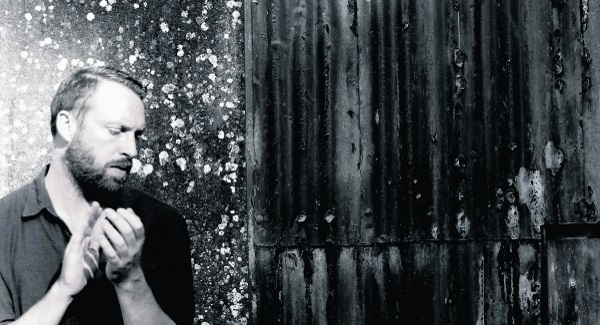
After a bruising encounter with the music industry, Cork soulster Brian Deady retreated to a cave-house in Andalusia to recover and create. The result is a superb new album, writes .
In February 2016, singer Brian Deady performed his gospel-inflected single ‘Clap Both My Hands’ on the Late Late Show. The response was rapturous and seemed to mark the end of a long hard road and signal a new beginning for the native of Skibbereen, Co Cork, who had overcome a traumatic adolescence that had included the break-up of his family and a spell in foster care.
At around the same time he signed to Decca Records in the UK. On the strength of ‘Clap Both My Hands’ doing well on radio in Ireland, executives painted a compelling picture. They believed in Deady and his music — a fascinating mix of old- timey blues and modern r’n’b, topped off with his bruised and nuanced voice. He was, it was intimated, an artist worth supporting for the long haul.
But when ‘Clap Both My Hands’ failed to catch alight in Britain and the follow-up single was perceived as underperforming, everything changed. His label dropped him — a disaster after all he’d endured to come so far. From arriving star to man sitting on a junk-heap of broken dreams, almost overnight everything had come unstuck.
Deady, who’d had it rough as a teenager for the reasons outlined above, had been through worse, however, and refused to give up. He moved to Spain — to a desert in Andalusia — where he recorded his fantastic second album, Black Diamond. It’s been a difficult process — but he feels he has come out the other end stronger, personally and artistically.
“It was a bit of a surprise,” he says of being shown the door.
I thought there was a longer career path in mind. That was at the narrative from the start. Of course, that’s always been the way. There is many an artist who has gone through the same thing. When I look back now, it was definitely for the better. Creatively it’s helped me a lot
He feels there was a “lack of faith” on both sides. He was urged to pursue a more dance-oriented direction by remixing his music. He resisted. Things got tense. He was also sent touring with artists who, though perfectly respectable in their own right, might not have appealed to the same audience, such as Co Kerry group Walking On Cars.
“We had a few conversations — to try to appeal to dance markets. It was more of a marketing strategy — stuff I didn’t agree with. I didn’t like the direction they were taking with certain things. I had the creative control so we did clash in certain ways, the management and I more than the label.”
Brand new music !! '9 cents & 2 Dollars' ...check it out !!!https://t.co/9WcDlPWen1 pic.twitter.com/MDiSaZn6L3
— Brian Deady (@Briandeady) September 8, 2018
The relationship turned truly rocky after it became clear that the success of ‘Clap Both Your Hands’ in Ireland was not necessarily going to be replicated straight away in large overseas territories.
“Because it did so well on radio and it being the flagship song internationally, everyone was hoping for a nice easy clean home run. When that didn’t happen… when the second single didn’t fly, there was no more talk about career, no more talk about this talk about this or that. It was good luck’. That was a shock.”
He sighs and tries to put things in perspective.
“When the shit hit the fan, it was a big mess. I didn’t know where to go. But when I got the rights to my music back, I became really focused. There was a quagmire for a few months where I didn’t know where I was going.”
The mainstream music industry’s loss is Deady’s gain however. Recorded in a “cave house” in northern Andalusia, Black Diamond is even better than its predecessor, Nonfiction. The songs are both catchier and deeper, more emotive (and Nonfiction was plenty emotive, given that it explored Deady’s often difficult relationship with his father).
Best of all, from Deady’s viewpoint, they were written with live performance in mind — which was not the case with his earlier output.
“One of the things I found hard about Nonfiction was taking the record out of the studio and making it work live,” he says.
“I really struggled in that respect. There was a lot a of hit and miss. But that’s one of those experiences you to through and it’s three years ago. I’m ready for the next chapter. ”
How did Deady end up in the province of Andalusia, in one of the region’s famous Hobbit-hole like dwellings cut into the mountainside ?
“I was looking to make a video for one of the songs, ‘Fire in the Woods’. I want to do it in a desert and Spain was recommended. I was staying in a cave house and thought, Jesus, I’ve got to come here and do an album. I imagine I was going to spend three weeks recording. Four months later, I’m just finished. It’s been a very unexpected experience.”
That Deady held it together in difficult circumstances probably isn’t surprising. His world fell apart when he was 15 and his parents separated. He ended up in foster care. Yet he never went off the tracks and instead found solace in music.
It was around this time that he, somewhat improbably given his subsequently musical direction, discovered the Prodigy and took strength from their cathartic sound. Recently on Twitter he observed that five years ago he was on the dole and not feeling confident about his future.
“Whatever has happened in the interim he’s undoubtedly in a better place.
“If you’d told me even six months ago that I’d be out in Spain with an album finished… I’d have been delighted,” he says.
“Life has been full of surprises and changes. I was in bits last year. But a lot of positives have ultimately come out of it. I’m just happy with the position I’m in now.”


CONNECT WITH US TODAY



Be the first to know the latest news and updates