Andrew Scott stars in Irish tale of lust and betrayal
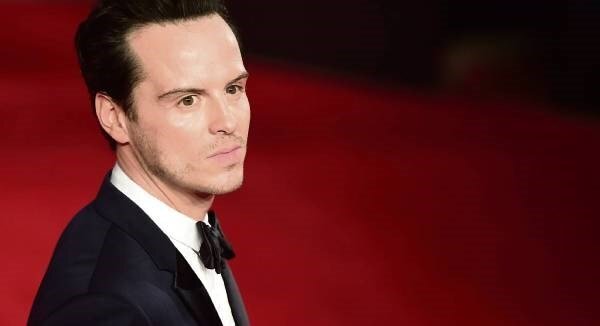
COMPLACENCY, love, lust and lies form the basis of The Delinquent Season, the directorial debut from top Irish playwright and screenwriter Mark O’Rowe.
The man who penned Intermission and Howie the Rookie has assembled a cast including Andrew Scott, Cillian Murphy, Katherine Walker and Eva Birthistle for his intimate tale of a fragile marriage.
Set in suburban Ireland, the movie centres on two young couples whose relationships and friendships are tested when two of them embark on an affair.
For Scott, it offered an opportunity to shine a light on what happens after happy ever after, an idea he says is relatively unexplored in film.
“I think it’s something we don’t talk about,” he tells me. “A lot of the time love and romance in the movies deals with the very early stages of love and what that means — falling in love and not being alone and finding ‘the one’. I think that leads to a sort of culture in our society which means that once you have found ‘the one’ you can sort of relax a little bit.
Complacency in a relationship can be the death of it — you can’t just put it on the shelf like a cactus and watch it
dry up.
Sex education in Ireland is lacking. We talk about the biology of it but we don’t talk about the actual psychology of it, how to maintain a relationship. Fidelity is a question that every person considers in their life, because your sexuality doesn’t get shut down just because you’ve met somebody that you love, and I don’t think that’s talked about.
Almost entirely a four-hander about a secret affair that develops between Murphy’s and Walker’s characters, there are other elements at play which bring even greater implications for the characters and their actions. Part of the draw for him, says Scott, was that it doesn’t always go to expected places.
“What I think is the death to any good film is when the audience knows exactly what going on, and they’re not required to do any work themselves. I think what’s always really dynamic in a film performance is the conflict between what somebody feels and what they present. I think the challenge with this is to have a sense of foreboding, that there’s something slightly unknowable. And also, really importantly, to try not to judge these characters. That this could happen to all of us. There’s a really unhealthy attitude about infidelity, monogamy, betrayal, because sometimes the victim of infidelity isn’t necessarily the victim in the marriage.”
It’s the second major movie (after Handsome Devil) that Scott has filmed at home recently. Despite being based in London for several years, he always keeps an eye out for Irish projects — and intends to spend even more time here in the future.
“It’s really important to me to connect to that part of me. I live between the two places now, I’ve just bought a place in Dublin to spend more time. I’m so excited about that. I think there’s great stories to be told out of Ireland and if they’re new and original I definitely have a bias towards them. Of course you have to choose what the project is, who it is and all that stuff. But I want to do it (work at home) at much as I can.”
There are deeper, more personal reasons that he’s spending more time in his hometown. The actor, who is gay, was in Dublin Castle on the memorable day that marriage equality passed. He felt the joy and jubilation of an Ireland that had changed greatly from the country he grew up in. It meant a great deal to him personally, he explains.
You know what? It can’t really be underestimated. Without looking into it too deeply, since then I’ve worked more in Ireland than I’ve had before. I’ve bought a place in Ireland, and I feel like returning home. That’s what happened. Whether that directly or fully consciously relates to that day, who’s to say?
“My instinct is that it’s in part related to that day, that I feel that this is a place that supports me, and supports other people. I do feel that was definitely one of the happiest days of my life.
“It’s reconnected me to a country that I really recognise and I’m proud of and I want to be a part of its output in whatever way I can.” But he feels that nurturing emerging talent is key to building on what has been a strong period for Irish cinema.
“I don’t think you can make a great film out of a mediocre script and what I’ve noticed is that if you really develop an idea and don’t just bring it to production too soon, really cultivate that voice, the you attract really good filmmakers, actors, all the best people. And then it becomes internationally relevant.
“I think it’s really important that we develop the individual voices. Make stories that are Irish stories but can reverberate around the world. We’re not going to make those by trying to ape what other countries have done.” Career-wise it’s been a remarkable period for Scott, who found his star wattage increase greatly (along with co-star Benedict Cumberbatch) after being cast as the sinister Moriarty in TV’s Sherlock. It led to him playing a Bond baddie and a string of successful movies.
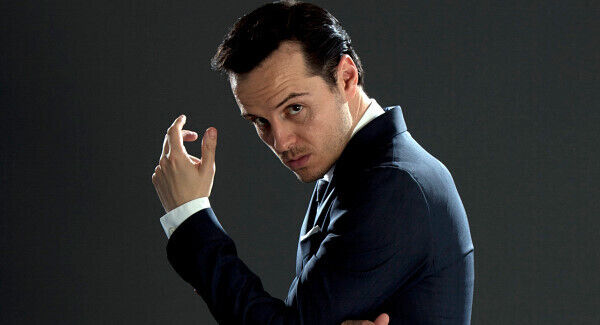
In the past year, he’s enjoyed a widely praised run playing Hamlet on the West End. The production succeeded in drawing a wider audience than your typical Shakespeare adaptation, which pleased him greatly.
“I’m still exhausted after it! We wanted to make a Hamlet for the 21st century. We wanted it to be as conversational as possible. I was completely obsessed with young people feeling it was for them too and not just for academic experts or middle-class people.
“One of the conditions of transferring it to the West End was that the audience would be able to afford it. You can make it as relevant as you like, but if you have to pay 90 quid for a ticket, no 24-year-old is going to come and see it.
“So we had incredibly cheap tickets and that was a risk for the producers but it really paid off. We had something like 98% business. It was an incredible achievement and I’m really proud of it. Because this was a play about a young man with mental health issues, and I wanted young people to be able to see themselves in it. It’s a story that’s 400 years old, but human psychology hasn’t changed that much.
“The BBC made the decision to broadcast it a couple of Saturdays ago. That was a really big honour and meant that it went out to other people. I’m thrilled about it. It was a big year.”
CONNECT WITH US TODAY



Be the first to know the latest news and updates

















