Coming up for air: Life after a lung transplant

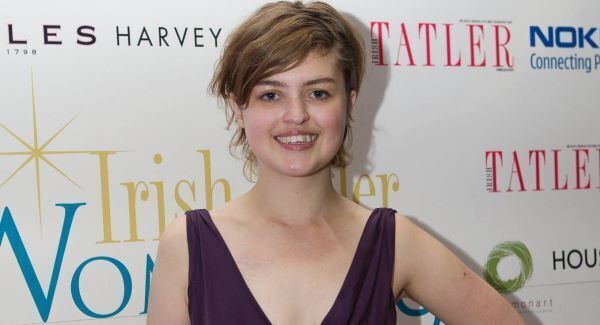
There were whoops of delights when cystic fibrosis campaigner Orla Tinsley had her double lung transplant in New York last December.
Over the years, in her activism, she has been joined by others similarly affected, who have been vocal in raising awareness about this condition.
Last year in Ireland, approximately 580 people were waiting for a solid organ transplant (lung, kidney, heart, liver or pancreas) — of those, 308 had operations.
Out of the 36 double lung transplants that took place, 13 were for adults with CF.
Philip Watt, CEO of Cystic Fibrosis Ireland and chairperson of the Irish Donor Network, says that the transplant figures for 2017 were very encouraging.
Double lung transplants play a significant role in the long-term interventions available to CF patients. People are considered for transplant if their lung function drops below 30% of what is normal.
“The key change that people say to us is that after a lung transplant there is no longer a struggle to stay alive. The quality of their lives improves dramatically.” says Watt.
‘No other choice’

Lar Brennan, 33, who lives and works as a personal trainer in Wexford, led a relatively normal childhood with CF. At the age of 15, however, he suffered a collapsed lung. This would become a painful recurrence over the years.
He was a high-risk patient for a transplant. It took a while for him to be accepted onto the list — when he was 28. “I was on the list for 13 months in total. At that stage, I was bed-bound pretty much.” Such was the level of his pain, he received palliative care at home.
Brennan was called for transplant in October 2013 but, unfortunately, the lungs were not a suitable match. He was called a second time, and on November 24, 2013, he had his transplant in the Mater Hospital: “I remember when I was going into the theatre, saying to my mam and dad, ‘We have no other choice, it has to be done’.” Shorter wait
Sara Reidy, 31, from Carlow had a shorter wait for her transplant — just over two months — which took place in Newcastle on May 27, 2006. It was still a relatively new procedure being undertaken in Ireland at the time —- the first transplant here was in 2005 — so there were still two lists available, either Ireland or the UK.
At the time, her lung function was only 12%.
“I tried to start college that September before the transplant, but I had a number of lung collapses, so I had to defer. At that stage, I was on oxygen full-time, and doing peg-feeds at night,” she says.
In February 2006, she was accepted onto the list and that May, she got the call for surgery. It went well and within three weeks, she was homeward-bound.
She is immensely grateful to the staff who looked after her while in hospital.
Can I go walking?

Justin Reynolds, 52 from Dublin, underwent a double lung transplant on March 3, last year.
Also a CF sufferer, recalls the next day post-surgery: “I was woken up and there was a physio and nurse beside me. We chatted for a few minutes and then the physio said to me: ‘We’re going to try to sit you up to see how you are and are you able to do it’.” Prior to surgery, he had diligently worked on his fitness — sitting up was a test of those efforts, one he passed with flying colours. He says: “It was like winning gold in the Olympics, the way I got up so easily, and sat to the side of the bed and said to them: ‘Can I go walking?’. It was a sense that I had done more than enough, that I was physically fit and all I needed was oxygen”.
The benefits of the surgery for Reynolds, who is self-employed, are many, including a sense of a return to being himself. The breathlessness is gone, replaced by a mental alacrity: “When you’re just before transplant, all your body organs are shutting down because of lack of oxygen. As time has gone on I’ve realised that, literally, my mental faculties seem to be fully back online”.
Aftercare

For the first year after surgery, Sara Reidy travelled to Newcastle for check-ups.
Since then, she has been monitored at the Mater: “Every three months, I have to go for review. There are complications that have come with the anti-rejection drug. I have diabetes and high blood pressure, but compared to what life was like before, there is no comparison”.
But CF is a lifelong condition and continues to affect her: “As I am getting older, it’s starting to affect my digestive system a bit more. Apart from that, liver disease can come into it with CF, but I have been lucky enough, I haven’t been affected by anything like that.” She has a keen appreciation of the second chance of life she has been given: “I would exercise quite a lot and would be very conscious of my health. You would be more susceptible to infection, so you would have to be more mindful in that way”.
Brennan also has a busy schedule of exercise throughout the week, and says that his mobility is amazing: “Most people with CF will always have some sort of issue going on, but the number of things I have done in the last four years, even just jumping on a plane without worrying, is great”.
He remembers his doner every day. “That’s what drives me on. It’s the fact that a family did that for me — in their grief, they were saving my family from the suffering they were going through”.
Twelve years on, May 27 remains an important date for Sara Reidy: “The transplant has given me the chance to live that I wouldn’t have gotten. The experiences of graduating, travelling, living and working abroad, working as a primary school teacher, getting married — all the things I had only dreamed about before the transplant.” Changes are afoot in the Irish organ donation process. “One of the key issues we feel could improve things is the change in organ donor consent, which the Government have proposed. We think it will make a major difference in terms of creating more organs for transplantation,” says Watt.
“The new organ donor consent would presume that people will want to give their organs, but there is still what’s called a soft opt-out. The new system would be a website, by which people could opt-out.
“It would also mean that if the next-of-kin are unhappy about their loved one’s organs being transplanted, they can still have a veto on it.
“Ireland is one of the few countries in Europe that doesn’t have that form of consent. We would call on the minister to introduce it as soon as possible through legislation”.
FACTFILE
* Cystic fibrosis is Ireland’s most common genetically inherited disease.
* It affects approximately 1,200 adults and children.
CF affects the glands, damaging many organs including the lungs, the pancreas, the digestive tract and the reproductive system.
* The first double lung transplant for adults took place in the Republic in the Mater Hospital in 2005. Prior to that, these operations only took place in Freeman Hospital in Newcastle, UK. Since 2012, all double lung transplants for adults living in the Republic take place in the Mater.
* Lung transplantation is rarely proposed for children with CF but for those who need a transplant, they are referred to a UK transplant centre.
CONNECT WITH US TODAY



Be the first to know the latest news and updates