New study shows young homeless men more likely to have been to be excluded at school
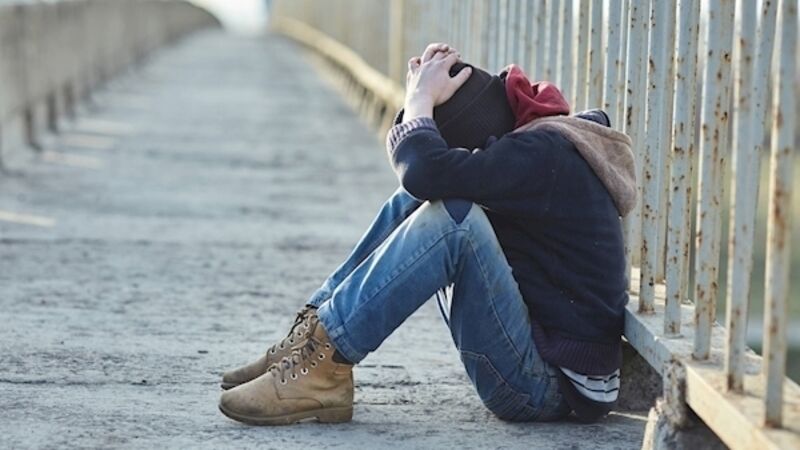
Young homeless men are more likely to have been excluded from school, either through suspension or expulsion, a new study examining their experiences of the education system has found.
New research from Dublin City University (DCU) and the Peter McVerry Trust, due to be published today, calls for the introduction of specialised counselling services to address emotional issues and trauma experienced by students, who may be at risk of experiencing homelessness.
Focusing on the educational experiences of men between the age of 18 and 38, it found that 55% of its participants experienced reduced access to education either through suspension, rolling suspension or expulsion.
According to the latest national figures, there were 167 expulsions nationally for the 2016-2017 school year, amounting to 0.048% of the population; 18.4% of participants said they had been permanently excluded or expelled from school.
Key findings of the report include:
- Almost 70% of participants reported experiencing traumatic childhood events.
- Men who took part in the study reported a significant deterioration in their experience of education following their transition from primary to secondary school.
- 43% experienced depression while in school, and a further 45% reported they experienced anxiety.
- Almost 80% of those who took part in the study were interested in further education or training but experienced challenges.
As part of the study, 13 men were also interviewed on their experiences in school. When asked if his self-esteem had suffered as a result of his experience in school, one man said: “I felt like I was a worthless piece of shit.”
The study, Educational Gaps and Future Solutions, reveals a range of “preventable system failures”, according to its lead author Sarah Murphy, with the DCU Educational Disadvantage Centre.
“These failures increase the risk of exclusion from the system and participation in society with knock-on impacts that heighten the risks of homelessness.”
“Furthermore, the high levels of those who have experienced trauma and with little or limited emotional counselling or therapeutic supports in and around their school is a glaring gap in supports to prevent trauma impacting on wider parts of a young person’s life.”
Case study: Report also finds participants had reduced access to education

Michael , aged 24, was born addicted to heroin. The son of two addicts, he lost his mother at the age of four and his father at the age of six.
“I didn’t have a happy childhood, family lossage, I lost my parents 20 years ago. I was a heroin baby,” said Michael.
“We lived a poor life when me Ma and Da were addicts. All the family were addicts.”
Homeless on and off since he was 16 years old, Michael is among the 13 Irish homeless men interviewed under pseudonyms about their experiences in school for a major report by Dublin City University (DCU) and the Peter McVerry Trust.
Carried out by the DCU Educational Disadvantage Centre and interviewing almost 30% of the young men staying in the charity’s services in Dublin, the study found that more than two-thirds had experienced traumatic childhood events.
With 55% of participants having experienced reduced access to education through suspension or expulsion, the study also found its 51 participants had been excluded from school at a significantly higher rate than the national average.
In Michael’s case, he was expelled in primary school due to his anger issues and sent to a special school. He was later diagnosed with dyslexia.
“I was sent to a special school, all my friends called it a handicapped school. Yeah, I was kicked out of school for kicking a chair,” he said.
Michael has been told his learning difficulties are a result of the trauma he experienced.
“That’s why I behaved like I did at school.
“I still have difficulties. I can’t sit in a class without switching chairs every five minutes.”
He found lessons in the special school behind the level he was capable of and became bored.
When he went on to a mainstream secondary school, he was put into the Leaving Cert Applied class even though he wanted to study subjects at higher level. He also wanted to do Transition Year but was not allowed.
He recalls being bullied throughout both primary and secondary school. “[I was suspended] loads of times. For flipping out,” he said.
To support young people experiencing homelessness, or who are at risk of experiencing homelessness, Michael would like to see more flexibility to help students who have problems.
“What school should have, they should have more like more ways of dealing with you to help you out.
“If you have a situation that you need someone to go talk to you should always have the opportunity to go to somebody. Go to your principal and say get a, like (sic) I’m after having a bad morning, I don’t want to sit in that class. Can I sit out, can I do another class like computers or whatever the next class is?”
Flexibility as well as a distinct funding strand for adequate emotional counselling are among the recommendations of the DCU report, Educational Gaps and Future Solutions.
This study also provides robust evidence for the positive impacts of the State’s education strategies, according to Pat Doyle, chief executive of the Peter McVerry Trust.
“Given the early age and length of time people will engage with the education system, it presents the best opportunity to positively impact on life outcomes for people,” he said.
“That is particularly true for those who may be more vulnerable or likely to experience homelessness due to their life circumstances.”
Among the research’s recommendations is a call for the Department of Education to make a new funding stream available for specialised counselling services for young people to address emotional issues and trauma.
Educational Gaps and Future Solutions was authored by Sarah Murphy, Gráinne McKenna, and Dr Paul Downes of the Educational Disadvantage Centre in DCU’s Institute of Education.