Ministers may block nurses’ pay incentives
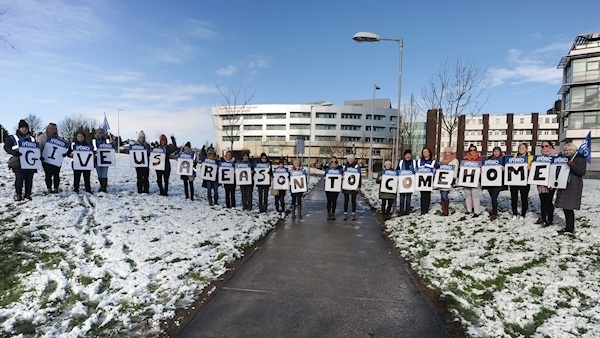
Striking nurses could see salary rises and pension increases under the existing pay deal frozen and blocked if they don’t call off their all-out strike.

Ministers may block nurses’ pay incentives

By Fiachra Ó Cionnaith, Catherine Shanahan, Evelyn Ring, and Juno McEnroe

Striking nurses could see salary rises and pension increases under the existing pay deal frozen and blocked if they don’t call off their all-out strike.

With two further full-day stoppages likely to go ahead next Tuesday and Thursday, Health Minister Simon Harris and a spokesperson for Finance Minister Paschal Donohoe confirmed officials will “legally consider” imposing penalties in what will be seen as a hardline response to the industrial action.

As more than 35,000 nurses took to the streets in protest yesterday, the Government again insisted it did not have the money to meet their pay demands but said there is “room” to find a solution through options not related to a pay increase.

Taoiseach Leo Varadkar said the Government is open to further talks to resolve the dispute.

Phil Ní Shéaghdha, general secretary of the Irish Nurses & Midwives Organisation (INMO), said the Government has done nothing so far to resolve the dispute.

“Regardless of what they say, they have not negotiated. They have attended negotiations but have produced no proposals.

“It’s a case of ‘let’s pretend, the public will believe us, and we’ll sit it out’.”

Ms Ní Shéaghdha said there “isn’t a hope” that they would accept any financial penalties. She said the INMO “has been forced into this position”.

“We have followed every procedure and we still have the same problem because the Government refuses to negotiate,” she said.

Asked whether potential pay sanctions for striking nurses — if pay rises and pension increases could still be blocked — Mr Harris said despite not wanting to “up the ante”, it is “clear” what breaking the existing pay deal could mean.

“I do want to find a resolution to this rather than upping the ante on the first day of an industrial relations dispute that is causing significant difficulty in every community up and down the country today and for many thousands of patients,” he said.

“The public service stability agreement is clear — you cannot lodge a cost-rising claim for the duration of the agreement and derive the benefits of the agreement. That is what the agreement says, in essence.

“Seeking pay parity for your members at a cost of €300m is by any account a cost-rising claim. In relation to the issue of sanctions, I don’t think the Government should be in that space today. The Government isn’t in that space today. The Department of Public Expenditure and Reform will legally consider that in the coming days and weeks.”

Speaking to the Irish Examiner, a spokesperson for Mr Donohoe repeated Mr Harris’s claims, saying: “The application of measures under the act are now the subject of legal consideration, as would be the norm in any instance such as this.

“The fact remains that those who do not subscribe to or resile from the public service stability agreement will not attract the benefits of the agreement which include increment progression and additional pay and superannuation contribution benefits.”

The comments are likely to cause anger among the INMO’s 35,000 members who say they are underpaid.

Yesterday’s action affected more than 25,000 patient appointments, including cancellation of 2,000 non-urgent surgical procedures.

HSE national director of operations Liam Woods warned that rescheduling procedures would become “more difficult” if the nurses’ industrial action continues into next week.

Mr Woods said discussions with the INMO on contingency plans for further action would resume today.

HSE acting national director for acute hospitals Angela Fitzgerald said emergency departments experienced delays yesterday because of a reduction in the number of nurses on duty.

While services at emergency departments are back to normal today, they said they expect a “significant disruption” with more people attending. According to the HSE’s TrolleyGAR, there were 356 admitted patients waiting on trolleys in emergency departments yesterday, a 16% decrease on the same day last year.

Mr Woods said all emergency departments were open with reduced services but attendances were lower due to the nurses’ strike.

Separately, the Psychiatric Nurses Association, which represents 6,000 nurses, will commence its industrial action campaign today, beginning with an overtime ban and escalating to all-out strike in February.

Meanwhile, the Taoiseach and his ministers have slapped down a Fine Gael senator’s demands that nurses get “pay parity” amid concerns about strikes.

Cavan senator Joe O’Reilly called for equal pay for nurses at the weekly Fine Gael meeting last night in Leinster House, insisting they should be treated like speech and language therapists and physiotherapists.

Mr O’Reilly said the training nurses undertook should be acknowledged under the public pay system.

However, his calls were rejected by Mr Harris, who warned that caving into nurse demands for more pay and better conditions could cost “hundreds of millions of euro”, party sources said.

Furthermore, Mr Varadkar also warned that if there was an increase in pay for the public sector, and not just for nurses, it would lead to the same cost as the build for the national children’s hospital every 18 months.

x

More in this section

Lunchtime News

Newsletter

Get a lunch briefing straight to your inbox at noon daily. Also be the first to know with our occasional Breaking News emails.

Cookie Policy Privacy Policy Brand Safety FAQ Help Contact Us Terms and Conditions

© Examiner Echo Group Limited