Cork environmentalists criticise destruction of inner-city tree habitat
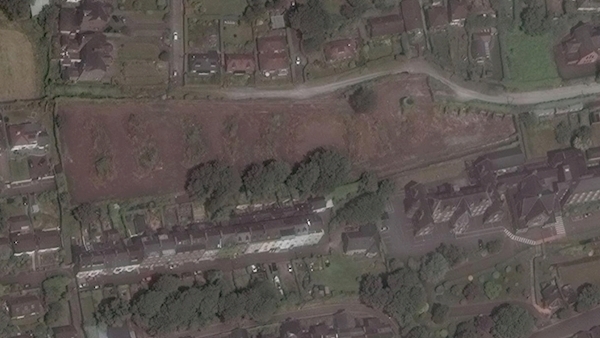
A number of trees on the grounds of the former St Patrick's Hospital on Wellington Road were removed last summer. The land has since been cleared.
The land, now the property of Griffith College Cork, has been earmarked for use as 'a recreation space' for students attending Griffith College Cork and Cork Educate Together School.
However, residents are furious about the removal of the trees. Pictures posted on Twitter this week by the Green Party representative, Oliver Moran, have been widely shared, with many condemning the removal of the trees and criticising the lack of green space in Cork city centre.
The site, formerly St Patrick's Hospital, was purchased by Griffith College Cork in 2016. It is not clear whether some of the trees were removed before that point but the College has confirmed that more were removed last summer.
A statement issued by Griffith College Cork said that the trees were removed amid complaints of anti-social behaviour and health safety concerns:
Griffith College Cork is committed to providing a welcoming environment for its students and the locality. It is sensitively restoring one of Cork's landmark buildings dating back to the 1820s.
"Last summer, the College cleaned up an area of land at the back of the former St Patricks Hospital and Hospice. This involved removing up to a decade of overgrowth and up to six small trees.
"Jim Daly, the Head of Campus, consulted closely with local residents at the time; a number of residents visited the campus to view the buildings and this area as part of this process. The College was also responding to concerns from local residents of anti-social behaviour, waste dumping and the overgrown nature of the area.
"This was deemed to be a health and safety concern. The College plans to grass this area and use it as a recreation space for its students and the pupils of Cork Educate Together School."
Residents say they met with the college to outline their opposition to the removal of the trees. It is understood that they plan to write to the college about the matter.

In the Cork City Development Plan 2015-2021, the site is given the status of Landscape Preservation Zone due to its tree canopy meaning that development 'will be considered only where it safeguards to the value and sensitivity of the particular landscape and achieves the respective site-specific objectives.'
A spokesperson for Cork City Council said, "The land in question is in private ownership and is not a designated ‘landscape conservation area’ within the meaning of section 204 of the Planning and Development Act 2000, and would therefore not benefit from the associated protections. Works to trees on this land would therefore not be unauthorised development and no enforcement could be carried out by Cork City Council."
Green Party representative, Oliver Moran, described the destruction of the trees as 'utterly shameful.'
"The reaction from people who've heard about it should make it clear to them this isn't acceptable, regardless of the law," he said.
"The right thing for them to do now is to make amends by replanting the trees and encouraging the ecology to return. That will be a costly commitment over years, but it's their responsibility to put it right. People are despairing at the loss of trees in the city."
Mr Moran criticised the lack of enforcement when it comes to the removal of trees:
Unfortunately, the City Council's position appears to be the legal situation given the level of protection they give to areas like this in the city.
"There's a distinction between an area being designated a 'Landscape Preservation Zone', which carries only a minimal level of protection against planning being granted, and a 'Landscape Conservation Area', which means that permission would be needed before felling trees."
Mr Moran called for the development of a specific tree policy for Cork city. Similar calls have been made by several members of Cork City Council in the last two years.
In July 2016, Dublin City Council adopted a tree strategy which 'sets out a vision for the management of public trees according to a long-term plan' and 'aims to identify opportunities for new tree planting to ensure a sustainable and balanced urban tree canopy.'