Sean Dunne did not co-operate with bankruptcy process, court told
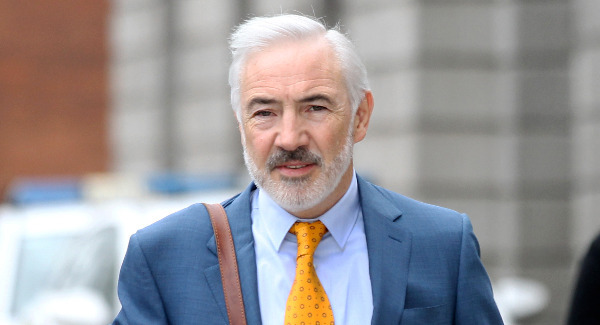
The official administering Sean Dunne's Irish bankruptcy has told the High Court the businessman did not co-operate with the process after being adjudicated bankrupt here in 2013.
While there was some co-operation in 2016, that was "wholly deficient" and lead to the application to extend the bankruptcy by five years, Chris Lehane said.
The businessman denies he has not co-operated with the Official Assignee and opposes the application to extend his bankruptcy.
Mr Lehane told the High Court in May 2016 he took the view Mr Dunne had not co-operated with him as he is required to do after the businessman was adjudicated a bankrupt in 2013.
Under cross-examination on sworn statements the Official Assignee has provided in support of the extension application Mr Lehane rejected an assertion by counsel the application to extend the bankruptcy was "grossly premature."
He said while Mr Dunne had challenged the bankruptcy he did not attend for interview with the al Assignee until June 2016.

It was accepted he had received a quantity of documents from Mr Dunne's representatives in early 2016, including an 800-page transcript of an interview conducted with the businessman and his creditors as part of bankruptcy proceedings that were being conducted in the US.
Mr Lehane said he also accepted he had received a statement of affairs from Mr Dunne in early 2016.
However Mr Lehane said while he did receive a large volume of material, some of which was helpful, he was not satisfied about the quality of the information received from Mr Dunne.
He said he also took the view from the transcript that Mr Dunne's responses to questions about assets were a complete obfuscation." and were "wholly deficient."
Mr Lehane said the bankrupt's estate was large. However, the level of co-operation the Official Assignee received from Mr Dunne contrasted to that given by former Anglo Irish Chairman Sean Fitzpatrick, whose estate was also sizeable after he was adjudicated bankrupt.
Mr Lehane accepted he did have some contact with Mr Dunne's creditors, NAMA and Ulster Bank, and the lawyer acting for the US trustee in bankruptcy about matters.
However, he said as an independent official the decision to seek to have Mr Dunne's bankruptcy extended was his, and was not based on representations made to him by other parties including the creditors and the US trustee.
He also told the court that his investigations into the estate are ongoing, and that there are other legal proceedings brought in respect of assets he claims form part of the businessman's estate.
These include an action over a property in Dublin 4 known as Walford which was purchased by Mr Dunne in 2005. Mr Dunne denies claims by Mr Lehane's that property is part of the businessman's estate.
Mr Dunne's Irish bankruptcy was due to expire July 2016 but has been extended pending the outcome of the full hearing concerning whether any extension, which can be for a maximum five years, should be granted.
Ulster Bank petitioned the High Court in February 2013 to have Mr Dunne adjudicated bankrupt here over default on some €164m loans.
The following month, Mr Dunne filed for bankruptcy in Connecticut, US, when he claimed to have debts of $1bn and assets of $55m.
In 2016 Mr Lehane initiated the bankruptcy extension application due to Mr Dunne's alleged non-cooperation,
The application, which is before Ms Justice Caroline Costello, continues.

CONNECT WITH US TODAY



Be the first to know the latest news and updates