Calls grow for the Government to tap emergency Brussels funds for Brexit threat
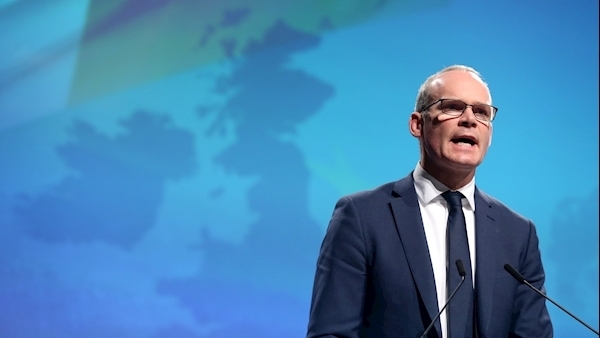
Irish businesses and leading experts say the Government needs to tap special funds from the EU to help offset the effects of Brexit.
For hauliers, Aidan Flynn, who heads up Freight Transport Association Ireland, whose members operate 10,000 commercial vehicles, said the risk of a no-deal amid the UK political chaos, should mean the Irish Government ramps up its contingency plans.
“We do not think it is near enough funding despite the aid from Enterprise Ireland and InterTrade Ireland,” said Mr Flynn.
He wants Tánaiste Simon Coveney to focus on “the nitty-gritty” of where Irish trucks will park at ports and not “measure its progress on how many inspectors it recruits”.
Back from a meeting of customs officials in Lille, Mr Flynn said that inspectors would quickly become the instigators of delays and hauliers face the need to provide financial guarantees, in the even of a no-deal Brexit.
Seamus Coffey, the UCC economist and chair of the Irish Fiscal Advisory Council, said there was “no doubt” that many UK retailers which operate large store chains in Ireland would run out of stock in a few days, under a no-deal outcome.
I am sure they are making contingencies but they simply do not have the warehouse space even for a couple of weeks. I think the issue will be resolved over time but there is little doubt if there was a crash-out that the shelves could be empty of certain products for a while.
UCC economist Declan Jordan said a second Brexit referendum was looking more likely, with the choice of saving “the UK economy or to save the Conservative Party”. He said the likelihood of no Brexit has increased following the vote which “seems to be the reaction of financial markets too, based on the recovery in sterling”.
Thomas McHugh at Cork Chamber said the sense of uncertainty for business was now palatable. “Business is good at planning for the future, the major difference, in this case, being that plans are based around exceptional levels of potential external risk,” he said.
The political impasse in the UK was “a mess”, said Edgar Morgenroth, professor of economics at the DCU Business School. “The solution was always to be found in London but it is a shambles because the Brexiteers do not have a plan. In the UK parliament, there doesn’t seem to be a majority for anything.
The EU would be rather foolish to renegotiate the deal and may turn its back on the whole thing,” he said. Mr Morgenroth said the Irish Government will need to start talking about the “undesirable” hard border.
“Take the backstop away it will not get any easier. The Government has to come clean now and say there are consequences.
"We need to start talking to Brussels about ‘pain relief’,” Mr Morgenroth said, which would involve Ireland receiving funds to ease the economic damage. “Transport costs are going to increase, which is a good reason for Ireland to keep its corporate tax regime – we must have some advantage to survive at all. We do not even have an electricity wire to France. It’s this that Brussels can help us with,” he said.
Patricia King, general secretary of the Irish Congress of Trade Unions, also said the Government must make available a Brexit fund, in the event of a no-deal Brexit.
Patricia Callan, director of the business group, the Alcohol Beverage Federation of Ireland said a no-deal would be “seriously damaging” for all inputs in the industry, including cream, barley, malt, glass bottles, apples, finished cider. She said customs checks would lead to further delays and costs. “The UK is a key export market for us, so it’s vital that free trade opportunities remain,” she said.
Economist Jim Power said the huge rejection of the Theresa May’s withdrawal agreement would “hopefully” encourage British politicians to back a Brexit deal “of the Norwegian variety”.
British-Irish Chamber of Commerce head, John McGrane said firms of all sizes were at “the point of no return”.
With €70bn worth of trade sustaining 400,000 jobs hanging in the balance, we would urge MPs on all sides to come together to find a way forward.
PwC managing partner Feargal O’Rourke said businesses now need to intensify contingency plans for a disorderly Brexit.

CONNECT WITH US TODAY



Be the first to know the latest news and updates