Meet the changemakers in Irish food
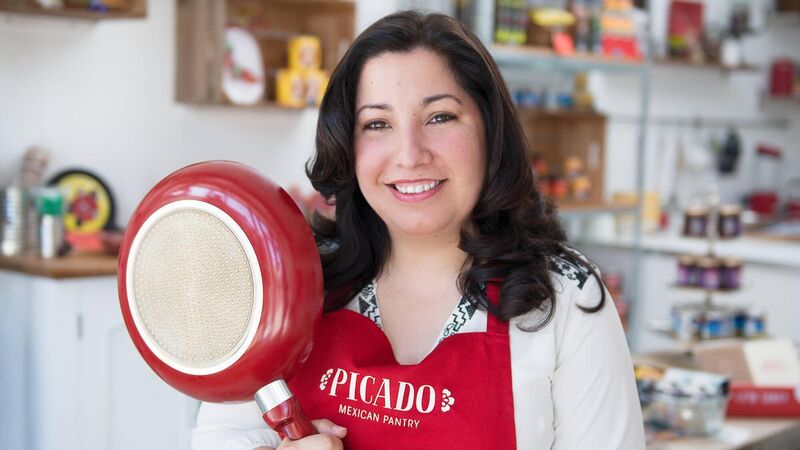
Bestselling writer and Picado founder Lily Ramirez-Foran has seen first hand how Irish foodies have embraced new flavours and cooking techniques in recent years.
is one of Ireland’s most prolific food entrepreneurs – a chef, owner of three restaurants in Co Leitrim (The Cottage, My Kitchen and Buffalo Boy), creator of Chef Sham Sauces, TV personality and now author.
His book, Agak Agak, is the eleventh in the Blasta Books series that champions diverse voices in Irish food. A celebration of Sham’s Malaysian heritage, Agak Agak means to estimate; to taste as you go until a dish is just right.


For Malaysians, Agak Agak is a way to balance the flavours of this multifarious cuisine. Sham’s heritage is Chinese, Thai, Indian and Malay - par for the course in Malaysia, because, he says, “The majority of Malaysians are born to multicultural families because we are so close to other Asian countries and there has always been a lot of migration.”
Spices from all over the world pass through the Malacca Straits, and everyone is influenced by the confluence of people, culture, food and spice.
“Many dishes in Malaysian cookbooks are a take on what is Chinese or Thai coming into Malaysia. What I’m sharing in Agak Agak is what I tasted growing up, what I’ve been taught and cooked growing up. This book, sharing these recipes, brings back memories of my childhood.”
While the principle of Agak Agak may suggest preference of the cook in how a dish will taste, Sham explains it is more a way to show empathy — hospitality, even — in how to cook for others.
“We never talk about how to use your instinct, but we should because our tastebuds are different,” he says. “Imagine you’re cooking my Rendang recipe, and it says use three chillies, but maybe that’s too hot or too mild for you. Agak Agak allows you to take it out or add more in. That’s how I was taught growing up. My grandmother would ask is this ready or salty enough; they would say, Agak Agak – use your instinct. In Ireland, I cook dishes I remember with ingredients I have here and often adapt without taking away the authenticity of the dish.”
Sham says a recipe is the sum of its parts, so adaption or substitution of ingredients is welcomed. “It gives people the freedom to create their own version of a dish, that’s what this book is all about: be brave, try things, be adventurous and take ownership of it when you finish the dish.”
The collection of recipes in Agak Agak are a love letter to foods of Sham’s childhood that are deeply personal. Sham has lived in Ireland for 24 years, longer than he lived in Malaysia. These dishes are how he connects back to that time.
“Every recipe for every dish is a comfort food. My favourite recipe in the book is Crab Laksa. My grandmother cooked in the Buddhist temple in Taiping and made a beautiful crab laksa for the monks. I’m still looking for that memory in that dish even today; still looking for that flavour to bring me home.”
“Food brings people together, and it is very personal to me. One recipe in the book is for Kway Teow Kungfu when I worked in a Chinese restaurant at 12 years old, washing pots. The phone would ring in the restaurant, and I knew it would be my mum. I’d say, the usual again, she’d say yes, and I’d arrive home about 1am with her Kway Teow Kungfu. We’d stay up chatting; she’d ask me about my day, and we’d enjoy that moment. That memory is still with me.”
There are three ingredients in Malaysian cooking, however, that Sham insists cannot be substituted: lime leaves, ketjap manis and galangal. When Sham first arrived in Ireland, such ingredients were near impossible to find. But these days there is a confidence in suggesting such specific Malay ingredients, demonstrating how much easier they are to get.
“I used to say if you can’t find the lime leaves or galangal don’t substitute it, just leave it out because it’s not the same. But now, you can go to the supermarket and get all these ingredients, they’re everywhere. It’s brilliant because it means people are cooking at home and they want an authentic dish.”
is known for her bestselling book, Tacos, and popular Dublin shop, Picado, which sells Mexican ingredients, hosts workshops and supper clubs.
When Lily came to Ireland in 2001, she remembers fruitless shopping trips to find anything resembling a Mexican ingredient.
“I bought a tin of baked beans,” she says, delighted to find this staple ingredient of her food culture, only to discover they were sweet. “I rinsed and rinsed them until I was left with the bare bean and then tried making refried beans with that,” she says.
Within five years, there was a marked difference, and today Lily says she can walk the streets of Dublin and find food from all over the world.
The Irish love for travel abroad and increased immigration during the Celtic Tiger years created a nexus where Irish curiosity to relive flavours experienced on travels met with a demand from new people into Ireland searching to replicate a taste of home.
“We all went to great lengths to do that,” says Lily. “What we eat is so fundamental to who we are. This is about your heritage, your connection to your roots and family. I don’t think I would have ever entered the food industry had I not been so homesick. Even now, when I shop for Picado, I’m always thinking about what I want to cook!”
Lily began writing a blog, A Mexican Cook in Ireland, where she shared thoughts and recipes about the food she grew up with and critiquing the way Mexican food was being portrayed in Ireland in the mid-noughties.
“I think I became more Mexican when I came here,” she says. “It always made me quite angry to see TexMex and CaliMex food labelled as Mexican food. There’s nothing wrong with it, it’s delicious, but they are regional American cuisines and very different to Mexican food. I wanted to set the record straight.”
Every Friday and Saturday evening, Lily runs popular workshops and supper clubs that book out within hours of going live. But classes are often never really about the recipes.
“If it’s a tortilla class, we talk about the history of corn, why it’s so important to Mexicans, and how it still rules what we do in every kitchen, what it did for women’s rights; we talk about the background to ingredients and dishes, the history behind them politically and socially, because that’s what makes the recipe interesting. When we sit down to eat, the dish that’s in front of you becomes not just a lovely taco filling but it has all this meaningful information behind it.”
Lily refers to the ripple effect of people coming to these classes, and how our natural curiosity about a cuisine different to our own means we can all be changemakers.
“We’ve been doing it for ten years, and I’m so grateful because I love what I do. When we first opened, we had no money, barely any experience and just this dream, but I knew we had to have a kitchen because without the education part, nobody would know what to do with the ingredients. I threw half of my first supply of corn tortillas in the bin because no one was buying them. Now, we can’t keep them on the shelf long enough!”
Tacos was published in 2022 and has gone on to sell over 12,000 copies.
“I was so worried everyone would hate it,” she says, “I was not prepared for the response! I get emails from people all over the world who have Tacos and love it. I pinch myself every time I think about it.”
Restaurant and hospitality expert, Paul O’Connor, created the Asian Restaurant Awards in 2023 to celebrate the cuisines of Asia, and to recognise the contribution of Ireland’s Asian food community to the food culture of the island.
“These are a 32-county awards. More than ever, it’s important to recognise people who have come to this part of the world bringing their wonderful cuisines for us all to enjoy.”

The Asian Restaurant Awards are the first of their kind to exclusively recognise the achievements of Asian restaurants, chefs, food trucks, market stalls and cafes. This year’s awards will take place November 27th at Castleknock Hotel with nominations open until October 22nd.
“We have already received nominations for restaurants representing cuisines of India, Pakistan, Bangladesh, Nepal, Thailand, Malaysia, Vietnam, Korea, China and Japan. It represents the quality of our Asian restaurants,” says Paul. “How some don’t have Michelin stars I don’t know.”
“Ireland’s Asian communities have brought joy to this country. Diversity should be celebrated, and we should be grateful for people bringing their wonderful cuisines to Ireland. It improves the overall standard of cuisine here too, and I believe it makes our lives better.”
If you’ve discovered your own favourite Asian restaurants during your travels across Ireland, give them a vote through www.asianrestaurantawards.ie