World waits for US election result
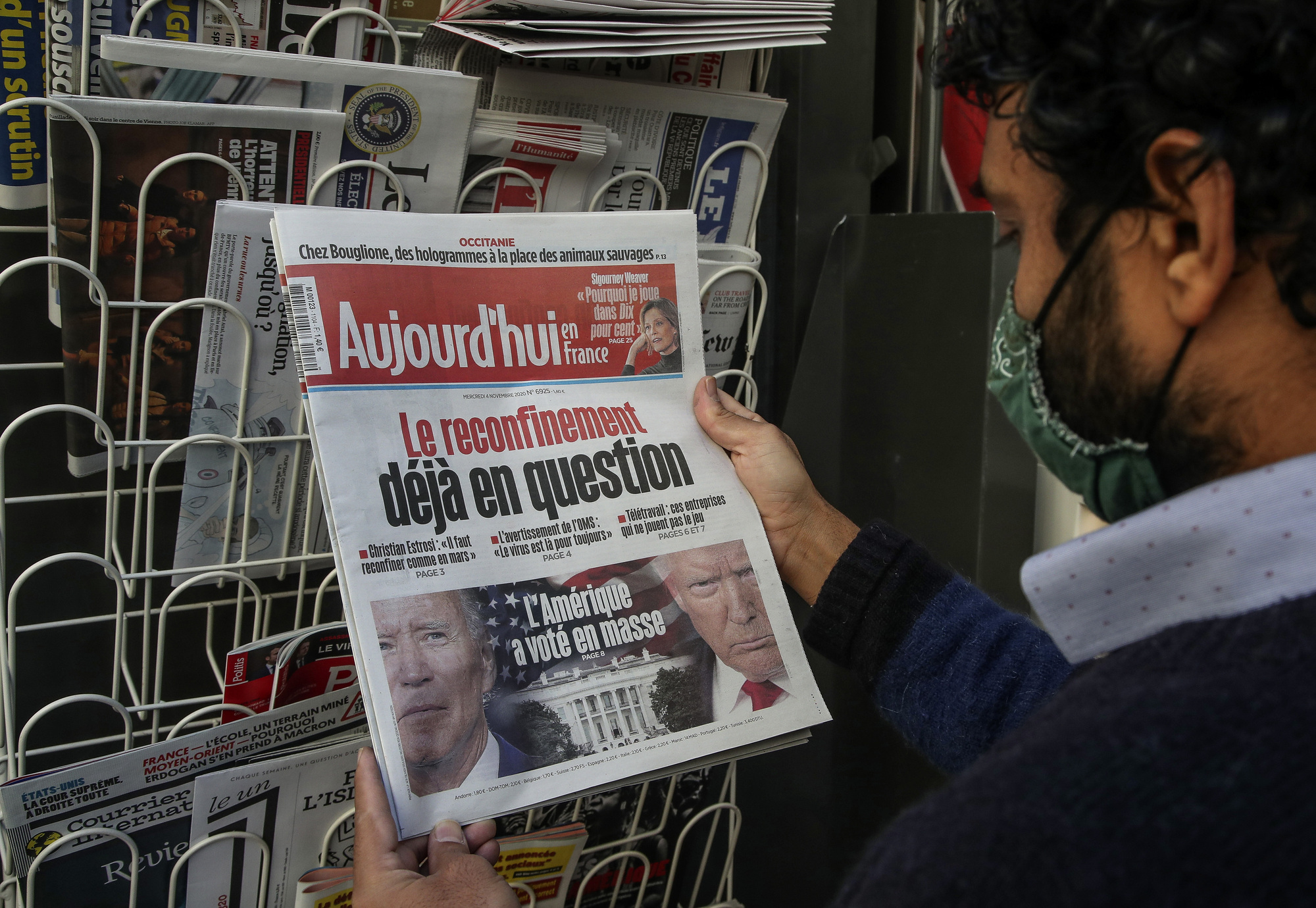
A man reads the headlines about the US election in Paris on Wednesday Picture: Michel Euler/AP
From Ford Model T cars that popped off the assembly line in just 90 minutes to 60-second service for burgers, the United States has long had a reputation for having things done swiftly.
So the world’s realisation on Wednesday that the US election winner might not be known for days or longer came as somewhat jarring news.
The guessing game of trying to figure out whether — and how — President Donald Trump or challenger Joe Biden would end up in the White House quickly turned global.
Government leaders scrambled to digest the delay and ordinary people swapped views, hopes and fears on feeds and phones.
Some scratched their heads — not for the first time — over the US presidency being decided not by the overall votes by by whoever wins 270 votes in the Electoral College.

Gloating was heard from parts of the world that have been on the receiving end of US criticism about their elections and governance. Underscoring how the drama captured global audiences, television graphics in Japan used fireballs to denote some of the battleground states crucial to the outcome.
“I’m hearing it may take some time before things are sorted out,” said Japanese finance minister, Taro Aso. “I have no idea how it may affect us.”
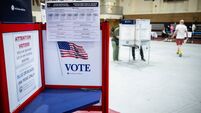
The lack of an immediate winner was not, in itself, an indication anything was wrong. In a year turned upside down by the coronavirus pandemic, many states made it easier to vote by mail, which slowed the compiling of results.
Russian opposition leader Alexei Navalny, who has been poisoned and attacked for challenging the Kremlin and trying to make Russia more democratic, even suggested that the delay was comforting, a sign of democracy at work.
“Woke up and went on Twitter to see who won. Still unclear. Now that’s (what I call) elections,” he tweeted.

Australian Prime Minister Scott Morrison also described the delayed outcome as a demonstration of democracy.
“I have great confidence in the democracy of the United States and I have great confidence in their institutions and the thing about great institutions and democracies is they deal with whatever challenges come, just like our own does,” Mr Morrison told reporters in Sydney.
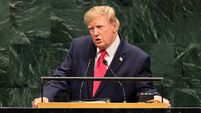
But elsewhere, global unease at not knowing was mixing with sharpening concerns about how America might heal after the divisive campaign. Mr Trump’s own extraordinary and premature claims of victory and his threat to take the election to the Supreme Court also sparked anxiety and comparisons with autocrats.
“That was such a ‘Trump or we burn the country’ moment,” quipped Danny Makki, a Syria analyst, referring to slogans of “Assad, or we burn the country” which were sprayed by supporters of Syrian President Bashar Assad on walls in the early days of the country’s civil war to intimidate opponents.

From Europe, in particular, came appeals for patience and rigorous vote-counting. In Slovenia, the birthplace of first lady Melania Trump, right-wing prime minister Janez Jansa claimed it was “pretty clear that American people have elected Donald Trump”. But he was a lonely voice among leaders in jumping ahead of any firm outcome.
German vice chancellor Olaf Scholz insisted on a complete tally, saying: “It is important for us that everything be counted and in the end we have a clear result.”
And German defence minister Annegret Kramp-Karrenbauer said that “the battle over the legitimacy of the result — whatever it will look like — has now begun”.
“This is a very explosive situation. It is a situation of which experts rightly say it could lead to a constitutional crisis in the US,” she said on ZDF television. “That is something that must certainly worry us very much.”

In financial markets, investors who had been hoping for a clearer outcome struggled to make sense of it all, sending indexes bobbing up and down.
Amid the waiting was also points-scoring, with some in Russia, Africa and elsewhere claiming the electoral process was exposing the imperfections of American democracy.
“Africa used to learn American democracy, America is now learning African democracy,” tweeted Nigerian senator Shehu Sani, reflecting a common view from some on a continent long used to troubled elections and US criticism of them.
In Zimbabwe, the ruling ZANU-PF party’s spokesman, Patrick Chinamasa, said: “We have nothing to learn about democracy from former slave owners.”
CONNECT WITH US TODAY



Be the first to know the latest news and updates