Christa Pike alive a day after failed attempt to execute her, lawyer says
Christa Pike remained alive on Thursday, a day after she survived a failed attempt to execute her for the 1995 murder of a woman, one of her lawyers said.
Lawyer Randy Spivey said Pike is being treated at a hospital, but that he and the rest of her legal team did not know her condition.
“Christa is alive right now. We don’t have a sense of her prognosis or much update on her health at the moment,” he said during a news conference.
“But we know she is alive right now and receiving live-saving medical care.”
Mr Spivey said the failed execution amounted to “torture” and he called for her death sentence to be commuted.
The state tried to execute her by lethal injection on Wednesday, but neither the initial nor backup dose of pentobarbital killed her and she was still snoring when the execution chamber’s microphone was cut off more than an hour into the attempt.
She was later taken to a hospital for treatment.
Afterwards, governor Bill Lee indefinitely postponed Pike’s execution and Tennessee’s lone remaining one that had been scheduled for this year.
He also ordered a review of what happened, calling it “deeply disturbing”.
Pike, 50, was sentenced to death for a murder she committed at age 18.
She would have been the first woman executed in Tennessee in more than 200 years.
An appeals court stopped the lethal injection an hour before it was scheduled to begin, but the US Supreme Court overturned that stay hours later.
At one point during Wednesday night’s execution attempt, she asked prison officials if her arm was supposed to feel that way, though it is unclear if it was after the first dose entered her body, as officials do not share that information.
Later, more than an hour after the process began and nearly 30 minutes after a backup dose of pentobarbital was administered, she could be heard snoring loudly.
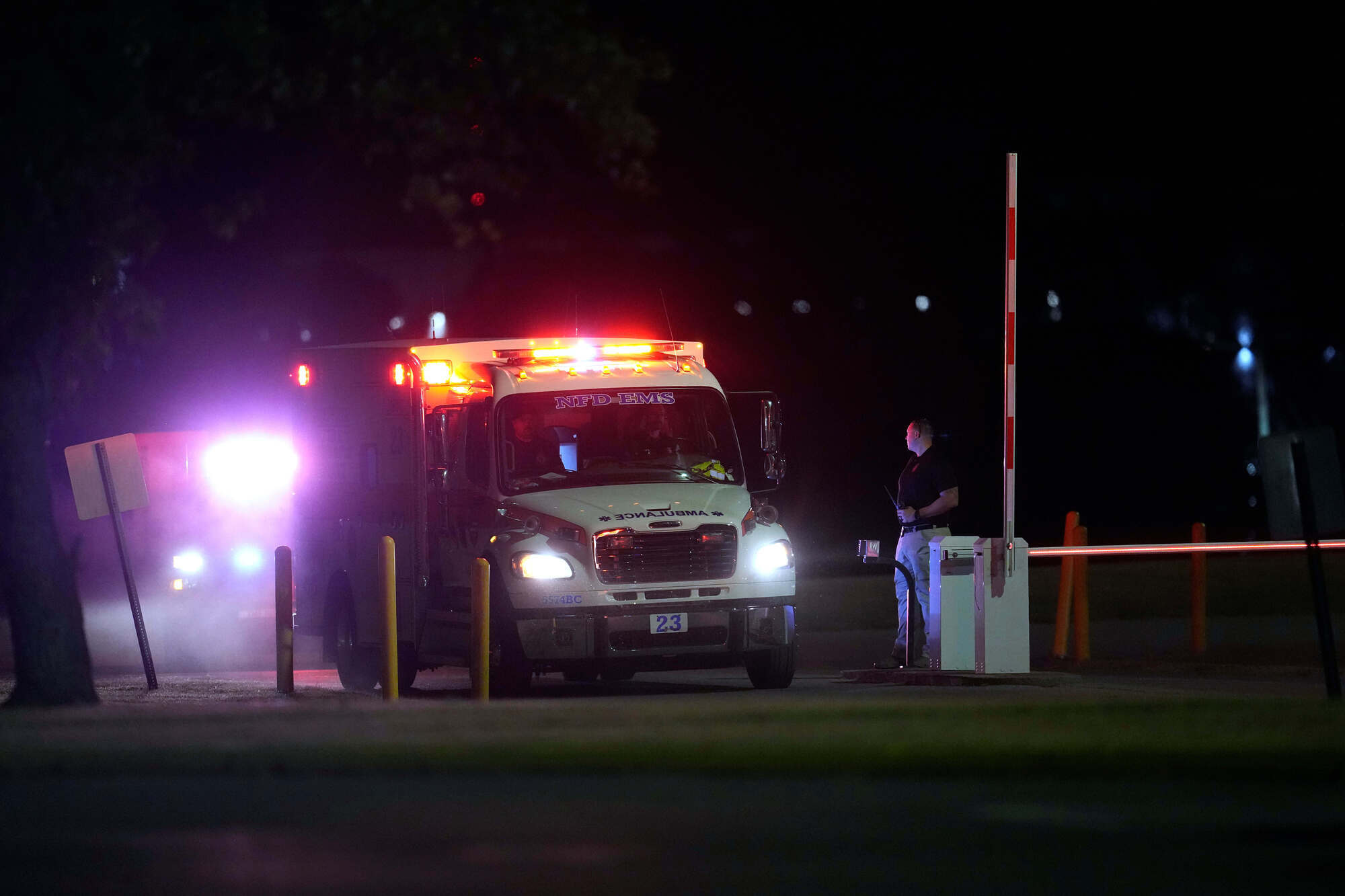
Pike was taken by ambulance from the prison to a hospital.
It was the second time this year that Tennessee was unable to complete an execution, though in the other case, officials could not find a suitable vein for an IV line so the drugs were not administered.
May Martinez, whose daughter was murdered by Pike and her boyfriend and who travelled to Nashville to watch the execution, told NBC News that “it was a mess”.
The failure, which one death penalty expert described as unprecedented, led governor Bill Lee to order a review and to indefinitely postpone Pike’s execution and Tennessee’s lone other one that had been scheduled for this year.
It also reignited the debate over the state’s execution procedures, including its single-drug lethal injections.
“There are very few answers this morning. It’s very early,” Mr Lee told reporters on Thursday at an unrelated event, noting he had received no updates on Pike’s condition.
“The people of our state deserve to have those questions answered.”
He called what happened “deeply disturbing” and said it appeared prison staff followed procedure.
Pike had been scheduled for execution on Wednesday morning for the killing she committed at age 18 and would have been the first woman executed in Tennessee in more than 200 years.
An appeals court stopped the execution an hour before it was to start, but the US Supreme Court overturned that stay hours later.
Officials gave Pike two doses of pentobarbital, her lawyers said in court filings late on Wednesday.
The drug has been used in executions in multiple states and by the federal government, but there have been concerns raised about the potential for “unnecessary pain and suffering”.
The Tennessee Department of Correction said in a statement that it “followed every step of the state’s lawful, established execution protocol approved by the Attorney General’s Office”.
Tennessee announced in 2024 that it was switching from a three-drug series for lethal injections to the single drug pentobarbital.
That came more than two years after the state abruptly halted the execution of Oscar Smith and acknowledged it had failed to ensure its lethal injection drugs had been tested properly.
Robin M Maher, executive director of the Death Penalty Information Centre, said what Pike experienced is “singular and unparalleled” in that she survived long enough to be moved to a hospital.
Seven other people have survived medical problems because of an execution team’s failure to access a vein to administer lethal injection drugs, but no one has stayed alive after receiving the drugs used in such executions, she said.
Executions in the US have fallen sharply since the beginning of this century amid growing public opposition and concerns about the costs and the drugs used.
But the number of executions nearly doubled last year behind a record increase in Florida.
Pike would have been the 30th person executed in the US this year.
Strapped to a gurney in the execution chamber, Pike described herself as at peace.
When asked if she had any last words, Pike said several things, including: “I’m at peace. I’m ready to be free… This is a happy day.”
But she remained awake, and at one point complained about the feeling in her arm.
The chamber’s curtains were closed, suggesting it had been five minutes since the first dose was administered.
But they were reopened three minutes later.
An hour after officials first raised the curtains, witnesses reported that a second dose of pentobarbital was administered.
Pike could still be heard snoring behind a closed curtain until the microphone was cut off almost 30 minutes later.
Lawyers for Pike filed an emergency motion with the Tennessee Supreme Court seeking to immediately halt and stay the execution, saying she was in “unnecessary agony” and the procedure violated her right to be executed free of cruel and unusual punishment.
They also filed motions with two other courts.
Last May, Tennessee officials called off the lethal injection of Tony Carruthers, who was convicted of kidnapping and killing three people in 1994, after executioners tried for over an hour but failed to find a suitable vein for a backup IV line.
Pike and her boyfriend were convicted of the fatal stabbing of 19-year-old Colleen Slemmer, a classmate.
The killing stoked fears of Satan worship because of a pentagram carved on Ms Slemmer’s body.
Pike’s boyfriend was not eligible for the death penalty because he was 17 at the time of the killing and received a sentence of life in prison.
He was denied parole last year.
Pike did not dispute that she helped kill Ms Slemmer, but supporters argued that Pike’s age at the time of the murder, her mental illness and her allegations of severe sexual abuse should be considered.
She was diagnosed with bipolar disorder and post-traumatic stress disorder after the killing.
“It took me numerous years to even realise the gravity of what I’d done,” she once said.


CONNECT WITH US TODAY



Be the first to know the latest news and updates