Trump threatens to seize island vital to Iran oil exports, as ceasefire teeters
US President Donald Trump threatened on Thursday to launch major strikes on Iran and seize control of its oil industry, as escalating attacks between the countries pushed the Middle East closer to the resumption of a full-scale war.
Mr Trump said in a social media post that the US would hit Iran “very hard tonight” and take “total control” of Iran’s oil and gas industries, including the vital Kharg Island oil terminal, in the “not too distant future”.
His latest threats came as efforts to negotiate an end to the war appeared stuck.
Mr Trump has voiced his frustration with the stalled negotiations, warning earlier in the week that Tehran would “pay the price” for taking too long to reach a deal.
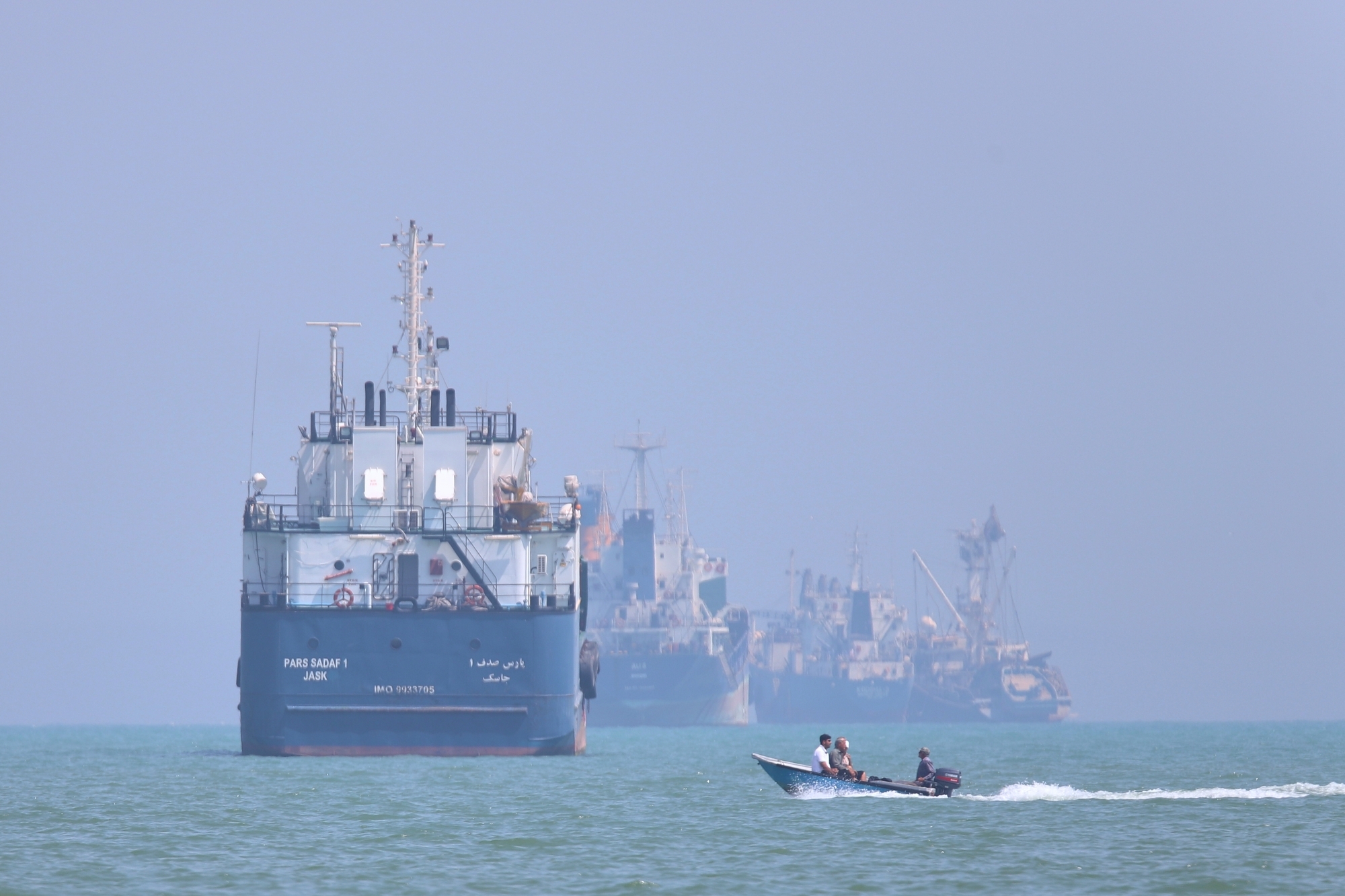
Iran’s stranglehold on the Strait of Hormuz has disrupted global energy supplies, driven up fuel prices and made food and other basics more expensive well beyond the region.
The US and Iran traded strikes for a second straight day on Thursday after reaching a tenuous ceasefire more than a month ago.
While the strikes have increased tensions in the region, they have been more limited compared to the early weeks of the war and negotiations between the US and Iran are ongoing.
Mr Trump’s threats on Thursday, while stark, represented his latest verbal escalation in the Iran war.
In April, he warned Iran that “a whole civilization will die tonight, never to be brought back again” if it did not agree to his terms, before extending a ceasefire.
Kharg Island, on the other side of the Persian Gulf from US bases in Kuwait and Saudi Arabia, is the beating heart of Iran’s oil industry, through which 90% of its exports pass.

It is important because Iran’s coastline is mostly too shallow for tanker ships to dock.
It was unclear how serious Mr Trump was about his threat to seize it.
“My preference has always been to take Kharg Island,” he said in an interview on Thursday on Fox News.
“I don’t know that America has the stomach for it to be honest.”
American troops would be vulnerable on Kharg Island because of its proximity – 21 miles – to the Iranian mainland, from which missiles, drones and artillery could be fired.
Mr Trump indicated in the interview that he remains averse to sending US forces into Iran.
“We could walk in there tomorrow. We could take soldiers – I don’t want to have boots on the ground.
“But if I wanted to we could put a small group of soldiers and take over the place.”
He compared his threat to take over Iran’s oil industry with the way the US assumed control of Venezuela’s oil sector after capturing then-president Nicolas Maduro in January.

Back-and-forth strikes rattled the Middle East for the third time this week.
The first involved attacks between Iran and Israel, followed by the two rounds of fire between the US and Iran, which targeted countries where US troops are based.
The US military’s Central Command said airstrikes ending early Thursday targeted “Iranian military surveillance capabilities, communication systems and air defence sites”.
Explosions echoed around Iran’s capital, as well as the port city of Bandar Abbas and other southern areas along the Strait of Hormuz.
Iran’s paramilitary Revolutionary Guard later said sites hit included a manufacturing complex, a military barracks and a local Guard base outside of Tehran.
Tehran said it fired back at Kuwait, Bahrain and Jordan.
Kuwait closed its airspace for several hours but did not report any damage.

Jordan said it intercepted 20 Iranian missiles fired toward an area with a base hosting US troops, though no-one was hurt.
Bahrain’s interior ministry said an 11-year-old girl was hurt and cars and homes were damaged by debris from intercepted Iranian strikes.
Iran’s foreign ministry said in a statement on Thursday that the US attacks had “effectively rendered the ceasefire … meaningless”, without saying it was abandoning it.
US treasury secretary Scott Bessent said in a social media post that the US would extract funds from frozen Iranian accounts to offset the costs of damage to American allies as well as any tolls Iran imposes on ships seeking passage through the Strait of Hormuz.
Beyond the deadlock over the strait, the two sides also remain at odds over Iran’s nuclear programme.
Tehran insists its nuclear efforts are peaceful. The US and Israel fear Tehran’s stockpile of highly enriched uranium could be used to build an atomic weapon. That was a main reason they cited for going to war on February 28.
Iran has insisted that any deal to end the war must also end fighting in Lebanon between its ally Hezbollah and Israel. But Israeli Prime Minister Benjamin Netanyahu appears intent on pursuing his goal of destroying the militant group.
CONNECT WITH US TODAY



Be the first to know the latest news and updates