UN nuclear chief urges strict Iran checks in any deal to end war
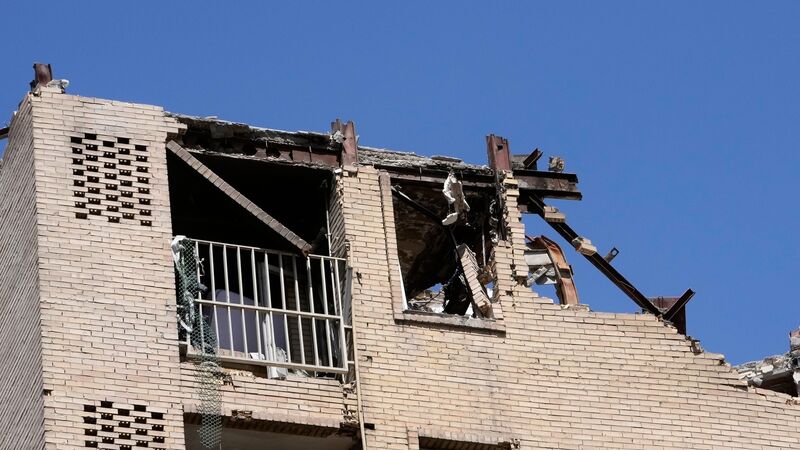
Damage is visible on the facade of a residential building that, according to Iranian authorities, was hit by a strike. Picture: AP Photo/Vahid Salemi.
The head of the UN’s nuclear watchdog has said that “very detailed” measures to verify Iran’s nuclear activities must be included in a potential US-Iran agreement to end their war in the Middle East.
International Atomic Energy Agency (IAEA) director general Rafael Grossi stressed the need for the thorough verification regime for Iran’s nuclear programme, as US President Donald Trump said on Tuesday that a second round of talks with Iran could happen over the next two days.
On Wednesday Moscow said it was ready help solve “the problem of enriched uranium” in Iran.
The Trump administration has said that preventing Iran from gaining a nuclear weapon is a key war aim. Iran has previously said it is not developing such weapons but rejected limits on its nuclear programme.
Read More
Last weekend in Pakistan, an initial round of talks between the two countries failed to produce an agreement.
The White House said Iran’s nuclear ambitions were a central sticking point. But an Iranian diplomatic official denied that negotiations had failed over Iran’s nuclear ambitions.
“Iran has a very ambitious, wide nuclear programme so all of that will require the presence of IAEA inspectors,” Mr Grossi told reporters in Seoul. “Otherwise, you will not have an agreement. You will have an illusion of an agreement.” He said that any agreement on nuclear technology “requires very detailed verification mechanisms”.
Iran has not allowed the IAEA access to its nuclear facilities bombed by Israel and the United States during a 12-day war in June, according to a confidential IAEA report circulated to member states and seen by the Associated Press in February.
The report stressed that it “cannot verify whether Iran has suspended all enrichment-related activities”, or the “size of Iran’s uranium stockpile at the affected nuclear facilities”.
Iran has long insisted its programme is peaceful, but the IAEA and western nations say Tehran had an organised nuclear weapons programme up until 2003.
The IAEA has maintained Iran has a stockpile of 440.9kg of uranium enriched up to 60% purity, a short, technical step away from weapons-grade levels of 90%.
That stockpile could allow Iran to build as many as 10 nuclear bombs, should it decide to weaponise its programme, Mr Grossi said earlier.
Such highly enriched nuclear material should normally be verified every month, according to the IAEA’s guidelines.
Russia’s top diplomat reiterated that Moscow was ready “to play a role in solving the problem of enriched uranium” in Iran.
“This role can take on many forms, including reprocessing highly enriched uranium into fuel-grade uranium, transferring a certain amount to Russia for storage. Anything that is acceptable to Iran without, I repeat, violating its inalienable right, like the right of any other state, to enrich uranium for peaceful purposes,” Russian foreign affairs minister Sergei Lavrov told reporters in Beijing, where he was on a two-day visit.
Russia was part of the 2015 deal between Iran and six nuclear powers offering sanctions relief for Tehran in exchange for curbing its atomic programme and opening it to broader international scrutiny.
As part of the deal, Moscow removed large amounts of enriched uranium from Iran.
The Kremlin offered political support to Iran when the US unilaterally withdrew from the agreement during Mr Trump’s first term.


CONNECT WITH US TODAY



Be the first to know the latest news and updates