$30m an hour: big oil reaping huge war windfall from consumers, analysis finds
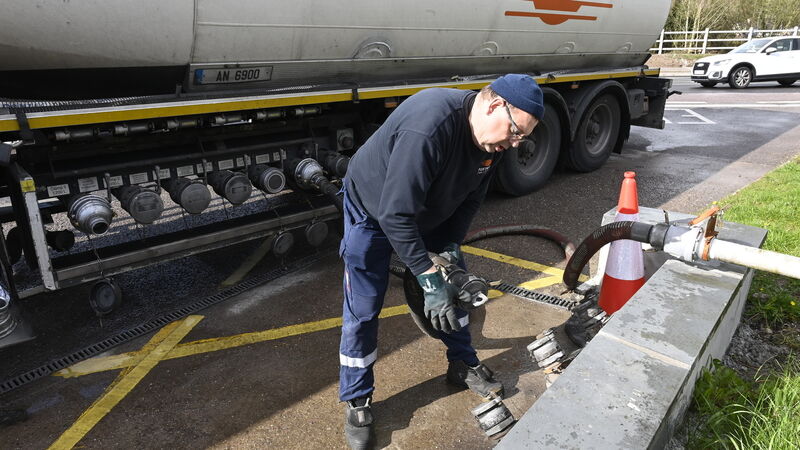
Adam Mudy, making a fuel delivery to the Applegreen Service station on the North Ring rd in Ballyvolane. He had travelled from Dublin to make deliveries in Cork. Picture: Noel Sweeney
The world’s top 100 oil and gas companies banked more than $30m (€25.5m) every hour in unearned profit in the first month of the US-Israeli war in Iran, according to exclusive analysis for the .
Saudi Aramco, Gazprom and ExxonMobil are among the biggest beneficiaries of the bonanza, meaning key opponents of climate action continue to prosper.
The conflict pushed the price of oil to an average of $100 (€85) a barrel in March, leading to estimated windfall war profits for the month of $23bn (€19.5bn) for the companies.
Oil and gas supplies will take months to return to pre-war levels and the companies will make $234bn (€199bn) by the end of the year if the oil price continues to average $100 (€85). The analysis uses data from leading intelligence provider Rystad Energy, analysed by Global Witness.
Read More
The excess profits come from the pockets of ordinary people as they pay high prices to fill up their vehicles and power their homes, as well as from businesses incurring higher energy bills. Dozens of countries have cut fuel taxes to help struggling consumers meaning those nations, including Australia, South Africa, Italy, Brazil and Zambia, are raising less money for public services.
Pressure is growing for windfall taxes on the war profits of oil and gas companies, with the European Commission considering a request from the finance ministers of Germany, Spain, Italy, Portugal and Austria to “send a clear message that those who profit from the consequences of war must do their part to ease the burden on the general public”.
“It would make it possible to finance temporary relief, especially for consumers, and curb rising inflation, without placing additional burdens on public budgets,” the ministers said in a letter on 4 April. The EU’s fossil fuel bill has risen by €22bn (€18.5bn) since the start of the Iran war.
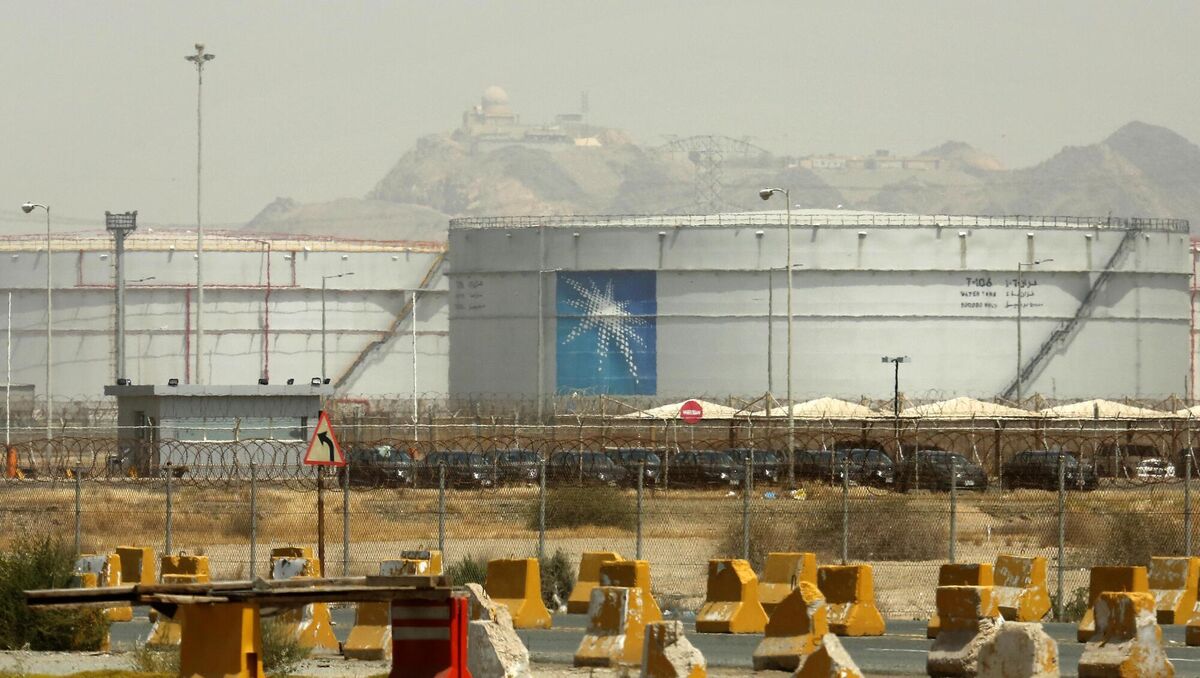
Aramco is by far the biggest winner, estimated to make a war profit of $25.5bn (€21.5bn) in 2026 if the oil price averages $100 (€85m). That is on top of the huge profits habitually made by the majority state-owned company – £250m (€288m) a day between 2016 to 2023. Saudi Arabia has for decades led successful efforts to block and delay international climate action.
Three Russian companies – Gazprom, Rosneft and Lukoil – stand to make an estimated $23.9bn (€20.3bn) in Iran-related war profits by the end of the year. The conflict has benefited Vladimir Putin’s treasure chest for his own war in Ukraine, with Russia receiving oil export revenues of €713m a day, 50% higher than in February, according to analysis by the Centre for Research on Energy and Clean Air.
ExxonMobil, which had a long record of denying climate change, will take in $11bn in unearned war profits in 2026 if the $100 (€85) price endures. Shell will get a $6.8bn (€5.8bn) boost. Both companies, like others, have also enjoyed huge increases in their value due to rises in share prices in the month after the Iran war began: ExxonMobil is worth $87bn (€73.9bn) more, Shell £25bn (€28.8bn) more.
Chevron is also on track to make big windfall profits from the Iran war – $9.2bn (€7.8bn) – according to the analysis. The company’s chief executive, Mike Wirth, has also benefited, selling $104m (€88.3m) worth of Chevron shares between January and March.
The impact of the Iran war is likely to be long lasting, with the International Energy Agency’s head, Fatih Birol, on Monday calling the Iran crisis the biggest shock ever to the global energy market.
Soaring oil and gas prices led the UN’s climate chief, Simon Stiell, to warn in mid-March: “Fossil fuel dependency is ripping away national security and sovereignty, and replacing it with subservience and rising costs.”
He said renewable energy instead insulates people and nations from price spikes: “Sunlight doesn’t depend on narrow and vulnerable shipping straits.”
The Iran war profits for oil and gas companies add to what has been for decades a supremely lucrative business for petrostates and shareholders. The oil and gas sector has made an average of $1,000bn (€850bn) a year in pure profit every year for the last half century, and much more in crisis years like 2022. The fossil fuel sector also benefits from explicit subsidies that totalled $1,300bn (€1,103bn) in 2022, according to the International Monetary Fund.
Patrick Galey, head of news investigations at Global Witness, said: “Moments of global crisis continue to translate into bumper profits for oil majors while ordinary people pay the price. Until governments kick their fossil fuel addiction, all of our spending power will be held hostage to the whims of strongmen.”
Jess Ralston, head of energy at the Energy and Climate Intelligence Unit, said: “This oil and gas crisis is illustrating yet again the cost of our dependence on volatile fossil fuels.
“Investing in net zero technologies is not only the route to permanent energy security, it’s also the only way to get the climate system back into balance. Calls to increase fossil fuel production and row back on net zero measures in the face of this new crisis would simply undermine our energy security and increase our exposure to damaging climate impacts.”
Beth Walker, an energy policy expert at the E3G thinktank, said: “Governments should use taxes on windfall profits to accelerate the transition to green energy, rather than deepen dependence on fossil fuels.”
Saudi Aramco, Shell and TotalEnergies declined to comment and ExxonMobil, Chevron, Gazprom, Petrobras and ADNOC did not respond to requests for comment.
The estimated war profits were calculated using Rystad Energy’s UCube database, which integrates global field-by-field data, news and intelligence and takes into account oil and gas demand to project how much each field can supply.
The windfall war profits were calculated by comparing the free cash flow generated from oil and gas production in March when oil was at an average $100 (€85) a barrel, compared to the $70 (€59.50) price before the Iran war. This date is the estimated upstream profit, after taxes and royalties, and capital and operating expenditure.
People in countries that are increasing their renewable energy capacity are shielded from some of the price rises and war profits. Wind and solar power in the UK in March meant £1bn (€850m) of gas imports were avoided. From 2010-2025, wind power saved consumers an estimated £100bn (€85bn).
Maria Pastukhova, energy transition programme leader at E3G, said that as long as homes, transport and industry remain tied to oil and gas, the UK and other fossil fuel importers remain exposed to global price shocks driven by conflict, chokepoints and market contagion.
“It doesn’t matter whether the molecules come from the North Sea or overseas; the UK exposure remains,” she said. “More UK fossil production is therefore a weak answer to energy insecurity.”
A UK government spokesperson said: “The government is determined to fight people’s corner in this crisis. We are driving further and faster for clean homegrown power that we control to protect the British people and bring down bills for good. We have also acted to prevent unfair practices like price-gouging, help those who rely on heating oil, and ensure households and businesses get a fair deal on their bills now.”


CLIMATE & SUSTAINABILITY HUB
CONNECT WITH US TODAY



Be the first to know the latest news and updates