Taiwan’s opposition leader visiting China on ‘journey of peace’
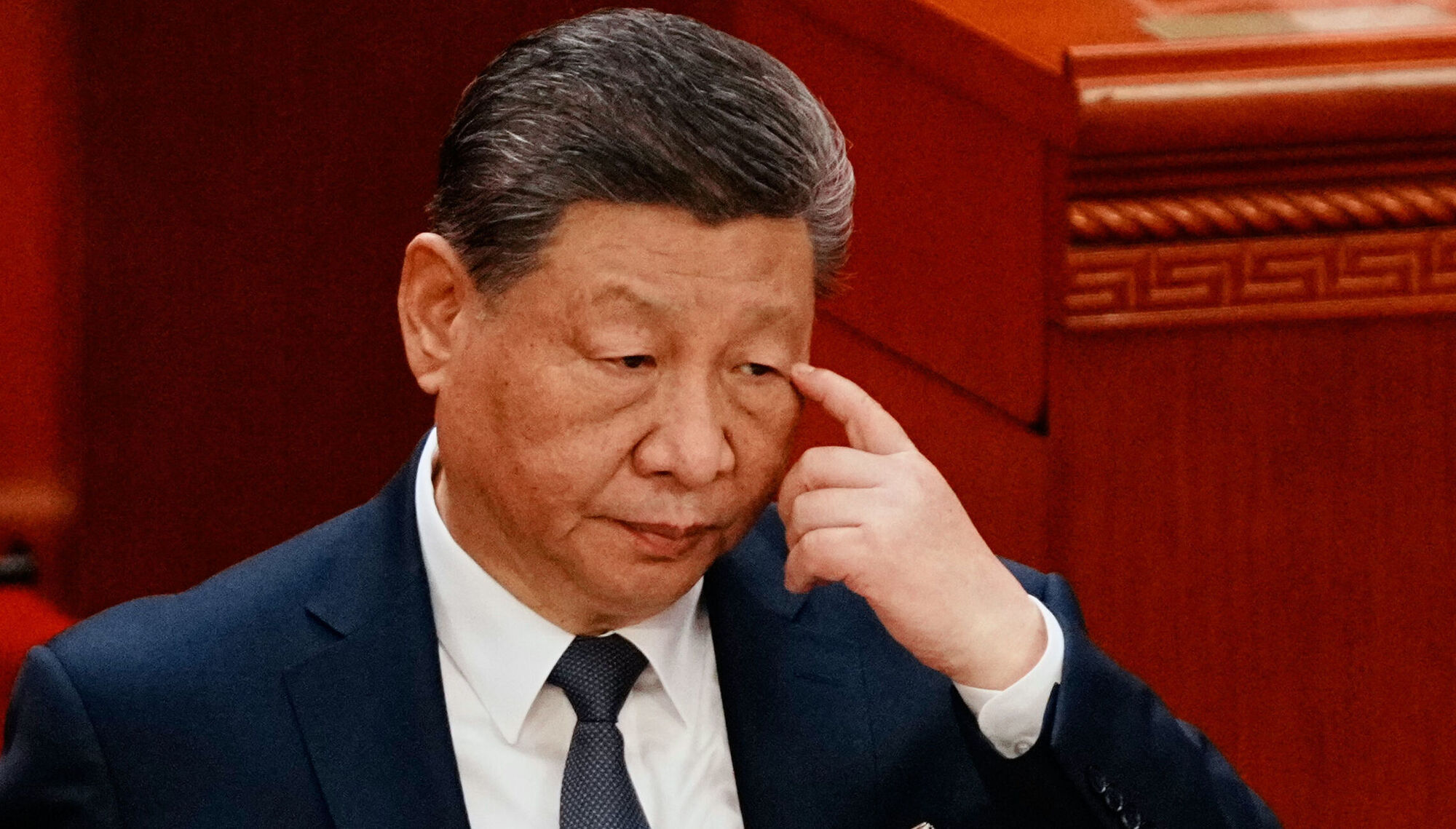
President Xi Jinping has invited Taiwan opposition leader Cheng Li-wun to visit China. Picture: AP Photo/Vincent Thian.
Taiwan opposition leader Cheng Li-wun is heading to China at the invitation of President Xi Jinping, in what she call it a “journey for peace” as Beijing calls for the self-ruled island to come under its control.
The visit is the first by a Taiwanese opposition leader in a decade and comes ahead of a meeting in Beijing between Xi and US President Donald Trump scheduled to take place in May.
Before leaving Taipei, the chairwoman of the Kuomintang told reporters that Taiwan must spare no effort to prevent war and seize any opportunity to promote peace.
China claims the self-ruled island as its own territory and has not ruled out the use of force to take it.
“The purpose of this visit to mainland China is precisely to show the world that it is not just Taiwan that unilaterally hopes for peace,” Ms Cheng said.
“I believe that through this journey for peace, everyone is even more eager to see the sincerity and determination of the CPC Central Committee to use peaceful dialogue and exchange to resolve all possible differences between the two sides,” she added, referring to the initials of the Communist Party of China.
A few dozen supporters and detractors of Ms Cheng showed up at Taipei’s airport, chanting and holding signs.
The Trump administration in December announced a massive package of arms sales to Taiwan valued at more than 10 billion US dollars that includes medium-range missiles, howitzers and drones, angering Beijing.
Beijing prohibits all its diplomatic partners, including the US, from maintaining formal ties with Taipei.
The US is the island’s strongest informal backer and arms provider, and the arms sale is expected to be discussed at the Xi-Trump summit.
In a call in February between Mr Xi and Mr Trump, the Chinese leader said that “Taiwan will never be allowed to separate from China”, according to a Chinese government statement about the conversation released at the time.
“The US must handle the issue of arms sales to Taiwan with prudence,” it added.
Beijing also said that the “Taiwan question is the most important issue in China-US relations”.
China has been sending warplanes and naval vessels toward Taiwan on a near-daily basis, and its military recently staged two major military exercises around the island.
The most recent exercise was in December, after the US announcement of the arms sales, and involved the deployment of air, naval and missile units for a joint live-fire drill.
The US State Department said such activities “increase tensions unnecessarily” and called on Beijing to cease military pressure against Taiwan.
China does not engage with Taiwanese President Lai Ching-te, describing him as a separatist.
Cheng will be in China at a time when the opposition-controlled parliament has stalled attempts by Taiwan’s government to pass a 40 billion US dollar special defence budget.


CONNECT WITH US TODAY



Be the first to know the latest news and updates