Iran will use Strait of Hormuz as leverage, says country’s new leader
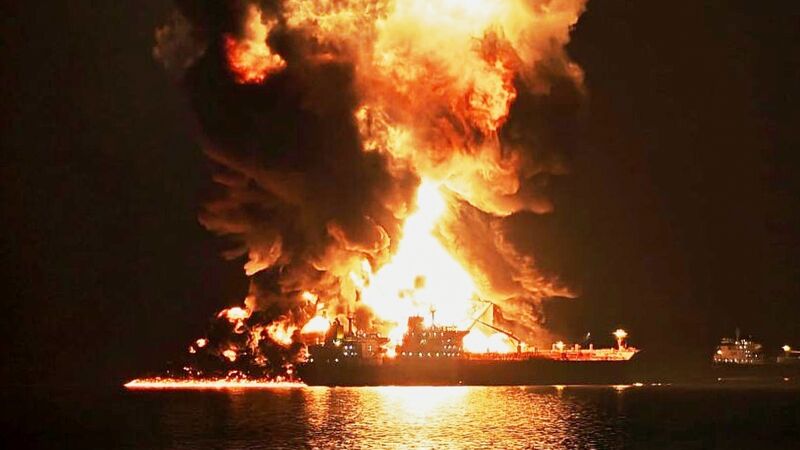
Iran has vowed to maintain its grip on the Strait of Hormuz. Picture: AP Photo/PA.
Iran’s Supreme Leader Ayatollah Mojtaba Khamenei said on Thursday that the leverage of closing the Strait of Hormuz should be used and that Iran’s attacks on Gulf Arab neighbours will continue.
His first statement since his appointment was read on state television by a news anchor. Mr Khamenei did not appear on camera, and an Israeli assessment indicates he was wounded in the war’s opening salvo.
Iran’s unrelenting attacks on shipping traffic and energy infrastructure in the Persian Gulf pushed oil back above $100 (€87) a barrel on Thursday, as American and Israeli strikes pounded the Islamic Republic with no sign of an end to the war in sight.
Iran is trying to inflict enough global economic pain to pressure the United States and Israel to halt their bombardment, which started the war on February 28.
Read More

Iran’s president said its attacks would continue until Iran gets security guarantees against another assault, indicating that even a ceasefire or US declaration of victory might not halt the conflict.
US President Donald Trump has promised to “finish the job”, even though he claimed Iran is “virtually destroyed”.
Iran-backed Hezbollah militants, meanwhile, launched some 200 rockets from Lebanon at northern Israel while sirens rang out and loud booms from the interception of Iranian missiles could be heard in other areas.
Israel launched another wave of attacks on Tehran and in Lebanon, where 11 people were killed.

The UN refugee agency said up to 3.2 million people in Iran have been displaced by the ongoing war.
It said most have fled from Tehran and other major cities toward the north of the country or rural areas.
It says at least 759,000 people have been internally displaced in Lebanon.
Iranian President Masoud Pezeshkian suggested online on Thursday that for the war to end, the world would need to recognise Iran’s “legitimate rights”, pay reparations and offer guarantees against future attacks.

In addition to attacking energy infrastructure around the region, Iran has a stranglehold on the Strait of Hormuz, the waterway leading from the Persian Gulf toward the Indian Ocean through which a fifth of the world’s oil is transported.
Amid speculation that the US might target Kharg Island in the Persian Gulf, Iran’s main oil terminal, Iran’s parliamentary speaker, Mohammad Bagher Qalibaf, threatened in a social media post that any attempt to take Iranian islands would “make the Persian Gulf run with the blood of invaders”.
It was a sleepless night for many Israelis as Hezbollah launched some 200 rockets at the country’s north and deeper into Israel, according to the Israeli military.
No serious injuries were reported, but the extent of the fire shook residents of the north, who have repeatedly been told by their leaders that Hezbollah was dealt a devastating blow in 2024 during its last war with Israel.
Israel, meantime, hit a car in a seaside area of Lebanon’s capital where dozens of displaced people have been sheltering, killing eight and wounding 31, the Lebanese Health Ministry said. The Israeli military said it was “not aware” of a strike at that location.
Iran’s latest attacks on its Gulf neighbours flouted a UN Security Council resolution approved on Wednesday.
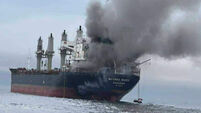
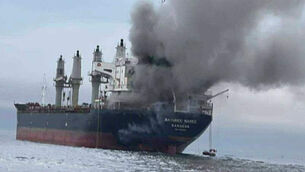
Early on Thursday, a container ship was hit with a projectile off the coast of Dubai, sparking a small fire, according to British military’s United Kingdom Maritime Trade Operations Centre. It said the crew were safe.
CONNECT WITH US TODAY



Be the first to know the latest news and updates