Iran targets busiest international airport as strikes escalate
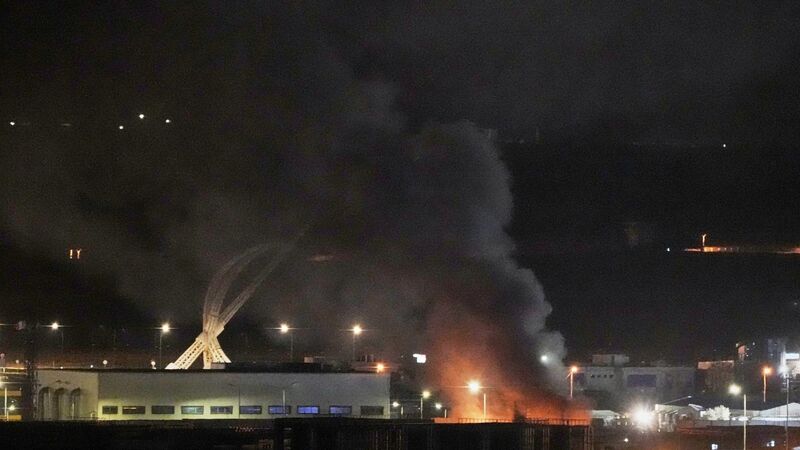
Iran targeted the world’s busiest international airport on Wednesday and attacked commercial ships in an escalation aimed at generating global economic pain to pressure the United States and Israel to end the war.
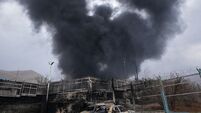
On Thursday, an Iranian attack sparked a major fire on Bahrain’s Muharraq Island, home to the island kingdom’s international airport.
Authorities urged people to stay indoors and close windows to avoid smoke. The airport has jet fuel tanks, and other tanks in the area serve the kingdom’s oil industry.
Also, an attack on Iraq’s Basra port killed at least one person and forced a halt to operations at all the country’s oil terminals.

Farhan al-Fartousi, the director-general of the General Company for Ports of Iraq, said the attack targeted a vessel in a ship-to-ship transfer area at the port on the Persian Gulf.
Iraq’s commercial ports remained open, though the oil terminals had been shut, according to his statement carried by the state-run Iraqi News Agency.
The first week of war with Iran cost the United States 11.3 billion dollars (£8.47 billion), according to the Pentagon, which provided the estimate to Congress in a briefing earlier this week, according to a person familiar with the situation who spoke on condition of anonymity to discuss the private meeting.
Both sides have dug in, hoping to outlast the other as the conflict upends trade routes, chokes supplies of fuel and fertiliser coming out of the Gulf and threatens air traffic through one of the world’s most-travelled regions.
Iran has targeted oil fields and refineries in Gulf Arab nations and effectively stopped cargo traffic through the narrow Strait of Hormuz, through which a fifth of all traded oil passes.
In response, the International Energy Agency agreed to release 400 million barrels of oil, the largest volume of emergency oil reserves in its history, in a bid to counter the war’s effects on energy markets.
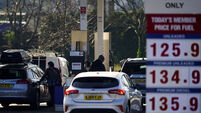
The US planned to release 172 million barrels of oil next week from its Strategic Petroleum Reserve to combat steep prices.
CONNECT WITH US TODAY



Be the first to know the latest news and updates