IEA agrees to release emergency oil reserves in effort to calm surging prices
The International Energy Agency agreed to release the largest volume of emergency oil reserves in its history, in a bid to counter the effects on energy markets of the war in the Middle East.
The Paris-based organisation said it will make 400 million barrels of oil available from its members’ emergency reserves.
It’s a larger stock than the 182.7 million barrels that were released in 2022 by the IEA’s 32 member countries in response to Russia’s full-scale invasion of Ukraine.
Today, @IEA Member countries unanimously agreed today to carry out the largest ever oil stock release – making 400 million barrels from their emergency reserves available amid market disruptions from the Middle East conflict.
— International Energy Agency (@IEA) March 11, 2026
Read more 👉 https://t.co/4HGtR7ZYZB pic.twitter.com/sPH1rOm8LY
IEA executive director, Fatih Birol, said: “Without sufficient routes to market and with no more available storage, Middle East oil producers have started to reduce production.
“And we have seen further attacks and damage to energy and energy-related infrastructure. Refinery operations have also been disrupted, with major implications for jet fuel and diesel supplies in particular.”
IEA member countries currently hold more than 1.2 billion barrels of public emergency oil stocks, with a further 600 million barrels of industry stocks held under government obligation.
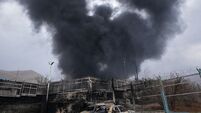
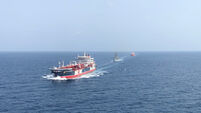
In response to US and Israeli strikes, Iran has attacked commercial ships across the Persian Gulf, escalating a campaign of squeezing the oil-rich region as global energy concerns mount.
Iran has effectively stopped cargo traffic in the narrow Strait of Hormuz, through which about a fifth of all oil is shipped from the Persian Gulf toward the Indian Ocean.
Today @IEA hosted a G7 Energy Ministers Meeting, chaired by Minister Roland Lescure of France, on the current oil & gas market situation
— Fatih Birol (@fbirol) March 10, 2026
We will hold an extraordinary meeting of IEA Member governments later today to assess market conditions
My statement: https://t.co/ViR4Zc4Mhv pic.twitter.com/TYlt2Aj89E
It has also targeted oil fields and refineries in Gulf Arab nations, aiming at generating enough global economic pain to pressure the United States and Israel to end their strikes.
Germany and Austria said on Wednesday they would release parts of their oil reserves following an IEA request for members to release the record 400 million barrels to help temper energy price spikes due to the Iran war.
Japan also said it will release some of its reserves starting from Monday.
G7 energy ministers met at IEA headquarters in Paris to look at ways to bring down prices.
Mr Birol said afterwards that they discussed all available options, including making IEA emergency oil stocks available to the market.
The IEA reserves were established in 1974 following the Arab oil embargo.
Mr Birol added: “This is a major action aiming to alleviate the immediate impacts of the disruption in markets.
“But, to be clear, the most important thing for a return to stable flows of oil and gas is the resumption of transit through the Strait of Hormuz.”

The G7 comprises the leading industrialised nations of Canada, the United States, France, Italy, Japan, Germany and Britain. Austria is not a member. The group’s leaders were set to hold a meeting via videoconference later on Wednesday to discuss energy issues.
The German economy ministry, Katherina Reiche, said the IEA asked Germany to release 2.64 million tons of its oil reserves. It was not immediately clear how much Austria was releasing.
She said it would take a couple of days before the delivery of the first quantities.
“Germany stands behind the IEA’s most important principle of mutual solidarity,” Ms Reiche said.
The G7 energy ministers announced on Tuesday that they supported in principle “the implementation of proactive measures to address the situation, including the use of strategic reserves”.
According to the IEA, export volumes of crude and refined products are currently at less than 10% of pre-war levels.
I welcome the decision by IEA Member countries to carry out coordinated oil stock release amid the current market disruptions sparked by the conflict in the Middle East.
— Dan Jørgensen (@DanJoergensen) March 11, 2026
In times of hardship, unity and global cooperation are essential. ↓
Austrian Economy Minister Wolfgang Hattmannsdorfer said his country was releasing part of the emergency oil reserve and extending the national strategic gas reserve, adding: “One thing is clear: in a crisis, there must be no crisis winners at the expense of commuters and businesses.”
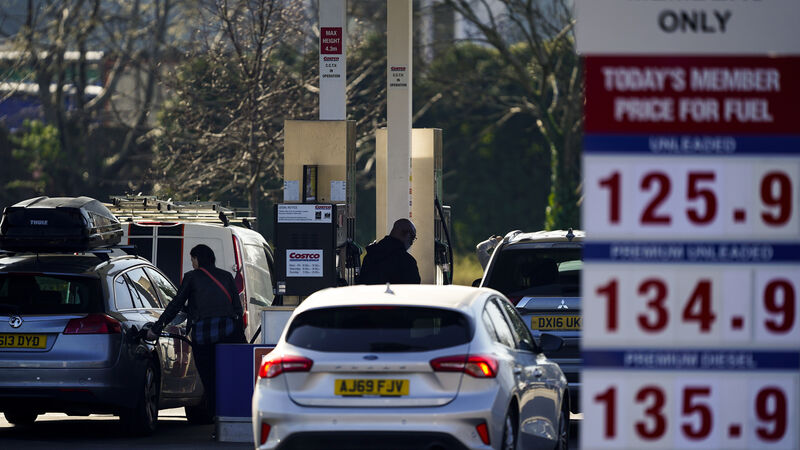
The German government also said it will introduce a measure to allow petrol stations in Germany to raise fuel prices no more than once a day.
The federal government wants to introduce this as quickly as possible, Ms Reiche said.
In Austria, starting Monday, price increases at petrol stations will be allowed only three times a week, the country’s economy minister said.
Oil reserves have been tapped when the market has faced major disruption in the past, including wars in Iraq, Libya and, most recently, Ukraine.


CONNECT WITH US TODAY



Be the first to know the latest news and updates