International Energy Agency orders largest ever release of stockpiled oil
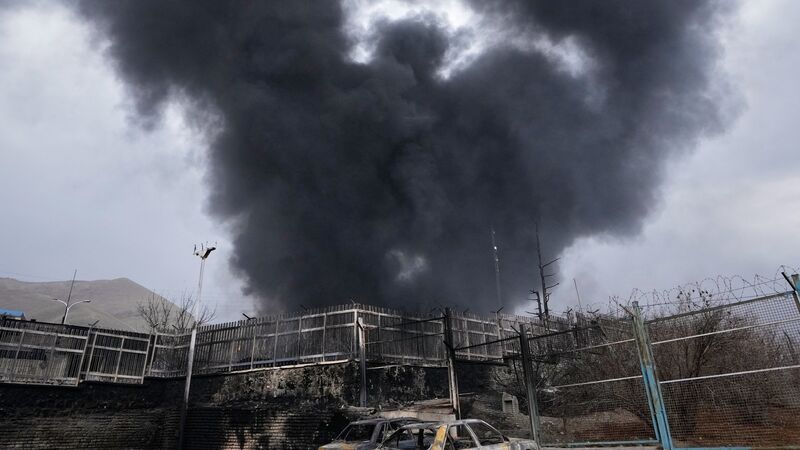
A thick plume of smoke rises from an oil storage facility hit by a US-Israeli strike in Tehran, Iran. Picture: Vahid Salemi/AP Photo.
The International Energy Agency has ordered the largest release of government oil reserves in its history to help calm the oil price shock triggered by the US-Israeli attacks on Iran.
The world’s energy watchdog said its 32 members had agreed unanimously to release about 400m barrels of emergency crude, a third of the group’s total government stockpiles and more than double the IEA’s previous biggest release.
The emergency intervention far outstrips the 2022 release of 182m barrels of oil by IEA countries after Russia’s full-scale invasion of Ukraine.
Executive director Fatih Birol said: “Oil markets are global so the response to major disruptions needs to be global, too. Energy security is the founding mandate of the IEA, and I am pleased that IEA members are showing strong solidarity in taking decisive action together.”
The IEA said the emergency stocks would be made available to the global market, which has lost about 15m barrels of crude a day because of a block on trade via the strait of Hormuz, over a timeframe appropriate to the national circumstances of each member, bolstered by supplementary emergency measures from some countries.
Japan’s prime minister, Sanae Takaichi, said the country, which relies on the strait of Hormuz for about 70% of its oil imports, would “act first” to release about 80m barrels from its private and national oil reserves from March 18 to help calm global oil markets.
Germany’s economy minister, Katherina Reiche, told reporters in Berlin that the German government would release the equivalent of 19.51m barrels of crude as part of the IEA’s historic release of crude.
“We will comply with this request and contribute our share, because Germany stands behind the IEA’s most important principle: mutual solidarity,” Reiche said.
The historic market intervention will deliver the equivalent of about 26 days of crude typically delivered via the vital oil trade artery, where deliveries have ground to a halt because of the threat of attack from Tehran.
At least 13 commercial vessels have come under attack in the region since the war began, including three on Wednesday as Iran’s military said the world should be prepared for oil to hit $200 a barrel.
Members of the IEA, which was set up after the Middle East oil crisis in the 1970s, are required to hold at least 90 days’ worth of crude supplies in reserve, which can be released to the market in the event of a supply shock.
In total, its members hold more than 1.2bn barrels of public emergency oil stocks and a further 600m barrels of stocks held by industry under government obligation.
About 15% of the stockpile is held in overseas countries, including the Netherlands, Belgium and Germany.
Although no G7 countries have faced physical shortages of oil since the war began last month, the price of Brent crude has fluctuated wildly, briefly jumping as high as $119.50 a barrel on Monday, which took it to levels not seen since 2022.
Shipments of oil and seaborne gas from the Middle East have struggled to reach the global market for almost two week as result of the effective closure of the strait of Hormuz, a key shipping lane off the coast of Iran through which about a fifth of global oil and seaborne gas tankers pass.
Oil is now sitting at about $90 a barrel after reports that the G7 would meet to discuss a market intervention.


CONNECT WITH US TODAY



Be the first to know the latest news and updates