Iran apologises to Gulf but war still rages across region
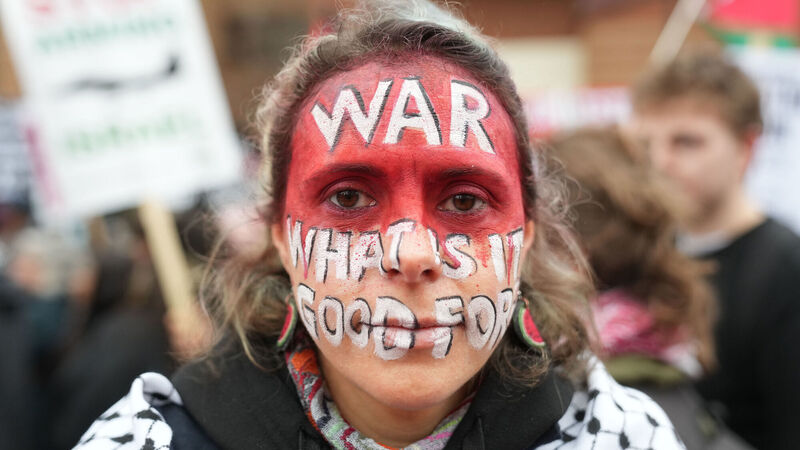
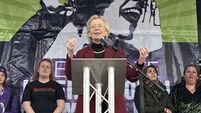
A protester takes part in a demonstration organised by CND, Stop the War, Palestine Solidarity Campaign, Muslim Association of Britain, Palestinian Forum in Britain and Friends of Al-Aqsa, at the US Embassy in London to call for an end to attacks on Iran. Picture: Maja Smiejkowska/PA Wire
Israel and Iran traded attacks as the Middle East war entered a second week on Saturday, while Tehran made an unusual apology to neighbouring states, apparently seeking to calm regional anger at Iranian strikes on Gulf civilian targets.
"I personally apologise to neighbouring countries that were affected by Iran’s actions,” Iranian President Masoud Pezeshkian said, urging them not to join US-Israeli attacks on Iran.
He dismissed US President Donald Trump's demand for the Islamic Republic's unconditional surrender as "a dream", but said its temporary leadership council had agreed to suspend attacks on nearby states unless strikes on Iran originated from their territory.
Trump nonetheless cast Iran's apology as a surrender, while saying the country would be "hit very hard"[] on Saturday and warned the US could widen its attacks to areas and groups of people that were not p/urlreviously designated targets.
Pezeshkian’s comments caused a political stir in Iran, prompting his office to reiterate Iran's military would respond firmly to attacks from US bases in the region. Hamid Rasai, a hardline cleric and lawmaker, wrote on X, "Mr Pezeshkian, your stance was unprofessional, weak and unacceptable".
Hours after Pezeshkian's announcement, Iran's Revolutionary Guards said their drones struck a US air combat centre at Al Dhafra Air Base, near Abu Dhabi, capital of the United Arab Emirates. Reuters could not independently verify that report.
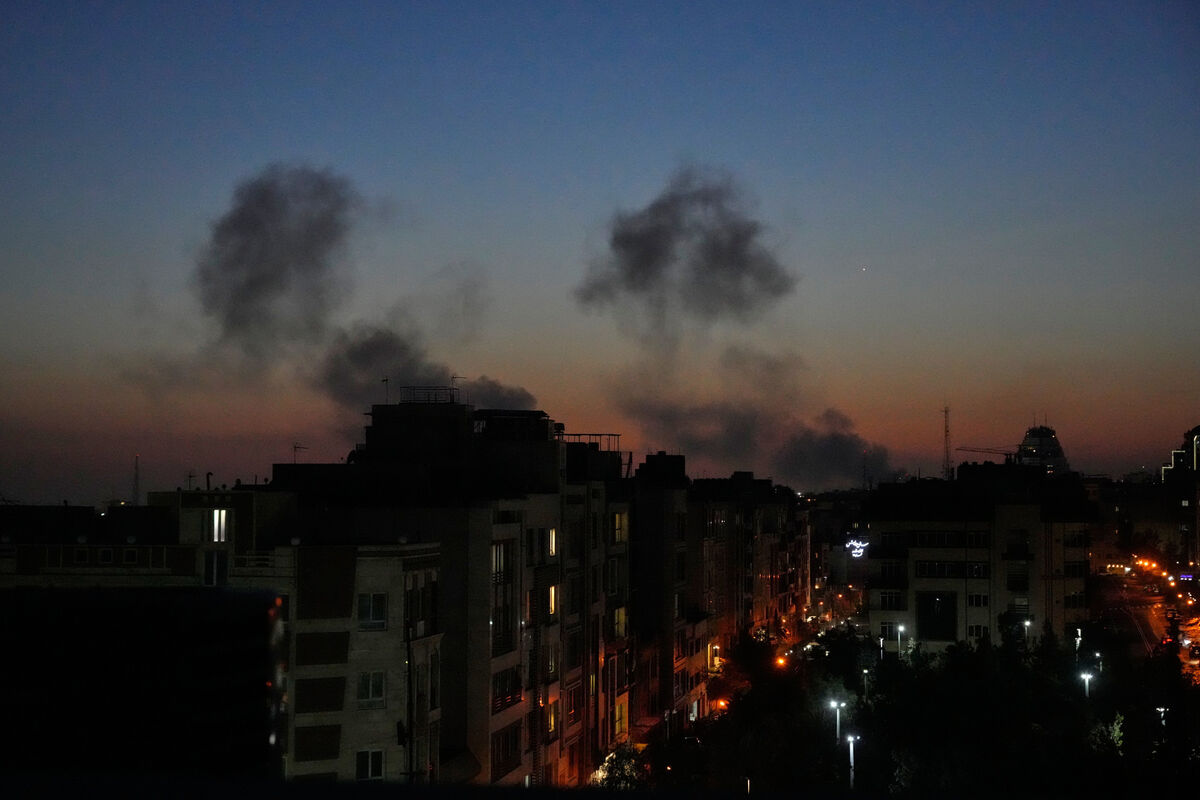
The Revolutionary Guards also targeted US forces at a base in Bahrain, the Iranian state media said. Blasts were also heard in Doha, a Reuters witness said.
Gholamhossein Mohseni-Ejei, Iran's judiciary chief, said evidence from Iran’s armed forces indicates that the territory of some regional countries was being used to carry out attacks against Iran.
Heavy strikes on those targets will continue, said Mohseni-Ejei, who is also a member of the interim leadership council set up after Supreme Leader Ayatollah Ali Khamenei was killed in an airstrike on his compound at the start of the conflict.
Huge explosions were heard in several parts of the Iranian capital, state media reported.
The US-Israeli war on Iran has already spilled beyond Iran's borders, as Tehran has responded by hitting Israel and Gulf Arab states hosting US military installations and Israel has launched fresh attacks in Lebanon after the Iran-aligned militia Hezbollah fired across the border.
Gulf states voiced outrage that their civilian infrastructure - hotels, ports and oil facilities - was struck despite their having had no part in the US-Israeli attacks.
The UAE, Kuwait, Qatar, Bahrain, Oman, Saudi Arabia and Iraq have all reported drone or missile attacks over the past week.
Iran had mended fences with its Gulf neighbours in recent years, including with former regional arch-rival Saudi Arabia.
An Emirati official said the United Arab Emirates wanted the Iranian aggression against the Gulf states to end immediately.
"We don’t want the war to expand. We want to start with the Iranians realizing that they are not helping themselves by attacking their whole neighbourhood and to stop there and realize that," the official said.
With the conflict spreading, Israel warned Lebanon of a "very heavy price" if it did not rein in Hezbollah, as it pounded the group's strongholds with airstrikes and mounted a deadly airborne raid in the east.
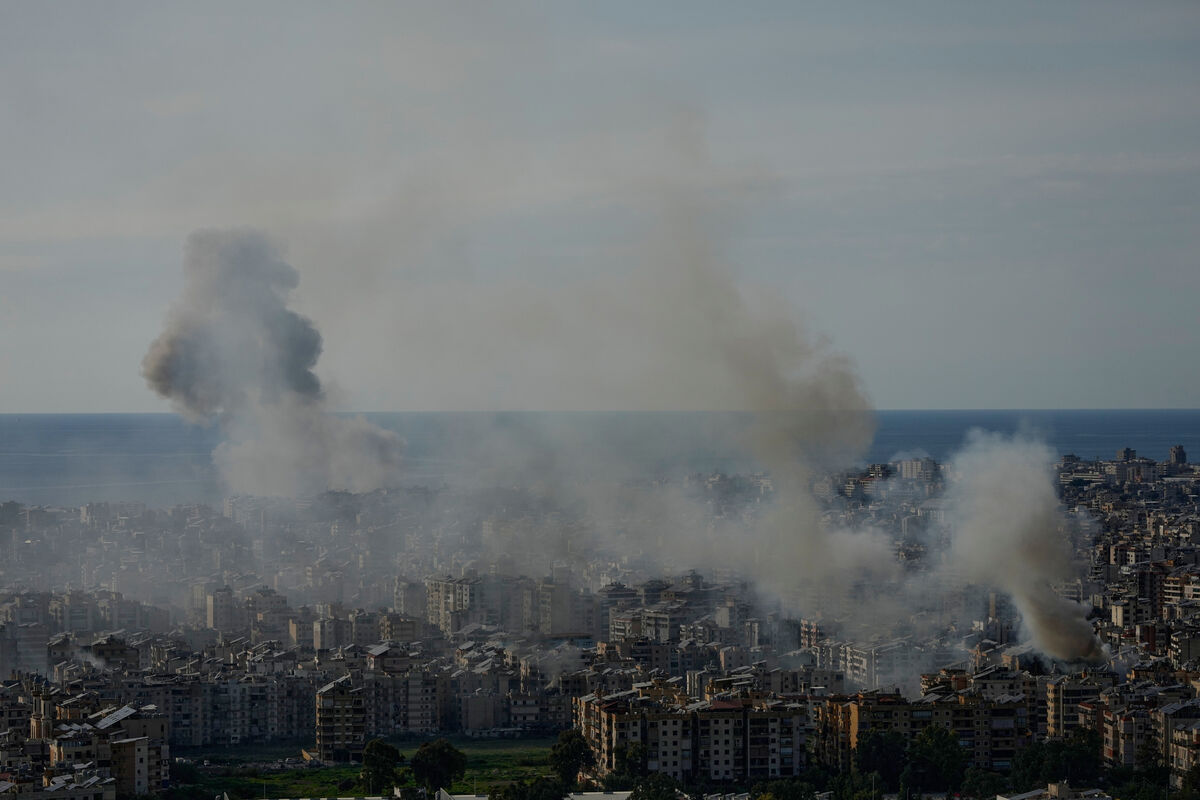
On Saturday morning, more buildings in the Hezbollah-controlled southern suburbs of Beirut had been reduced to mounds of smoking rubble, dust and tangled wires, Reuters video showed, with a toddler's toy car lying on its side.
Heavy Israeli bombardment had followed an evacuation order for civilians. The total death toll from Israel's attacks on Lebanon since Monday has risen to 294, the health ministry said.
The US-Israeli attacks have killed at least 1,332 Iranian civilians and wounded thousands, according to Iran's UN ambassador, Amir Saeid Iravani.
Iranian attacks have killed 10 people in Israel, and at least six US service members have been killed.
Iran's apparent strategy of maximum chaos has driven up the costs of the conflict by raising energy prices, hurting global business and logistics links and shaking trust in the stability of a critical region for the world's economy.
Early on Saturday, the Iranian army said its navy had carried out drone strikes against targets in Israel as well as US gathering points and bases in Abu Dhabi and Kuwait.
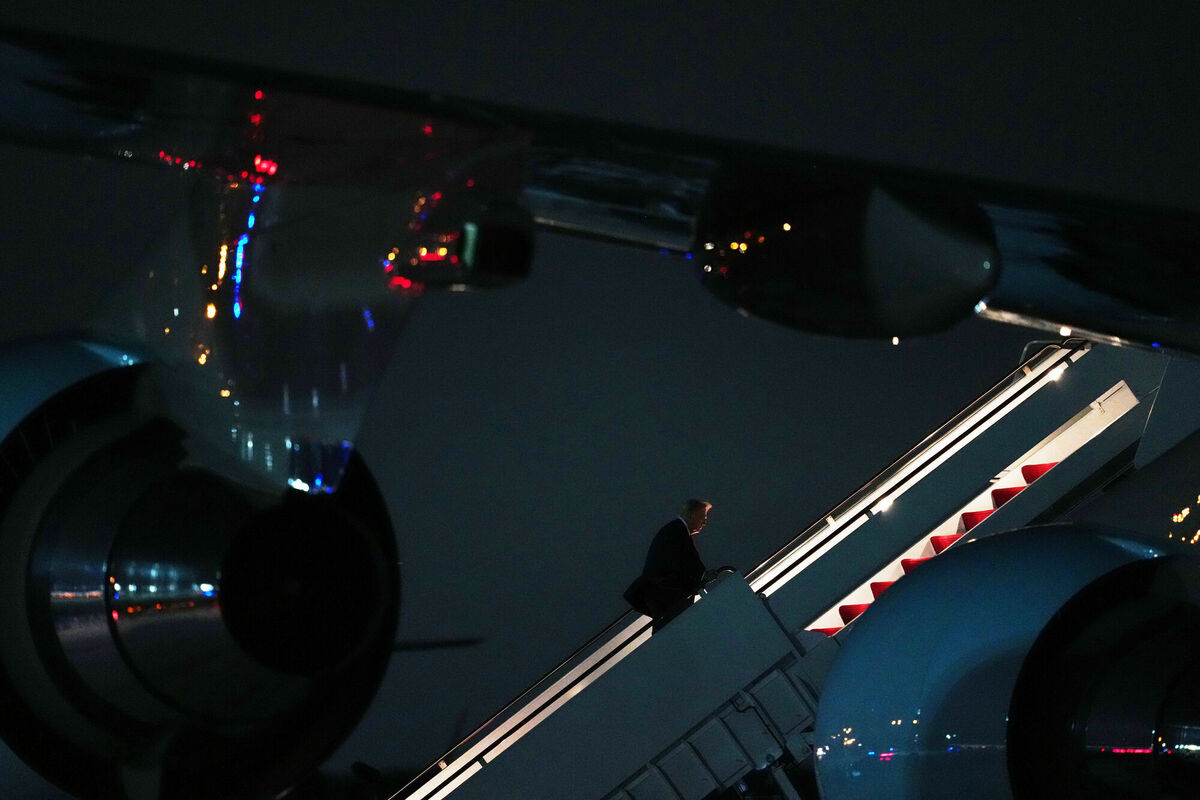
Speaking at an event hosting Latin American leaders in Miami, Florida, Trump said on Saturday the US had knocked out 42 Iranian navy ships in three days.
Israel launched what its military described as a new wave of strikes on Tehran and Isfahan, while overnight, the Israeli military said it had carried out strikes on neighbouring Lebanon that it said were aimed at Hezbollah military sites.
The Israeli military reported identifying missiles fired from Iran at Israel on eight different occasions on Saturday, setting off air raid sirens in parts of the country and prompting Israeli air defences to intercept incoming fire.
The war has roiled global markets and oil prices have hit multi-year highs with the Strait of Hormuz effectively shut. About one-fifth of global oil moves daily through the strait.
Iran's Revolutionary Guards hit a Marshall Islands-flagged tanker in Hormuz, Iranian state media reported on Saturday.
Trump has said the US Navy could escort ships in the Gulf. But Iran's Revolutionary Guards challenged him to do so, with spokesperson Alimohammad Naini saying Iran "welcomes" and is "awaiting" any US presence in the strait, state media said.
Trump also reiterated his demand to have a say in selecting Iran's new supreme leader, a notion rejected by Iravani.
The ambassador said new leadership would be selected "without any foreign interference."
CONNECT WITH US TODAY



Be the first to know the latest news and updates