World leaders urge return to talks after US and Israeli strikes
World leaders urged peace and a return to talks as the military strikes by the US and Israel on Iran raised concerns about whether the violence could spread across the region.
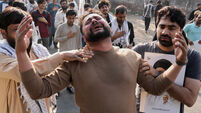
The calls came as tensions rose with Iran vowing devastating blows after the killing of the country’s Supreme Leader Ayatollah Ali Khamenei.
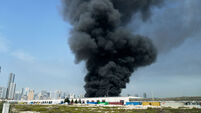
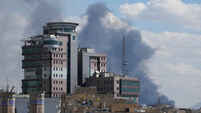
A massive explosion rocked the Iranian capital on Sunday morning as the Israeli military said it was targeting the “heart” of the city after stating it cleared the path to the capital Tehran the day before.
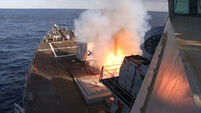
Meanwhile, Iran pressed on with its retaliation campaign targeting US military bases in Gulf states.
Read More
41802017;41801996[/readmore]
The demise of Mr Khamenei, who had no designated successor, will likely throw Iran’s future into uncertainty and exacerbate already growing concerns of a broader conflict.
But it has also been giving hope to Iranians who have suffered from political repression.
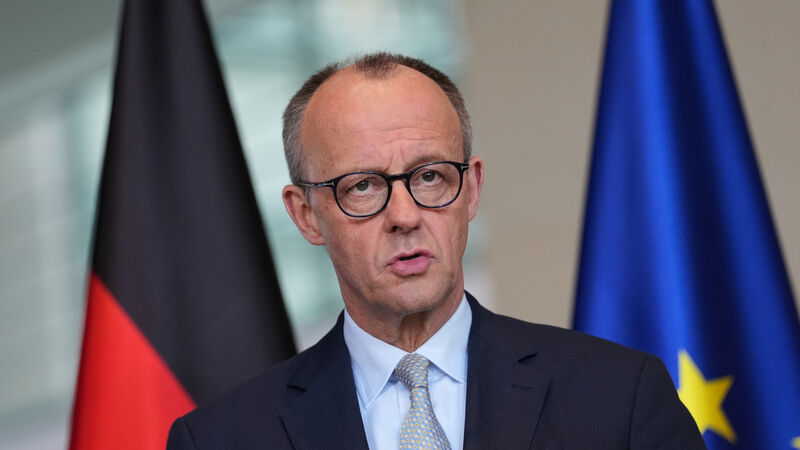
Speaking on Sunday, German Chancellor Friedrich Merz recognised the complexities of the situation.
In recognition of the legal ambiguity of the US attack, Mr Merz said that, globally, international law was being respected less and less and there was little point in lecturing allies.
He said the Iranian regime was a “terrorist” one, endangering its citizens and the region and therefore Germany essentially agreed with the goals of the US action.

“The federal government shares the relief of many Iranians that this mullah regime is now coming to an end,” Mr Merz said.
“Together with the United States and Israel, we share the interest in ending this regime’s terror and stopping its dangerous nuclear and ballistic armament.”
The evolution of the situation was hard to predict, the German chancellor said.
He said not only was it unclear how far Iran was willing to go with its counterattack, but also “we do not know whether the plan to bring about political change from within through external military strikes will succeed”.
To reduce risks, Mr Merz set out four principles his country would pursue in its further actions in the region: creating a new order in the Middle East in which all neighbours recognise Israel’s right to exist; pursuing a treaty that commits Iran to ending its nuclear and ballistic missile programme; supporting the future economic development of Iran and helping Iranians to freely determine their future.

Fears about the conflict spreading were amplified on Sunday, when UK defence minister John Healey said Iranian missile and drone strikes had come within a few hundred yards of a group of 300 British military personnel in Bahrain, and that two missiles were fired in the direction of Cyprus, where the UK has bases.
“We don’t believe they were targeted at Cyprus, but nevertheless, it’s an example of how there is a very real and rising threat from a regime that is lashing out widely across the region, and that requires us to act,” Mr Healey told Sky News.
He said British planes would intercept any Iranian drones and missiles they saw.
Cyprus government spokesman Constantinos Letymbiotis posted on X that reports suggesting missiles had been fired toward Cyprus were not valid and that “there is no indication whatsoever that any threat to the country has occurred”.
Top diplomats from the 27 European Union nations were holding an emergency meeting on Sunday to discuss the situation around Iran and the next steps for the bloc.
“The death of Ali Khamenei is a defining moment in Iran’s history. What comes next is uncertain,” EU foreign policy chief Kaja Kallas said on Sunday.
“But there is now an open path to a different Iran, one that its people may have greater freedom to shape.”
Pope Leo said on Sunday that he was “profoundly concerned” about the US and Israeli strikes on Iran and urged both sides to “stop the spiral of violence before it becomes an irreparable abyss”.
During a UN security council meeting on Saturday, the UN chief and many countries urged a halt to attacks and a return to negotiations to prevent the conflict from expanding further into the region and beyond.
Secretary-general Antonio Guterres told the council that everything must be done to prevent an escalation.
“The alternative,” he warned, “is a potential wider conflict with grave consequences for civilians and regional stability.”
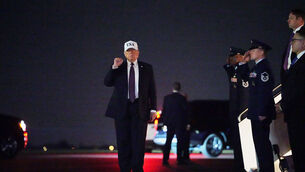
Perhaps cautious about upsetting already strained relations with US President Donald Trump, many nations, including several in the Middle East, refrained from commenting directly or pointedly on the joint strikes but condemned Tehran’s retaliation.
The 22-nation Arab League called the Iranian attacks “a blatant violation of the sovereignty of countries that advocate for peace and strive for stability”.
This coalition of nations has historically condemned both Israel and Iran for actions it says risk destabilising the region.
“Return to your senses… and deal with your neighbours with reason and responsibility before the circle of isolation and escalation widens,” Anwar Gargash, an adviser to the United Arab Emirates’ president, told the Iranian theocracy.

Speaking on Sunday, Russian leader Vladimir Putin blasted Mr Khamenei’s killing, which he called “a cynical violation of all norms of human morality and international law”.
“The blatant killing of the leader of a sovereign state and the incitement of regime change are unacceptable,” China’s foreign minister Wang Yi said in a phone call with his Russian counterpart Sergei Lavrov, according to China’s official Xinhua News Agency.
“These actions violate international law and the basic norms governing international relations.”
He said attacking a sovereign state without UN security council authorisation undermined the foundation for peace established after the Second World War.
CONNECT WITH US TODAY



Be the first to know the latest news and updates