Spain performs pioneering face transplant from donor who requested assisted dying
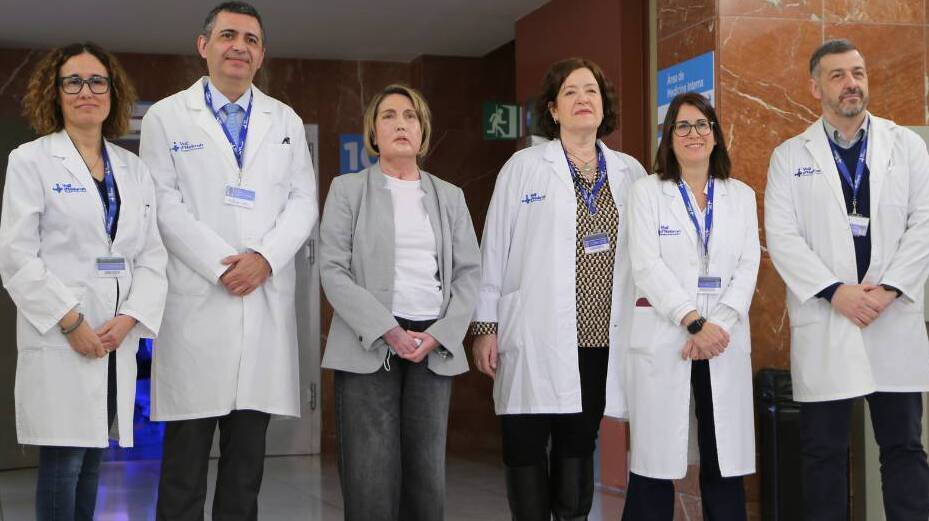
The face transplant recipient, Carme, third from left, with the doctors who performed her face transplant at Vall D'Hebron hospital in Barcelona.
A hospital in Barcelona said on Monday it had performed a pioneering facial transplant in which the donor, in a world first, had offered her face for donation before undergoing an assisted dying procedure.
The complex surgery involved transplanting composite tissue from the central part of the face and required the participation of around 100 professionals, including psychiatrists and immunologists, the prestigious Vall d'Hebron hospital said in a statement.
The hospital's transplant co-ordinator, Elisabeth Navas, said the donor had shown "a level of maturity that leaves one speechless".
"Someone who has decided to end their life dedicates one of their last wishes to a stranger and gives them a second chance of this magnitude," Navas said.
The recipient — identified only by her first name, Carme — had suffered facial tissue necrosis from a bacterial infection caused by an insect bite, affecting her ability to speak, eat and see. Carme told a press conference on Monday:
She added that her recovery was going very well.
For such cases requiring facial transplants, donor and recipient must share the same sex, blood group and have a similar head size.
With a population of 49.4m, Spain has been a global leader in organ transplants for more than three decades.
In 2021, it became the fourth EU country to legalise euthanasia.
Half of the six facial transplants ever done in Spain have been performed by Vall d'Hebron staff.
The Catalan hospital also carried out the world's first full face transplant back in 2010.
A spokesperson for the hospital declined to say the exact date of the procedure for privacy reasons, but told Reuters it took place during the autumn of 2025.
Some 6,300 organ transplants were performed last year in Spain, according to health ministry data, with kidney transplants being the most common.
In 2024, 426 people received assistance in dying, government data shows.


CONNECT WITH US TODAY



Be the first to know the latest news and updates