Trump's tariff threat risks ‘dangerous downward spiral’, affected countries warn
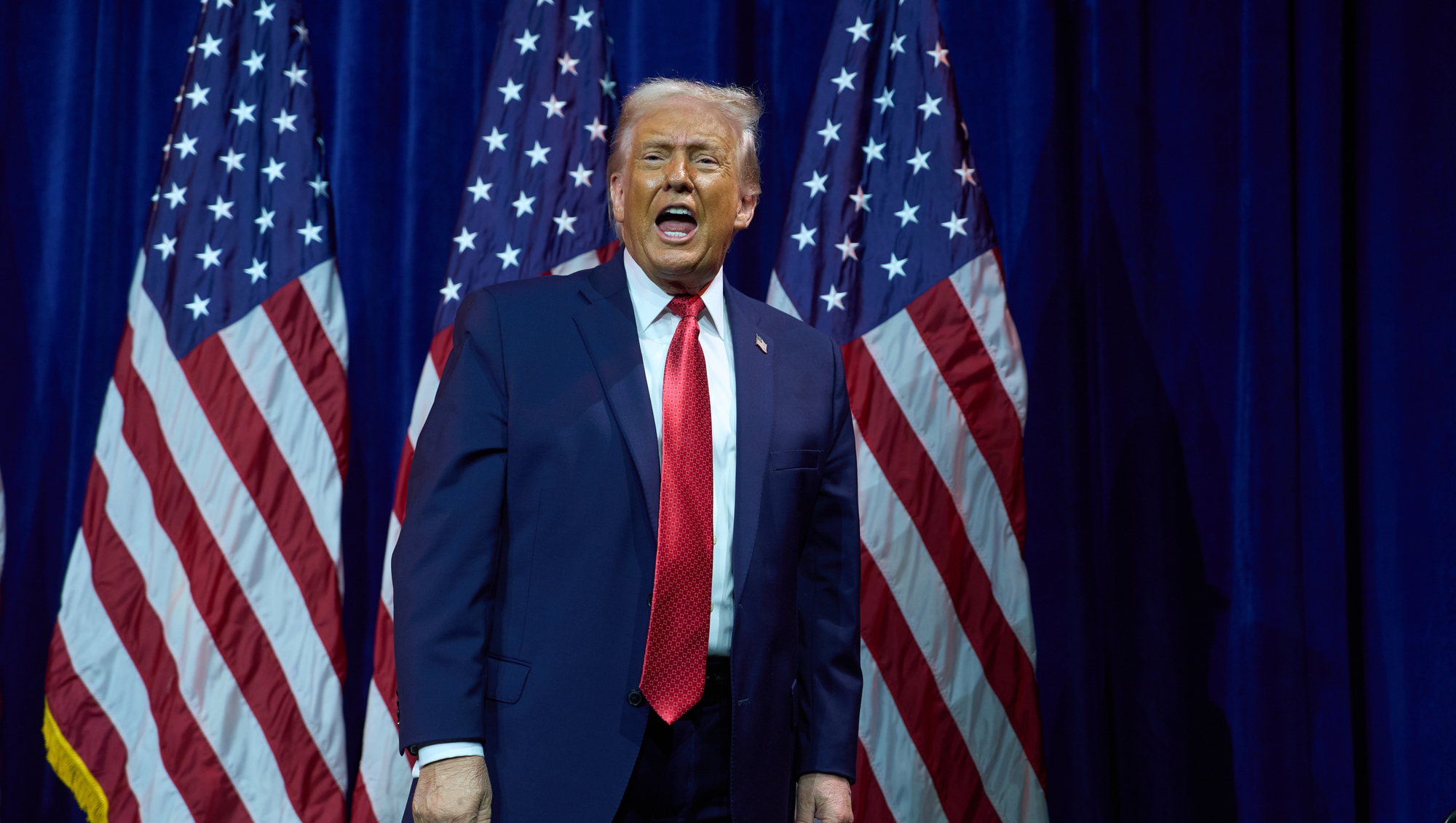
US president Donald Trump. File picture: AP Photo/Evan Vucci
US tariff threats over the future of Greenland “undermine transatlantic relations and risk a dangerous downward spiral,” the seven affected European countries and Britain have said.
In a joint statement on Sunday, the countries said they will “stand united and coordinated” in their response.
US president Donald Trump said on Saturday that Denmark, Norway, Sweden, France, Germany, the Netherlands, Finland, and the UK will be charged a 10% tariff “on any and all goods” sent to the US from February 1, increased to 25% from June 1, until a deal is reached for Washington to purchase Greenland from Denmark.
They said: “As members of Nato, we are committed to strengthening Arctic security as a shared transatlantic interest.
“The pre-coordinated Danish exercise Arctic Endurance conducted with Allies, responds to this necessity.
“It poses no threat to anyone.
“We stand in full solidarity with the Kingdom of Denmark and the people of Greenland.
“Building on the process begun last week, we stand ready to engage in a dialogue based on the principles of sovereignty and territorial integrity that we stand firmly behind.
“Tariff threats undermine transatlantic relations and risk a dangerous downward spiral.
“We will continue to stand united and coordinated in our response.
“We are committed to upholding our sovereignty.”
The US president’s longstanding interest in acquiring Greenland “one way or the other” has become a fixation since the US raid that captured Venezuelan president Nicolás Maduro earlier in January. While he has claimed the Arctic territory’s current status poses a national security threat to the US, this has been disputed by US allies, including Denmark.
In the Saturday morning post, Mr Trump said forces from the eight European nations “have journeyed to Greenland, for purposes unknown”.
It was an apparent reference to Nato allies deploying troops in Greenland on Thursday in response to Mr Trump’s threats to forcefully take the Arctic island, which is an autonomous territory of Denmark.
Mr Trump has repeatedly turned to tariffs in a bid to force countries to bend to his will — with some success. Days after returning to office for his second term in early 2025, Colombia agreed to accept military aircraft carrying deported migrants after Mr Trump threatened steep duties on the country’s exports to the US.
He stressed on Saturday that the US was “immediately open to negotiation” with Denmark and any of the countries it was threatening to hit with these new tariffs.
His aggressive global trade strategy has raised fears for the US economy, which analysts and policymakers have warned could face significant damage from sweeping tariffs on the world.
While the White House has played down such concerns, a vast wave of tariffs unveiled by Mr Trump last spring — when he proclaimed the start of a new era for the US economy — was quickly reversed as global markets fell sharply.
But his administration’s erratic rollout of other tariffs nevertheless significantly strained US trade ties with the world. Americans now face an overall average effective tariff rate of 16.8%, according to the Budget Lab at Yale, the highest level since 1935.