Brigitte Bardot, French screen legend, dies aged 91
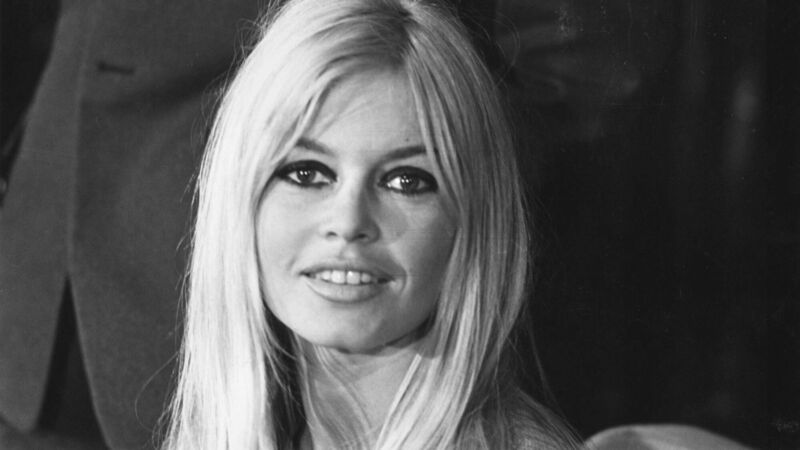
Brigitte Bardot, French screen legend, dies aged 91

Ms Bardot shot to international fame with the 1956 film And God Created Woman, written and directed by her then-husband Roger Vadim, and for the next two decades embodied the idea of the archetypal “sex kitten”. 

Brigitte Bardot, the French actor and singer who became an international sex symbol before turning her back on the film industry to become an animal rights activist, has died aged 91.

“The Brigitte Bardot foundation announces with immense sadness the death of its founder and president, Madame Brigitte Bardot, a world-renowned actress and singer, who chose to abandon her prestigious career to dedicate her life and energy to animal welfare and her foundation,” it said in a statement sent to Agence France-Presse on Sunday, without specifying the time or place of death.


Ms Bardot shot to international fame with the 1956 film And God Created Woman, written and directed by her then-husband Roger Vadim, and for the next two decades embodied the idea of the archetypal “sex kitten”. 

In the early 1970s, however, she announced her retirement from acting and became increasingly active politically. Her outspoken support of animal rights evolved into incendiary comments about ethnic minorities and open support for France’s far-right Front National, resulting in a string of convictions for racial hatred.

Born in 1934 in Paris, Bardot grew up in a prosperous, traditional Catholic family but excelled enough as a dancer to be allowed to study ballet, gaining a place at the prestigious Conservatoire de Paris. At the same time she found work as a model, appearing on the cover of Elle in 1950 while still 15. 

As a result of her modelling work, she was offered film roles; at one audition she met Mr Vadim, whom she would marry in 1952, after she turned 18. Ms Bardot was cast in small roles, with increasing prominence; she played Dirk Bogarde’s love interest in Doctor at Sea, a big hit in the UK in 1955.

But it was Mr Vadim’s And God Created Woman, in which Bardot played an uninhibited teenager in Saint-Tropez, that consolidated her image and turned her into an international icon. The film was a huge hit in France, as well as internationally, and catapulted Bardot into the front rank of French screen performers.

Born in 1934 in Paris, Bardot grew up in a prosperous, traditional Catholic family but excelled enough as a dancer to be allowed to study ballet, gaining a place at the prestigious Conservatoire de Paris.

As well as for cinema audiences, Ms Bardot swiftly became an inspiration for intellectuals and artists; not least the young John Lennon and Paul McCartney, who demanded their then-girlfriends dye their hair blond in imitation of her. Columnist Raymond Cartier wrote a lengthy article about “le cas Bardot” in Paris-Match in 1958, while Simone de Beauvoir published her famous essay Brigitte Bardot and the Lolita Syndrome in 1959, framing the actor as France’s most liberated woman. In 1969, Ms Bardot was chosen as the first real-life model for Marianne, the symbol of the French republic.

In the early 1960s, Bardot appeared in a string of high-profile French films, including Henri-Georges Clouzot’s Oscar-nominated drama The Truth, Louis Malle’s Very Private Affair (opposite Marcello Mastroianni) and Jean-Luc Godard’s Contempt. In the second half of the decade, Bardot took up a number of Hollywood offers: these included Viva Maria!, a Mexican-set period comedy with Jeanne Moreau, and Shalako, a western with Sean Connery.

Ms Bardot also had a parallel music career, which included recording the original version of Serge Gainsbourg’s J e T’Aime … Moi Non Plus, which Mr Gainsbourg had written for her while they were having an extramarital affair. (Afraid of scandal after her then-husband Gunter Sachs found out, Ms Bardot asked Mr Gainsbourg not to release it; he went on to re-record it with Jane Birkin, to huge commercial success.) 

However, Ms Bardot found the pressure of stardom increasingly irksome, telling the Guardian in 1996: “The madness which surrounded me always seemed unreal. I was never really prepared for the life of a star.” She retired from acting in 1973, aged 39, after making the historical romance The Edifying and Joyous Story of Colinot. Her primary focus became animal protection activism, joining protests against seal hunts in 1977 and establishing the Brigitte Bardot Foundation in 1986.

Ms Bardot subsequently sent letters of protest to world leaders over issues such as dog extermination in Romania, dolphin killing in the Faroe Islands and cat slaughter in Australia. She also regularly aired outspoken views on religious animal slaughter. In 2003, her book A Cry in the Silence she espoused right-wing politics and took aim at gay men and lesbians, schoolteachers and the so-called “Islamisation of French society”, resulting in a conviction for inciting racial hatred.

Ms Bardot had a long history of supporting France’s Front National (which has since been renamed National Rally), telling the Guardian: “On the terrifying surge of immigration, I share [Jean-Marie Le Pen’s] views completely.” In 2006, a letter to then-interior minister Nicolas Sarkozy said that France’s Muslim population was “destroying our country by imposing its acts”.

Ms Bardot was married four times: to Vadim between 1952 and 1957, Jacques Charrier between 1959 and 1962 (with whom she had a son, Nicholas, in 1960), Sachs (1966-1969)​, and former Le Pen adviser Bernard d’Ormale, whom she married in 1992. She also embarked on a number of high-profile relationships, including with Jean-Louis Trintignant and Mr Gainsbourg.

- The Guardian

More in this section

Cookie Policy Privacy Policy Brand Safety FAQ Help Contact Us Terms and Conditions

© Examiner Echo Group Limited