Ukraine deal: EU leaders agree €90bn loan 'to defend the future of the continent'
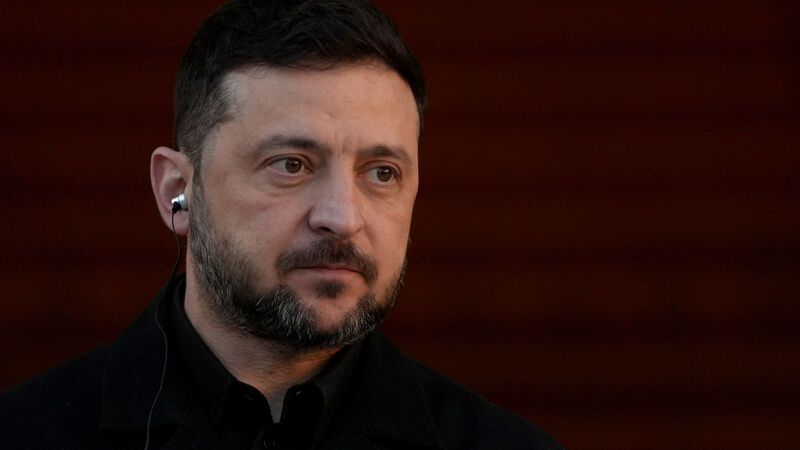
Ukrainian President Volodymyr Zelenskyy (Brian Lawless/PA)
EU leaders have pledged a €90bn loan for Ukraine to meet urgent financial needs, but failed to agree on the preferred option for many of securing that loan against Russia’s frozen assets in the bloc.
After talks ended in the early hours of Friday, the president of the European Council, António Costa, told reporters: “We committed and we delivered.”
He said EU leaders had approved a decision to make a €90bn loan to Ukraine for the next two years backed by the EU budget, which Kyiv would repay only once Russia pays reparations.
Mr Costa added: “The union reserves its right to make use of the immobilised assets to repay this loan.”
EU leaders entered the summit on Thursday with many wanting to secure the urgently needed loan against some of Russia’s €210bn frozen assets on the continent. But the plan fell on the demand of Belgium, which hosts 88% of the Russian funds in the EU, to have unlimited budget guarantees from other member states if Moscow won a successful claim for damages.
Belgium’s prime minister, Bart De Wever, said the reparations loan had not been a good idea.
“When we explained the text again, there were so many questions that I said, ‘I told you so, I told you so.’ There are a lot of loose ends. And if you start pulling at the loose ends in the strings, the thing collapses.”
Euroclear in Brussels is being sued by the Russian central bank for $230bn while its top executives have also faced a campaign of intimidation orchestrated by Russian intelligence, the Guardian reported this week.
German chancellor Friedrich Merz, a strong advocate of the reparations loan, said the agreement was “a decisive message because Putin will only make concessions once he realises his war will not pay off”.
In a statement, he said: “If Russia does not pay reparations we will – in full accordance with international law – make use of Russian immobilised assets for paying back the loan.”
Mr Merz and other supporters of the reparations loan plan had argued that funding Ukraine via the EU budget was impossible because it required unanimity.
But the path was cleared when the three nationalist governments in central Europe indicated they would approve the use of the EU budget to fund Ukraine, as long as they did not have to contribute to the loan guarantees.
The leaders of Hungary, Slovakia and the Czech Republic were pictured in a trilateral meeting by Hungarian prime minister Viktor Orbán, who tweeted: “back in business!”
According to the final text of the agreement, the EU guarantees for the loan “will not have an impact on the financial obligations” of these three countries.
Danish prime minister Mette Frederiksen said it was “quite something” to get 27 countries to agree on a €90bn loan for another.
She said: “There are a lot of people outside the European Union and unfortunately also inside the European Union who tries to divide us. It is getting more and more difficult and I think this will continue.”
The Ukraine finance decision had been cast as “money today or blood tomorrow” by Poland’s prime minister Donald Tusk. EU officials had hoped that if the union went ahead with using frozen assets for Ukraine, other western allies , such as the UK, Canada and Japan, would follow suit. Now it is not clear how they will respond. But Brussels has called on non-EU allies to provide around €45bn to cover the rest of Ukraine’s estimated €136bn needs for military and civilian finance in 2026 and 27.
Ukrainian President Volodymyr Zelensky has thanked EU leaders after the European Council agreed to provide the financial support.
In a post on X, Mr Zelenskyy said the “significant” investment would “truly strengthen our resilience”.
“It is important that Russian assets remain immobilised and that Ukraine has received a financial security guarantee for the coming years,” he said.
“Thank you for the result and for unity. Together, we are defending the future of our continent.”
- The Guardian