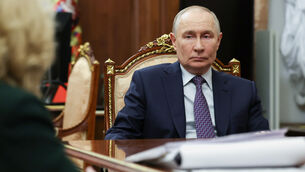
Putin says Russia is 'ready' for war with Europe as US peace talks end without progress
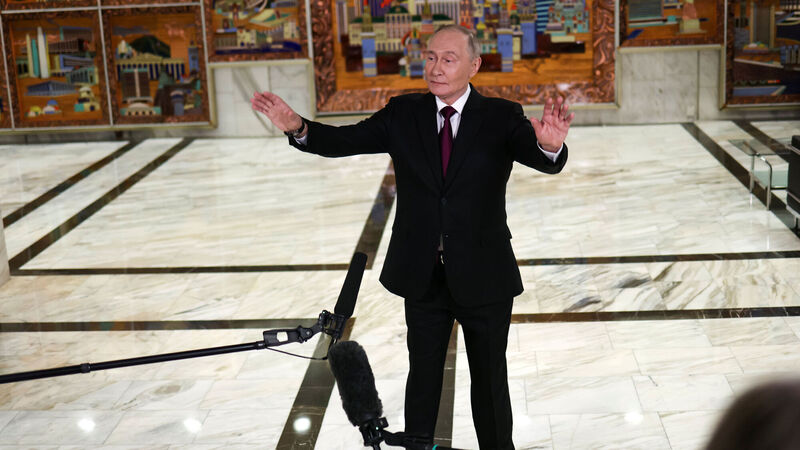
Russian president Vladimir Putin gestures speaking to journalists in Moscow. Picture: Sergei Ilnitsky/Pool Photo via AP
Russia and the US did not make progress toward a peace deal for Ukraine during their talks, a senior aide to Vladimir Putin has said, hours after the Russian president issued threats that Russia was ready for war with Europe.
In remarks to Russian media, Kremlin aide Yuri Ushakov said that after a five-hour meeting with Donald Trump envoy Steve Witkoff and Mr Trump’s son-in-law Jared Kushner, the two sides were “neither further nor closer to resolving the crisis in Ukraine. There is a lot of work to be done.”
Mr Ushakov called the meeting “extremely useful, constructive, and informed”, but nonetheless said the two sides had not come to an agreement on key issues, including the potential lines of territorial control in a potential peace deal between Russia and Ukraine.
“We did not discuss … specific American proposals, but discussed the essence of what is embedded in these American documents,” Mr Ushakov said of the peace plan presented by the US side.
“We could agree with some things … and the president also did not hide our critical and even negative attitude towards a number of proposals.”
Some aspects of the negotiations would not be revealed, Mr Ushakov said, and he indicated that another summit between Mr Trump and Mr Putin was not imminent.
US secretary of state Marco Rubio said later that “some progress” was made on security guarantees.
“What we have tried to do, and I think have made some progress, is figure out, what could the Ukrainians live with that gives them security guarantees for the future,” Mr Rubio told Fox News. He added that the US hoped a compromise would allow them “not just to rebuild their economy, but to prosper as a country”.
The relatively downbeat assessments of Tuesday night’s diplomacy follows combative opening statements from Mr Putin as Mr Witkoff and Mr Kushner arrived for talks at the Kremlin, in which he accused European powers of sabotaging peace in Ukraine and that “European demands” on ending the war were “not acceptable to Russia”.
“Europe is preventing the US administration from achieving peace on Ukraine,” Mr Putin said, adding: “Russia does not intend to fight Europe, but if Europe starts, we are ready right now.”
Mr Putin did not clarify which European demands he found unacceptable.
“They are on the side of war,” Mr Putin said of European powers.
Mr Witkoff, on his sixth trip to Moscow this year, was expected to present Mr Putin with an updated version of a US peace proposal drafted with input from a senior Russian official and reworked to make it more acceptable to Kyiv.

The Ukrainian president, Volodymyr Zelenskyy, said he was “awaiting signals” from the US delegation after its meeting with Mr Putin, in an intense round of shuttle diplomacy that the Trump administration has claimed is its best chance yet of bringing an end to the war.
But there remains significant skepticism that Russia is ready to accept any concessions, rather than continue the war and await a further breakdown in relations between the Trump White House and its European allies.
“I am ready to receive all the signals and ready for a meeting with President Trump,” Mr Zelenskyy posted on X. “Everything depends on today’s discussions.”
Several US media outlets reported that Mr Zelenskyy was expected to meet with Mr Witkoff and Mr Kushner in Europe after the meeting. While on his first official state visit to Ireland, Mr Zelenskyy said "Russian killers can’t travel the world as if they have done nothing wrong" and that Europe “can’t run away from its own values”.
A short video feed from the Kremlin showed the two small delegations sitting on opposite sides of an oval white table, with Mr Putin seated next to his advisers Kirill Dmitriev and Yuri Ushakov. Mr Putin asked Mr Witkoff and Mr Kushner about a short tour of Moscow they had taken before the meeting, with Mr Witkoff calling it a “magnificent city”. The feed then cut out.
The two Trump allies arrived in Moscow on Tuesday after meeting Ukrainian officials at the weekend in Florida to discuss revisions to the original 28-point peace plan, which overwhelmingly favoured Moscow.
Mr Zelenskyy, on a diplomatic push to rally support among European capitals that have backed changes to the original plan, said in Paris that the updated version of the proposal “looks better” but emphasised it was “not over yet”.
Mr Zelenskyy has objected in particular to provisions in the 28-point plan that would have required Ukraine to surrender territory in the east that it currently controls, and impose limits on the size of its military. He has also demanded clear, enforceable security guarantees from the west to prevent a future Russian invasion.
Mr Putin, for his part, has said that only the original US proposal could serve as a basis for further talks, while also stating that it required significant revisions.
Despite intense shuttle diplomacy in recent weeks, which has produced several revisions to the US peace plan, bridging the gap remains difficult: Russia’s maximalist demands in effect require Ukraine’s capitulation.
Mr Trump said in remarks to a cabinet meeting on Tuesday that the Ukraine war was a “mess” and not an easy situation to resolve.
Mr Putin’s comments appeared aimed at driving a wedge between Washington and European capitals. European officials have had some success in pushing back against the original US plan, though it remains unclear to what extent Washington is taking their concerns into account.
The Kremlin spokesperson, Dmitry Peskov, earlier on Tuesday said Mr Putin and Mr Witkoff would discuss the “understandings” reached recently between Washington and Kyiv, adding that Russia remained open to talks but would insist on achieving the goals of its “special operation”.
Those goals amount to sweeping demands that would severely erode Ukraine’s sovereignty, including deep cuts to its armed forces, a ban on western military assistance, far-reaching limits on political independence, and the handover of Ukrainian-controlled territory in the east of the country.
On the eve of the talks with the US delegation in Moscow, Mr Putin claimed Russian forces had taken control of the strategic city of Pokrovsk in Ukraine.
Dressed in military fatigues during a visit to a command centre on Monday evening, the Russian president hailed what he called the “important” capture of Pokrovsk, once a major logistical hub for the Ukrainian army, though Ukrainian officials later disputed the claim.
Russia has spent more than a year attempting to seize the frontline hub, seen as a gateway to Donetsk, and has suffered heavy losses in the process.
Ukrainian analysts and military bloggers have acknowledged that Russia now holds most of Pokrovsk, with battlefield maps showing its forces largely in control.
Buoyed up by recent gains at the front, Mr Putin has indicated in recent weeks that the Russian military was prepared to keep fighting if diplomacy faltered, repeatedly emphasising that his forces remained on the offensive on the battlefield.
The Russian leader also on Tuesday threatened retaliation against Ukraine’s ports and shipping after Kyiv in recent days struck several vessels in Russia’s so-called shadow fleet in the Black Sea.
The Russian president threatened that Moscow would “step up strikes on Ukrainian ports and on any ships entering them” in response to attacks on Russian tankers, which he described as “piracy”.