Pope in Lebanon asks for ‘gift of peace’ alongside Christian and Muslim leaders
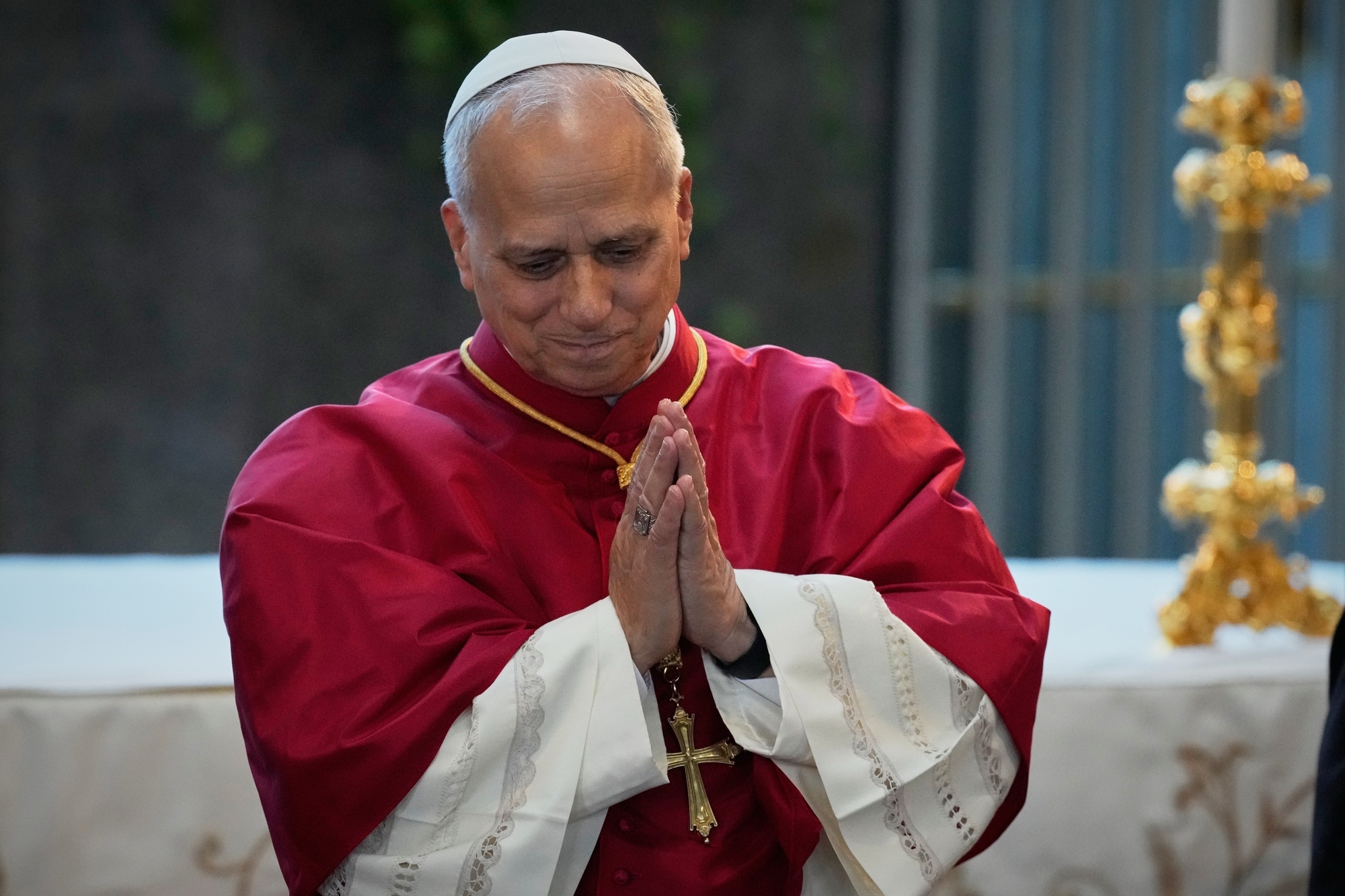
Pope Leo XIV has celebrated Lebanon’s tradition of interfaith co-existence as a beacon of hope for a conflict-torn region, as he asked for “the divine gift of peace” alongside the country’s Christian and Muslim religious leaders.
He received a raucous welcome from the crowds and a sincere greeting from its spiritual leaders on his first full day in Lebanon, where billboards with his image dotted major roads around the capital.
Thousands of ordinary Lebanese braved a steady rain in the morning to line his motorcade route, some throwing flower petals and rice on his car in a gesture of welcome.

History’s first American pope is on his maiden papal voyage, and it has taken him to the heart of Christianity – first to Turkey to commemorate a founding profession of the Christian faith and now to Lebanon to encourage an ancient Christian community in a country that is unique in the Arab world for its religious tolerance.
The highlight of his day was an interfaith meeting in Martyrs’ Square in Beirut, with the country’s Christian patriarchs and Sunni, Shiite and Druze spiritual leaders gathered under a tent.
After listening to hymns and readings from the Bible and Koran, Leo praised Lebanon’s tradition of religious tolerance as a beacon for “the divine gift of peace” in the region.
“In an age when co-existence can seem like a distant dream, the people of Lebanon, while embracing different religions, stand as a powerful reminder that fear, distrust and prejudice do not have the final word, and that unity, reconciliation and peace are possible,” he said.
Leo’s remarks underscored the importance of Lebanon and its Christian community to the Catholic Church, a place that St John Paul II famously said was more than just a country but a message of freedom to the rest of the world.

At the end of the event, the spiritual leaders planted an olive sapling as a symbol of peace.
At a time of conflict in Gaza and worsening political tensions in Lebanon, Leo’s visit has been welcomed by the Lebanese as a sign of hope.
The country has recently been deeply divided over calls for Hezbollah, a Lebanese militant group and political party, to disarm after fighting a war with Israel last year that left the country deeply damaged. Despite a ceasefire, Israel has carried out almost daily air strikes targeting Hezbollah members.
The Grand Sunni Muslim Mufti of Lebanon, Abdul-Latif Derian, welcomed Leo at the interfaith event and recalled the good relations forged by the pontiff’s predecessor, Pope Francis. He cited the 2019 joint statement on human fraternity signed by Francis and the grand imam of Al-Azhar, the seat of Sunni learning in Cairo, Sheikh Ahmad al-Tayeb.
“Lebanon is the land of this message,” Mr Derian said.

A senior Lebanese Shiite Muslim cleric, Ali al-Khatib, deputy head of the Supreme Islamic Shiite Council, urged Leo to help Lebanon end Israel’s attacks amid rising concerns in the Mediterranean country of wider Israeli strikes.
“We put Lebanon in your hands so that maybe the world helps us,” he said.
Leo opened his day by praying at the tomb of St Charbel Makhlouf, a Lebanese saint revered by many Christians and Muslims.
Every year, hundreds of thousands of pilgrims visit the tomb at the hilltop monastery of St Maroun overlooking the sea at Annaya, around 25 miles from Beirut.
Bells rang as Leo’s covered vehicle snaked its way through the rain to the monastery where he prayed quietly in the darkened tomb and offered a lamp as a gift of light for the community.

Lebanese troops were deployed on both sides of the roads along his motorcade routes, but his warm welcome underscored the joy his visit had brought.
Leo ended the day at a jubilant rally of Lebanese youth at Bkerki, the seat of the Maronite Church, where he encouraged them to persevere and not leave the country as many others have done.
Christians make up around a third of Lebanon’s five million people, giving the small nation on the eastern coast of the Mediterranean the largest percentage of Christians in the Middle East.
A power-sharing agreement in place since independence from France calls for the president to be a Maronite Christian, making Lebanon the only Arab country with a Christian head of state
The Vatican sees Christian presence as a bulwark for the church in the region.
CONNECT WITH US TODAY



Be the first to know the latest news and updates