Marcel Ophuls, filmmaker who forced France to face wartime past, dies aged 97
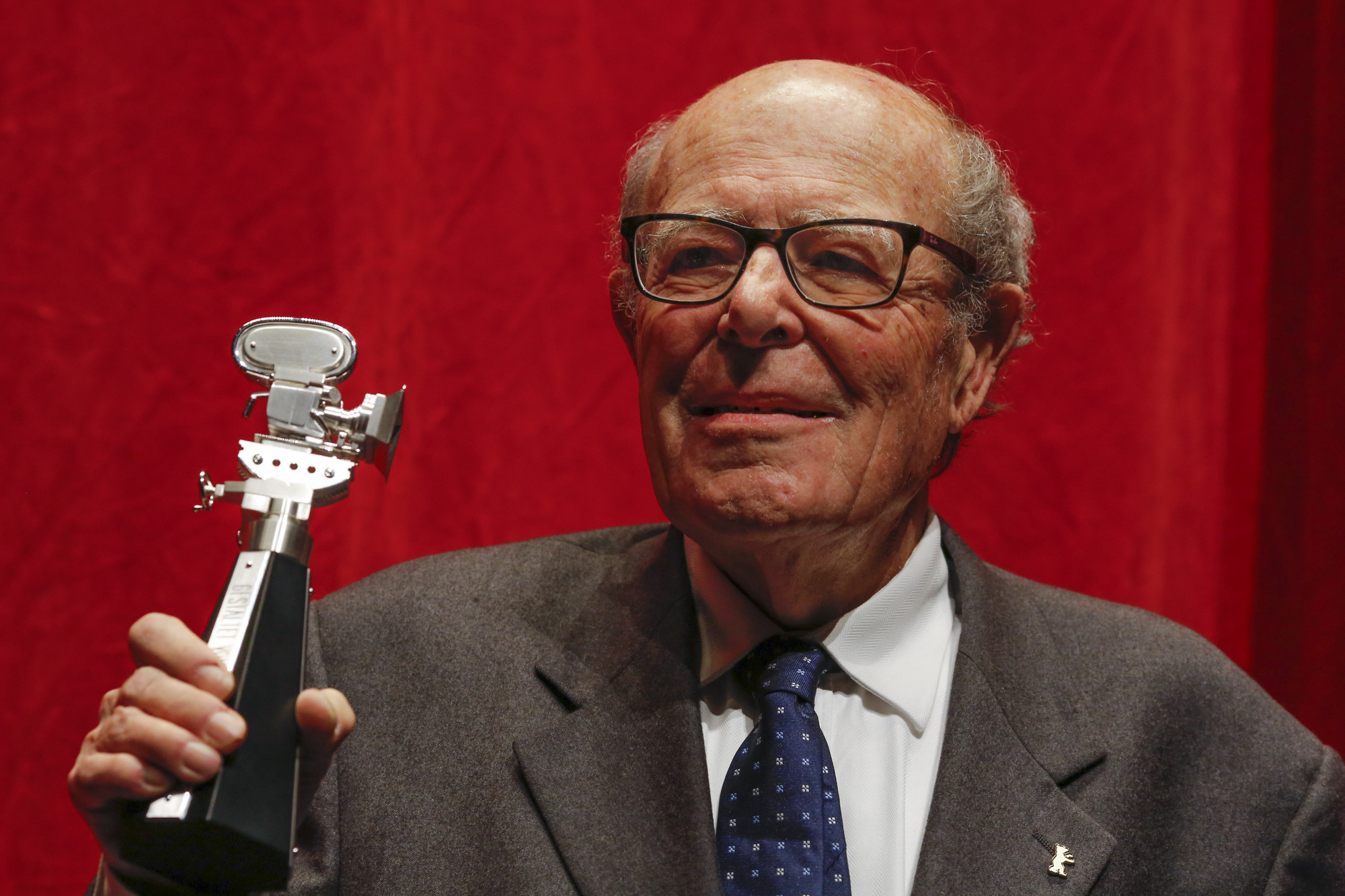
Marcel Ophuls, the Academy Award-winning filmmaker whose landmark 1969 documentary The Sorrow And The Pity shattered the comforting myth that most of France had resisted the Nazis during the Second World War, has died aged 97.
The German-born filmmaker, who was the son of legendary filmmaker Max Ophuls, died on Saturday at his home in southwest France of natural causes, his grandson Andreas-Benjamin Seyfert told The Hollywood Reporter.
Though Ophuls would later win an Oscar for Hotel Terminus, (1988), his searing portrait of Nazi war criminal Klaus Barbie, it was The Sorrow And The Pity that marked a turning point, not only in his career, but in the way France confronted its past.
Deemed too provocative, too divisive, it was banned from French television for more than a decade.
French broadcast executives said it “destroyed the myths the French still need”.
It would not air nationally until 1981.
Simone Veil, Holocaust survivor and moral conscience of postwar France, refused to support it.
But for a younger generation in a country still recovering physically and psychologically from the aftermath of the atrocities, the movie was a revelation, an unflinching historical reckoning that challenged both national memory and national identity.

The myth it punctured had been carefully constructed by Charles de Gaulle, the wartime general who led Free French forces from exile and later became president.
In the aftermath of France’s liberation in 1944, de Gaulle promoted a version of events in which the French had resisted Nazi occupation as one people, united in dignity and defiance.
Collaboration was portrayed as the work of a few traitors. The French Republic, he insisted, had never ceased to exist.
The Sorrow And The Pity, which was nominated for the 1972 Oscar for Best Documentary, told a different story.
Filmed in stark black and white and stretching over four and a half hours, the documentary turned its lens on Clermont-Ferrand, a provincial town at the heart of France.
Through long, unvarnished interviews with farmers, shopkeepers, teachers, collaborators, members of the French Resistance, even the town’s former Nazi commander, Ophuls laid bare the moral ambiguities of life under occupation.
There was no narrator, no music, no guiding hand to shape the audience’s emotions. Just people, speaking plainly, awkwardly, sometimes defensively.
They remembered, justified and hesitated. And in those silences and contradictions, the film delivered its most devastating message: that France’s wartime story was not one of widespread resistance, but of ordinary compromise, driven by fear, self-preservation, opportunism and, at times, quiet complicity.
The film revealed how French police had aided in the deportation of Jews. How neighbours stayed silent.
How teachers claimed not to recall missing colleagues. How many had simply got by. Resistance, The Sorrow And The Pity seemed to say, was the exception not the rule.
It was, in effect, the cinematic undoing of de Gaulle’s patriotic myth, that France had resisted as one, and that collaboration was the betrayal of a few.
Ophuls showed instead a nation morally divided and unready to confront its own reflection.
In a 2004 interview with The Guardian, Ophuls bristled at the charge that he had made the film to accuse.
“It doesn’t attempt to prosecute the French,” he said. “Who can say their nation would have behaved better in the same circumstances?”
Born in Frankfurt on November 1, 1927, Marcel Ophuls was the son of legendary German-Jewish filmmaker Max Ophuls, director of La Ronde, Letter From An Unknown Woman, and Lola Montes.
When Hitler came to power in 1933, the family fled Germany for France.
In 1940, as Nazi troops approached Paris, they fled again, across the Pyrenees into Spain, and on to the United States.
Marcel became an American citizen and later served as a US army GI in occupied Japan. But it was his father’s towering legacy that shaped his early path.
“I was born under the shadow of a genius,” Ophuls said in 2004. “I don’t have an inferiority complex, I am inferior.”
He returned to France in the 1950s hoping to direct fiction, like his father.
But after several poorly received features, including Banana Peel (1963), an Ernst Lubitsch-style caper starring Jean-Paul Belmondo and Jeanne Moreau, his path shifted.
“I didn’t choose to make documentaries,” he told The Guardian. “There was no vocation. Each one was an assignment.”
That reluctant shift changed cinema.
After The Sorrow And The Pity, Ophuls followed with The Memory Of Justice (1976), a sweeping meditation on war crimes that examined Nuremberg but also drew uncomfortable parallels with atrocities in Algeria and Vietnam.
In Hotel Terminus (1988), he spent five years tracking the life of Klaus Barbie, the so-called “Butcher of Lyon”, exposing not just his Nazi crimes but the role western governments played in protecting him after the war.
The film won him his Academy Award for Best Documentary but, overwhelmed by its darkness, French media reported that he attempted suicide during production.
In The Troubles We’ve Seen (1994), he turned his camera on journalists covering the war in Bosnia, and on the media’s uneasy relationship with suffering and spectacle.
Despite living in France for most of his life, he often felt like an outsider.
“Most of them still think of me as a German Jew,” he said in 2004, “an obsessive German Jew who wants to bash France.”
He was a man of contradictions: a Jewish exile married to a German woman who had once belonged to the Hitler Youth; a French citizen never fully embraced; a filmmaker who adored Hollywood, but changed European cinema by telling truths others would not.
He is survived by his wife, Regine, their three daughters and three grandchildren.
CONNECT WITH US TODAY



Be the first to know the latest news and updates