Spain’s PM visits China to boost ties with Trump’s top tariff target
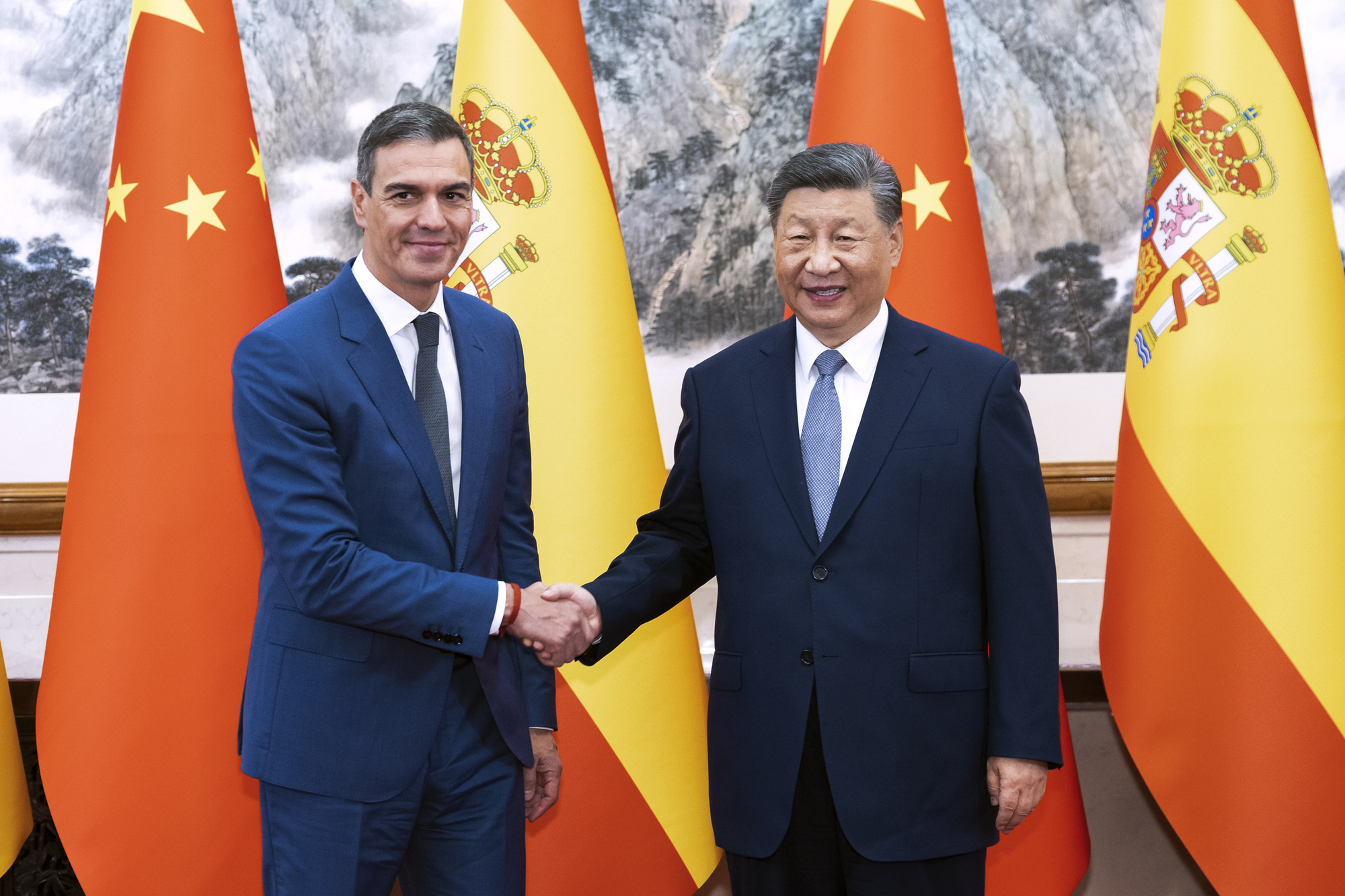
Spain’s Prime Minister Pedro Sanchez is visiting China on Friday, his third trip to the country in two years, as his government seeks to boost investment from the Asian giant amid global economic uncertainty caused by a chaotic US tariff policy.
Mr Sanchez met with Chinese President Xi Jinping and was expected to meet as well as business leaders from several Chinese companies, many of which produce electric batteries or renewable energy technologies.
The visit comes at a complex moment for Europe and China.
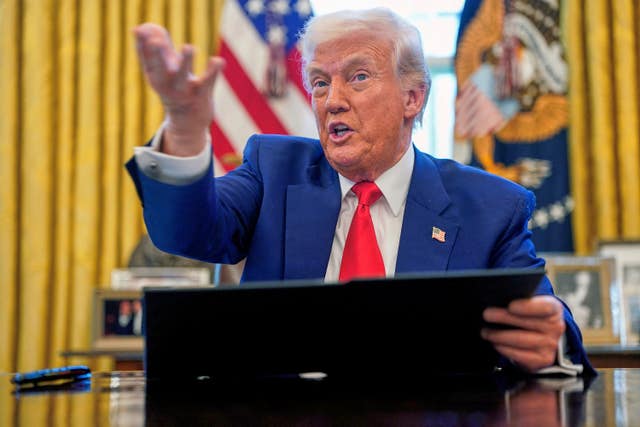
The tariffs announced last week — and then paused — by US president Donald Trump could mean that the European Union pursues more trade with China, the world’s third-largest consumer market after the United States and the EU.

There is also growing concern in the EU about China flooding the bloc with discounted goods as a result of US tariffs, which would hurt European producers.
Mr Sanchez’s government has said that EU-member Spain wants to expand its economic ties with China.
“A trade war favors no one. We all will lose,” Mr Sanchez said after meeting with Vietnamese leaders in Hanoi on Thursday, where he signed commercial agreements ahead of his visit to Beijing.
Spain’s government spokeswoman Pilar Alegria said earlier this week that Mr Sanchez’s trip “has special importance” and is an opportunity to “diversify markets” — Spain could see as much as 80% of its exports to the US impacted by Mr Trump’s tariffs.
US treasury secretary Scott Bessent called out Spain for its move toward China, saying on Tuesday that Spain—or any country that tries to get closer to China—would be “cutting their own throat” because Chinese manufacturers will be looking to dump goods that they cannot sell in the US.
“Expanding the trade relations that we have with other countries, including a partner as important as China, does not go against anyone,” Spain’s agriculture minister, Luis Planas, who accompanied Mr Sanchez, said in Vietnam on Wednesday.
“Everyone has to defend their own interests,” Mr Planas said.
Spain — the eurozone’s fourth-largest economy and a leader in growth — has in recent years been less adversarial toward China than other EU countries.
After initially supporting EU tariffs placed last year on Chinese-made electric vehicles, which European leaders have said enjoy unfair advantages compared to European car makers, Spain abstained from voting on the customs duty.
Mr Planas insisted that Spain’s approach to China “contributes to the collective effort made by certain countries in the European Union to get out of this situation”.
“Spain’s position has changed to be more pro-China … than the average European country,” said Alicia García-Herrero, an economist for Asia Pacific at the French investment bank Natixis and an expert on Europe’s relations with China.

CONNECT WITH US TODAY



Be the first to know the latest news and updates