EU delays retaliatory trade action to work out impact of Trump tariffs
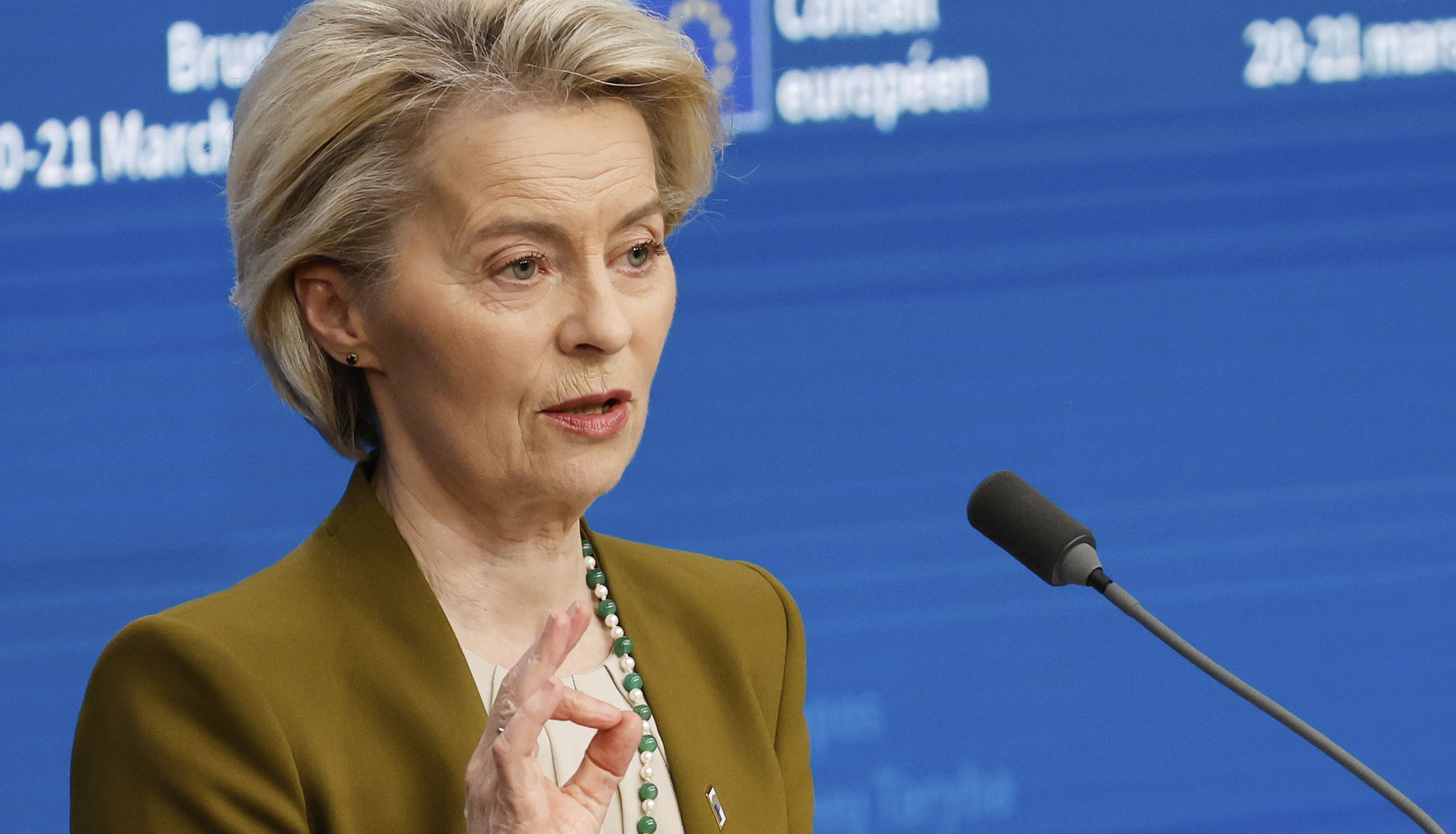
European Commission President Ursula von der Leyen (Geert Vanden Wijngaert/AP)
The European Union is delaying until mid-April its retaliatory trade action over the Trump administration’s increase in tariffs on all steel and aluminium imports to 25%, senior officials said on Thursday.
The EU had intended to impose measures on goods from the United States worth some 26 billion euros (£21.5 billion) in two phases, on April 1 and April 13.
The tariffs will target steel and aluminium products, but also American beef, poultry, bourbon, motorcycles, peanut butter and jeans.
But US President Donald Trump also plans to impose “reciprocal” tariffs by increasing US duties to match the tax rates that other countries charge on imports “for purposes of fairness”.
These reciprocal tariffs are expected to be announced on April 2.
“I can confirm that we decided to adjust the timing of the entry into force of tariffs,” European Commission President Ursula von der Leyen said.
The EU’s executive branch manages trade negotiations and disputes on behalf of the 27-member bloc.
Ms Von der Leyen said that with the delay, the commission’s goal is “to get the balance of products right, reflecting the interests of our producers, our exporters, our consumers, and of course, minimise the potential negative impact on our economy.”
EU trade commissioner Maros Sefcovic, who has held talks with US officials to try to avoid a tariff war, warned lawmakers earlier on Thursday that “the situation is quite fluid, quite volatile”.
Mr Sefcovic said that delaying the measures would allow the EU to better understand the possible impact of Mr Trump’s reciprocal tariffs and work out how best to respond.
“This would also give us extra time for negotiations with our American partners to try to find a mutually agreeable solution, which clearly would be a preference for us,” he added.
Ms Von der Leyen reaffirmed that the world’s biggest trading bloc is “opposed to tariffs”.
“We think that tariffs are bad. They are like taxes. They are bad for consumers. They are bad for business on both sides of the Atlantic without any question.”
CONNECT WITH US TODAY



Be the first to know the latest news and updates