German parliament votes to make it easier for people to change name and gender
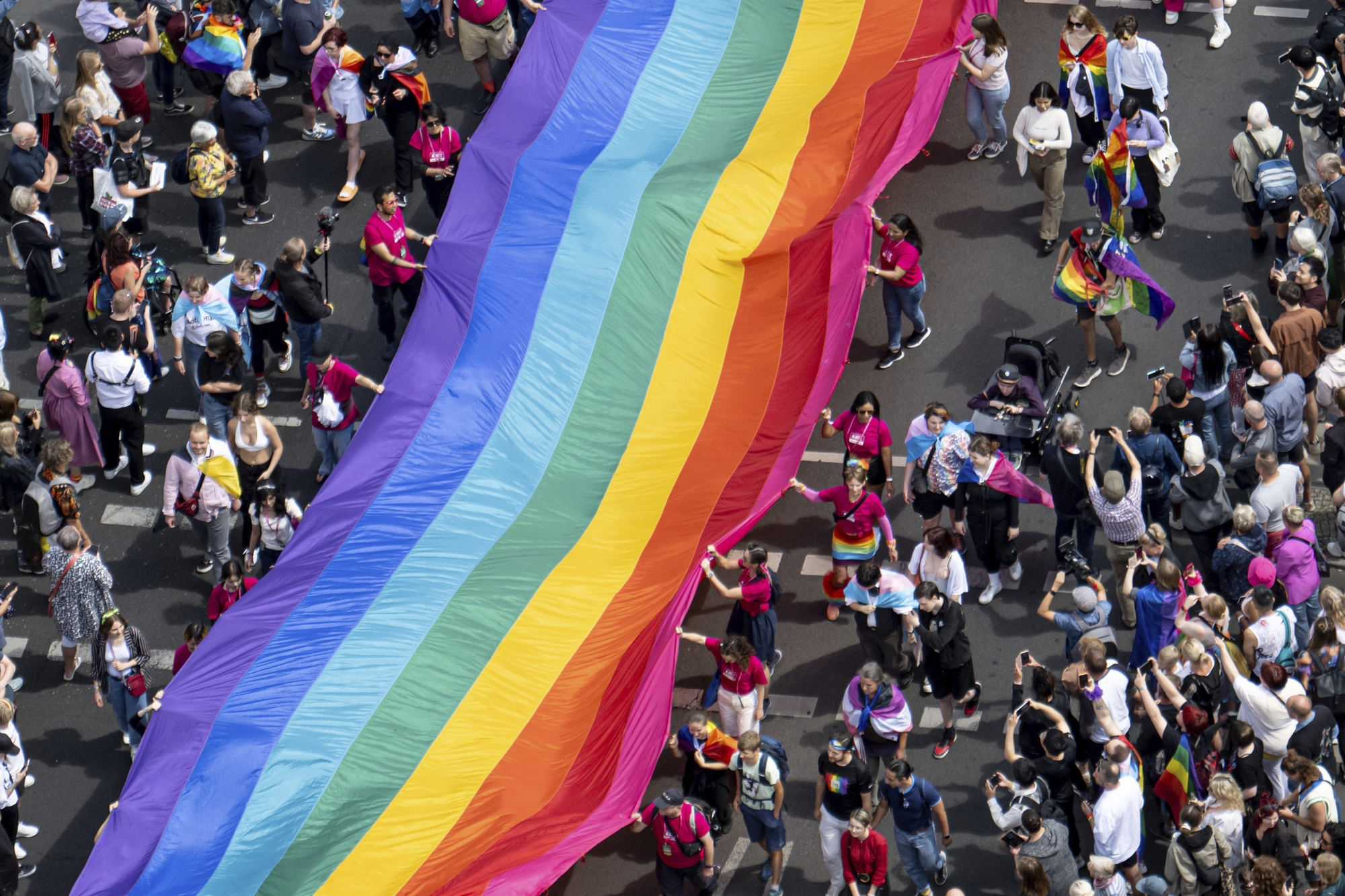
The German parliament has approved legislation that will make it easier for transgender, intersex and nonbinary people to change their name and gender in official records.
The âself-determination law,â one of several social reforms that chancellor Olaf Scholzâs liberal-leaning coalition government pledged when it took office in late 2021, is set to take effect on November 1.
Germany, the European Unionâs most populous nation, follows several other countries in making the change.
Parliamentâs lower house, the Bundestag, approved it by 374 votes to 251 with 11 abstentions.
The German legislation will allow adults to change their first name and legal gender at registry offices without further formalities.
They will have to notify the office three months before making the change.
The existing âtranssexual law,â which dates back four decades, requires individuals who want to change gender on official documents to first obtain assessments from two experts âsufficiently familiar with the particular problems of transsexualismâ and then a court decision.
Since that law was drawn up, Germanyâs top court has struck down other provisions that required transgender people to get divorced and sterilised, and to undergo gender-transition surgery.
âFor over 40 years, the âtransexual lawâ has caused a lot of suffering⊠and only because people want to be recognised as they are,â Sven Lehmann, the governmentâs commissioner for queer issues, told legislators âAnd today we are finally putting an end to this.â
The new legislation focuses on individualsâ legal identities. It does not involve any revisions to Germanyâs rules for gender-transition surgery.
The new rules will allow minors 14 years and older to change their name and legal gender with approval from their parents or guardians â if they donât agree, teenagers could ask a family court to overrule them.
In the case of children younger than 14, parents or guardians would have to make registry office applications on their behalf.
After a formal change of name and gender takes effect, no further changes would be allowed for a year. The new legislation provides for operators of, for example, gyms and changing rooms for women to continue to decide who has access.
Nyke Slawik, a transgender woman elected to parliament in 2021 for the Greens, one of the governing parties, recounted her experience of going through the current system a decade ago.
She said she had had enough of being asked âis that your brotherâs ID?â when she had to identify herself.
âTwo years, many conversations with experts and one district court process later, it was done â the name change went through, and I was nearly 2,000 euros poorer,â she said.
âAs trans people, we repeatedly experience our dignity being made a matter for negotiation.â
The mainstream conservative opposition faulted the legislation for what it described as a lack of safeguards against abuse and a lack of protection for young people.
Conservative Susanne Hierl complained that the government is âignoring the justified concerns of many women and girlsâ.
âYou want to satisfy a loud but very small group and, in doing so, are dividing society,â Ms Hierl said.
Martin Reichardt of the far-right Alternative for Germany blasted what he called âideological nonsenseâ.
Among others, Denmark, Norway, Finland and Spain already have similar legislation.