International leaders condemn Ecuador after police raid Mexican Embassy in Quito
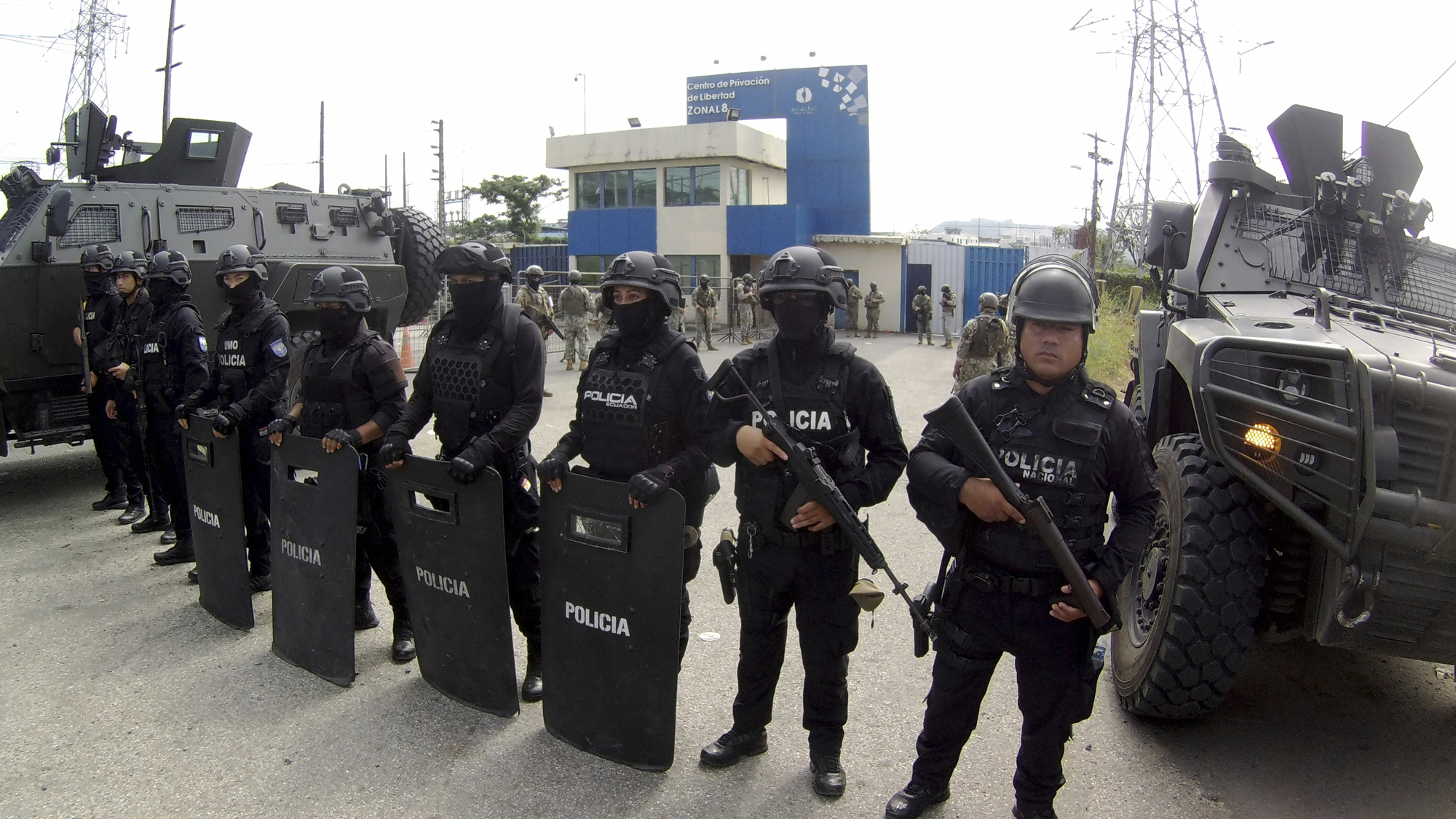
International leaders have condemned Ecuador after police in the country’s capital broke into the Mexican Embassy to arrest a former vice president who had been granted political asylum.
The raid late on Friday prompted Mexican President Andres Manuel Lopez Obrador to break off diplomatic relations with Ecuador, while his government’s foreign relations secretary said the move will be challenged at the World Court in The Hague.
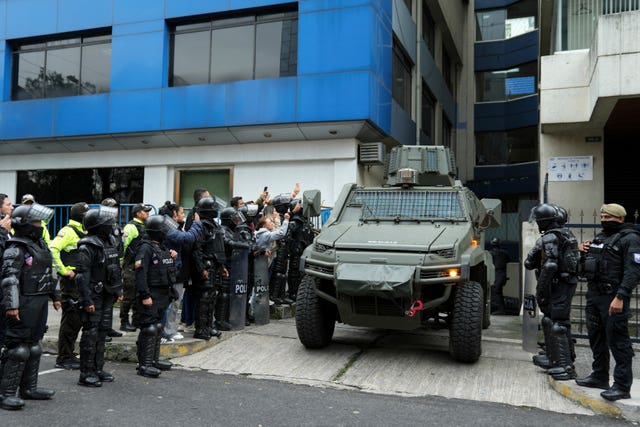
Police broke through the external doors of the embassy in Quito to arrest Jorge Glas, who had been residing there since December. He had sought asylum after being indicted on corruption charges and it had been granted hours earlier.
The break-in was widely condemned.
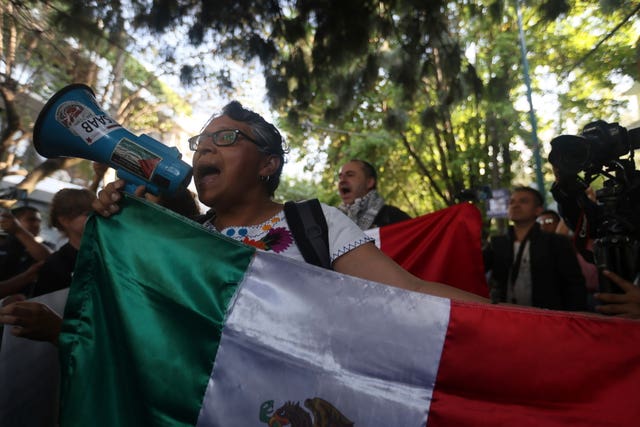
The Organisation of American States in a statement reminded its members, which include Ecuador and Mexico, of their obligation not to “invoke norms of domestic law to justify non-compliance with their international obligations”.
The Spanish foreign ministry, in a statement on Sunday, said: “The entry by force into the Embassy of Mexico in Quito constitutes a violation of the 1961 Vienna Convention on Diplomatic Relations. We call for respect for international law and harmony between Mexico and Ecuador, brotherly countries to Spain and members of the Ibero-American community.”
US State Department spokesman Matthew Miller said: “The United States condemns any violation of the Vienna Convention on Diplomatic Relations, and takes very seriously the obligation of host countries under international law to respect the inviolability of diplomatic missions.”
He called on both countries to resolve their differences.
Honduran President Xiomara Castro, writing on X, formerly Twitter, characterised the raid as “an intolerable act for the international community” and a “violation of the sovereignty of the Mexican State and international law” because “it ignores the historical and fundamental right to asylum”.
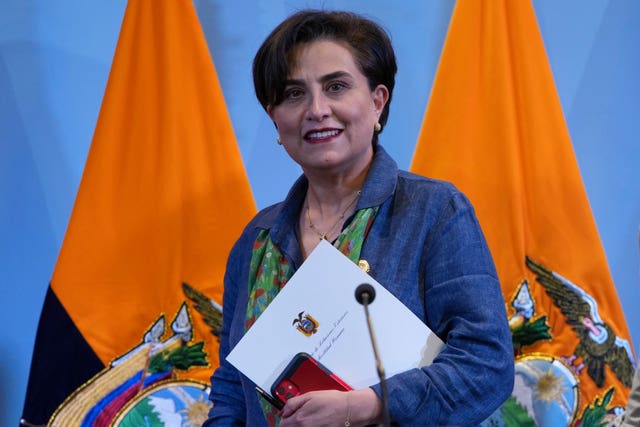
Diplomatic premises are considered foreign soil and “inviolable” under the Vienna treaties and host country law enforcement agencies are not allowed to enter without the permission of the ambassador.
People seeking asylum have lived anywhere from days to years at embassies around the world, including at Ecuador’s in London, which housed WikiLeaks founder Julian Assange for seven years because British police could not enter to arrest him.
Alicia Barcena, Mexico’s secretary of foreign relations, on Friday posted on X that a number of diplomats suffered injuries during the break-in.
She said Mexico will take the case to the International Court of Justice “to denounce Ecuador’s responsibility for violations of international law”. She also recalled Mexican diplomats.
On Saturday, Glas was taken from the attorney general’s office in Quito to the port city of Guayaquil, where he will remain in custody at a maximum-security prison.
People who had gathered outside the prosecutor’s office yelled “Strength” as he left with a convoy of police and military vehicles.
Glas’s lawyer, Sonia Vera, told the Associated Press that officers broke into his room and he resisted when they attempted to put his hands behind his back.
She said the officers then “knocked him to the floor, kicked him in the head, in the spine, in the legs, the hands”, and, when he “couldn’t walk, they dragged him out”.
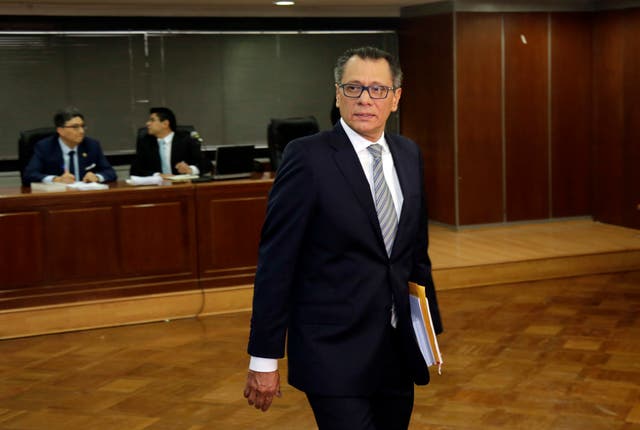
Ms Vera said the defence team was not allowed to speak with Glas while he was at the prosecutor’s office, and it is now working to file a habeas corpus petition.
Authorities are investigating Glas over alleged irregularities during his management of reconstruction efforts following a powerful earthquake in 2016 that killed hundreds of people. He was convicted on bribery and corruption charges in other cases.
Ecuador’s Foreign Minister Gabriela Sommerfeld told reporters on Saturday that the decision to enter the embassy was made by President Daniel Noboa after considering Glas’s “imminent flight risk” and exhausting all possibilities for diplomatic dialogue with Mexico.
Mexico granted Glas asylum hours before the raid. Ms Sommerfeld said “it is not legal to grant asylum to people convicted of common crimes and by competent courts.”
Mr Noboa became Ecuador’s president last year as the nation battled unprecedented crime tied to drug trafficking.
He declared the country in an “internal armed conflict” in January and designated 20 drug-trafficking gangs as terrorist groups that the military had authorisation to “neutralise” within the bounds of international humanitarian law.
Will Freeman, a fellow of Latin American studies at the Council on Foreign Relations, said the decision to send police into Mexico’s embassy raises concerns over the steps Mr Noboa is willing to take to get re-elected. His tenure ends in 2025 as he was only elected to finish the term of former president Guillermo Lasso.
“I really hope Noboa is not turning more in a Bukele direction,” Mr Freeman said, referring to El Salvador President Nayib Bukele, whose tough-on-crime policies have been heavily criticised by human rights organisations. “That’s to say, less respectful of rule of law in order to get a boost to his popularity ahead of the elections.”
Mr Freeman added that whether Glas was abusing diplomatic protection is a “separate issue” from the decision to send police to the embassy.
“We see a pattern of that in Latin America, with politicians abusing embassies and foreign jurisdictions, not to flee prosecution but to flee accountability,” he said.
The Mexican Embassy in Quito remained under heavy police guard after the raid – the boiling point of recent tensions between Mexico and Ecuador.
Glas’s lawyer said she fears “something could happen” to him while in custody considering the track record of the country’s detention facilities, where hundreds of people have died during violent riots over the past few years.
Those killed while in custody include some suspects in last year’s assassination of a presidential candidate.
“In Ecuador, going to jail is practically a death sentence,” Ms Vera said. “We consider that the international political and legal person responsible for the life of Jorge Glas is President Daniel Noboa Azin.”
CONNECT WITH US TODAY



Be the first to know the latest news and updates