David Cameron hints Britain could strike again if Houthis continue attacking
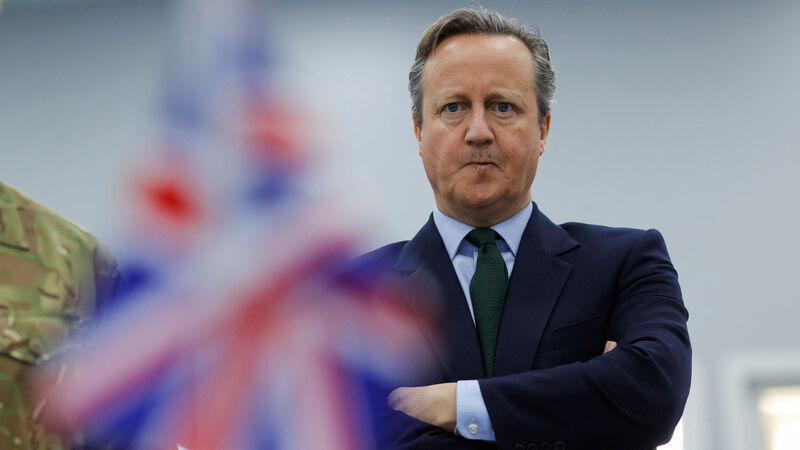
David Cameron hinted further strikes could follow if the Houthis continue their attacks (Valdrin Xhemaj/PA)
Britain could strike Houthi targets in Yemen again if the rebel group continues to attack ships in the Red Sea, British Foreign Secretary David Cameron has suggested.
Mr Cameron warned that the Iran-linked militants could force up prices in Britain if they are allowed to block the passage of container ships in the busy trade route.
The US struck another site in Yemen early on Saturday after the Houthis vowed revenge for the bombing raid carried out by the Americans and the RAF a day earlier.
Writing in the Sunday Telegraph, Mr Cameron said the joint action “will have gone some way to degrade Houthi capabilities built up with Iranian backing”.
He argued that not acting would be accepting that Houthi attacks could “virtually shut a vital sea lane with relative impunity”.
“If the Houthis deny this passage to ships, vital supply chains are threatened and prices will go up in Britain and across the globe.”
Mr Cameron said that the air strikes “sent an unambiguous message” to the Houthis that “we are determined to put a stop” to their Red Sea attacks.
And he hinted that Britain could join the US in striking the Houthis again if they continue.
“We will work with allies. We will always defend the freedom of navigation. And, crucially, we will be prepared to back words with actions,” he said.
The British Foreign Secretary argued that the Houthi assertion that their attacks are linked to Israel’s war in Gaza is “nonsense”.
“They’ve attacked ships from countries all over the world, heading to destinations right across the globe,” he wrote.
After the first strikes, the United Kingdom Maritime Trade Operations received a report of a missile attack on a vessel off the coast of Aden, Yemen, on Friday afternoon.
Meanwhile, Keir Starmer defended his support for the strikes, which Rishi Sunak ordered without first consulting Parliament, as prime ministers sometimes do before military interventions.

Writing for the Independent, the UK Labour leader argued that “protecting trade, security and lives are paramount to our national interest”.
He said Mr Sunak “must make a full statement” to the Commons when it returns on Monday, but stressed the need for swift military action.
“That is why we must retain the flexibility to react with the necessary speed to threats, while also submitting to scrutiny,” he wrote.
Mr Starmer was facing some criticism from the left over his support for the air strikes.
While running for the Labour leadership, he promised “no more illegal wars” and proposed a law that would require a Commons vote before military action.
But his new comments and support for the raids contradict this.
Diane Abbott, who was Jeremy Corbyn’s shadow home secretary but now sits as an independent, said: “In 2020 Keir Starmer said no more illegal wars. He said that he would only back war if it was legal, had a viable objective and Parliament gave consent.
“The current military action on Yemen has none of these yet he supports it.”
CONNECT WITH US TODAY



Be the first to know the latest news and updates