Palestinians flee as Israel orders evacuation and stages brief Gaza incursions
Palestinians are scrambling to flee northern Gaza after Israel ordered nearly half the population to flee south and carried out limited ground forays ahead of an expected land offensive, as the war appeared set to escalate a week after a wide-ranging Hamas attack on Israel.
Israel has ordered some one million people to flee, including the entire population of Gaza City, despite warnings from the UN and aid groups that such an exodus would cause untold human suffering, with hospital patients and others unable to relocate.
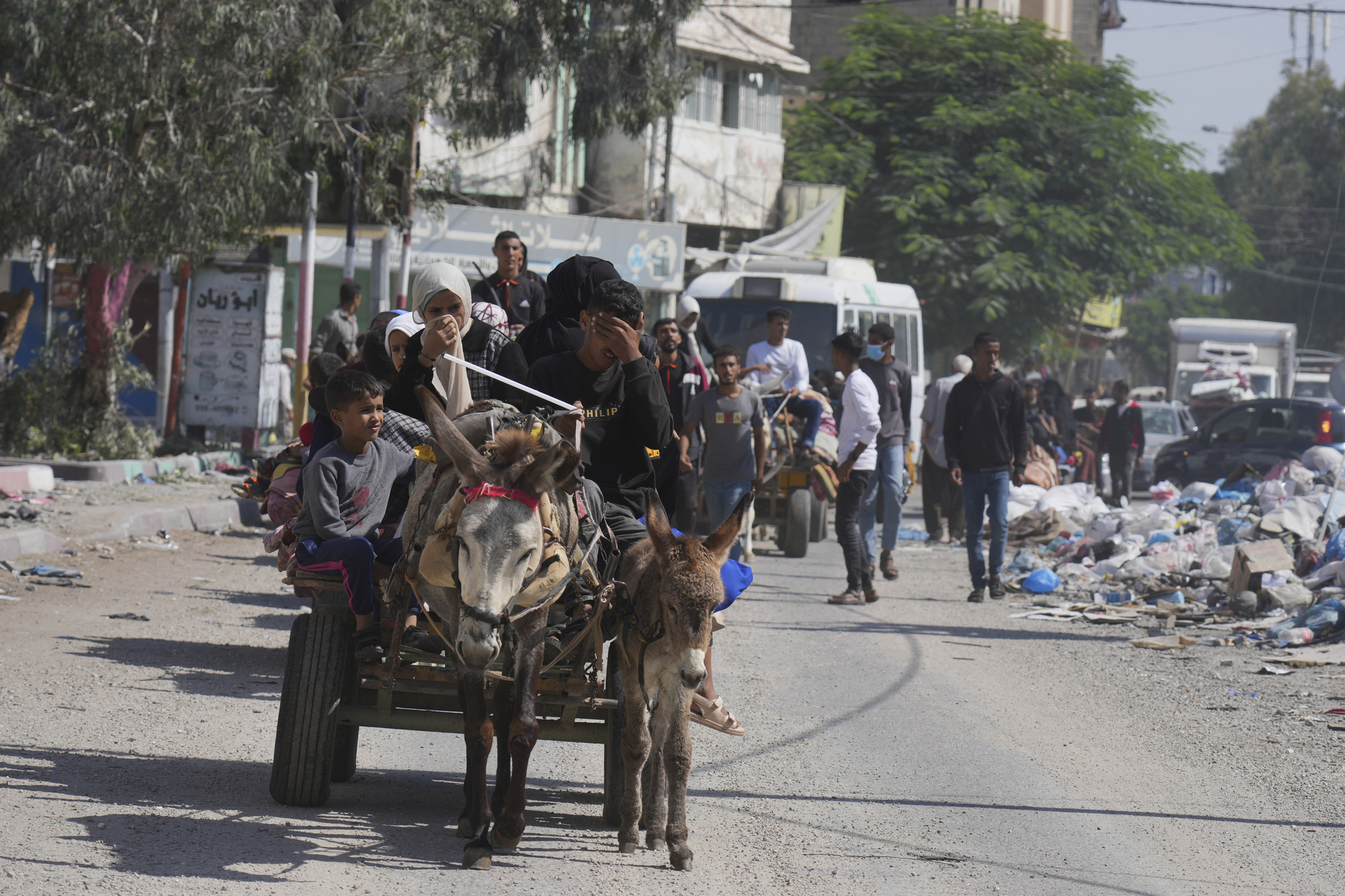
Families in cars, trucks and donkey carts packed with their possessions crowded a main road heading southwards from Gaza City as Israeli air strikes continued to hammer the besieged territory. Hamas’ media office said war planes struck cars fleeing south, killing more than 70 people.
The Israeli military said its troops conducted temporary raids into Gaza to battle militants and hunted for traces of some 150 people — including men, women and children — abducted in the shocking assault on southern Israel by Hamas on October 7.
In urging the evacuation, Israel’s military said it planned to target underground Hamas hideouts around Gaza City. But Palestinians and some Egyptian officials fear that Israel ultimately aims to push Gaza’s people out through the southern border with Egypt.
The UN called on Israel to reverse the unprecedented directive, while Hamas told people to ignore the evacuation order.
Families in Gaza faced an agonising dilemma in deciding whether to leave or stay, with no safe ground anywhere.
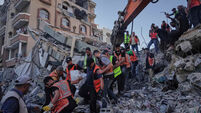
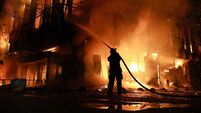
Israeli strikes have levelled entire city blocks, and Gaza has been sealed off from food, water and medical supplies — all under a virtual total power blackout.
Haifa Khamis al-Shurafa, 42, fled to the farming town of Deir al-Balah in a group of about 150 people on Friday, after her apartment in an upscale neighbourhood of Gaza City was demolished in an Israeli air strike earlier in the week.
“We lost everything, our house, our belongings, everything,” she said. “All we have is our kids, and that’s why we left. We don’t want to lose them.”

The Gaza Health Ministry said on Friday that roughly 1,900 people have been killed in the territory. The Hamas assault killed more than 1,300 Israelis, most of whom were civilians, and roughly 1,500 Hamas militants were killed during the fighting, the Israeli government said.
Israel’s raids into Gaza on Friday were the first indication that troops had entered the territory since Israel began its round-the-clock bombardment in retaliation for the Hamas massacre. Palestinian militants have fired thousands of rockets into Israel since the fighting erupted.
A military spokesman said Israeli ground troops left after conducting the raids.
Israel has called up some 360,000 reserves and massed troops and tanks along the border, but no decision has been announced on whether to launch a ground offensive. An assault into densely populated Gaza would likely bring even higher casualties on both sides in brutal house-to-house fighting.
“We will destroy Hamas,” Israeli Prime Minister Benjamin Netanyahu vowed on Friday night.
Hamas said Israel’s air strikes killed 13 hostages, including foreigners, without giving their nationalities. The military denied the claim. Hamas and other Palestinian militants hope to trade the hostages for thousands of Palestinians held in Israeli prisons.

In Israel, the public remained in shock over the Hamas rampage and frightened by continual rocket fire out of Gaza.
In the occupied West Bank, the Palestinian Health Ministry reported 16 Palestinians were killed on Friday, bringing the total number of Palestinians killed there to 51. The UN says attacks by Israeli settlers have surged there since the Hamas assault.
The UN said the Israeli military’s call for civilians to move south affects 1.1 million people.
If carried out, that would mean the territory’s entire population would have to cram into the southern half of the 25-mile strip. And Israel is still carrying out strikes across the territory, including in the south.
An Israeli spokesperson, Jonathan Conricus, said the military would take “extensive efforts to avoid harming civilians” and that residents would be allowed to return when the war is over.
Israel has long accused Hamas of using Palestinians as human shields. Israeli defence minister Yoav Gallant said Israel wanted to separate Hamas militants from the civilian population.
“So those who want to save their life, please go south,” he said at a news conference with US defence secretary Lloyd Austin.

The US and Israel’s other allies have pledged ironclad support for its war on Hamas, but the European Union’s foreign policy chief said on Saturday that the military needs to give more time for people to evacuate northern Gaza ahead of any military action.
Josep Borrell, speaking to news media on a visit to China, welcomed the evacuation order but said “you cannot move such a volume of people in (a) short period of time”, noting a lack of shelters or transportation.
The UN estimated that tens of thousands had fled homes in the north by Friday night.
Gaza’s Health Ministry said it was impossible to safely transport the wounded from hospitals, which are already struggling with high numbers of dead and injured.
“We cannot evacuate hospitals and leave the wounded and sick to die,” said spokesperson Ashraf al-Qidra.
Al Awda Hospital struggled to evacuate dozens of patients and staff after the military contacted it and told it to do so by Friday night, said the aid group Doctors Without Borders, which supports the facility. The military extended the deadline to Saturday morning, it said.
The UN agency for Palestinian refugees, known as the UNRWA, said it would not evacuate its schools, where hundreds of thousands have taken shelter. But it relocated its headquarters to southern Gaza, according to spokesperson Juliette Touma.
“The scale and speed of the unfolding humanitarian crisis is bone-chilling. Gaza is fast becoming a hellhole and is on the brink of collapse,” said Philippe Lazzarini, the UNRWA’s commissioner general.

CONNECT WITH US TODAY



Be the first to know the latest news and updates